
The real scoop on dog doo video
Spokane pet owners also should pay attention

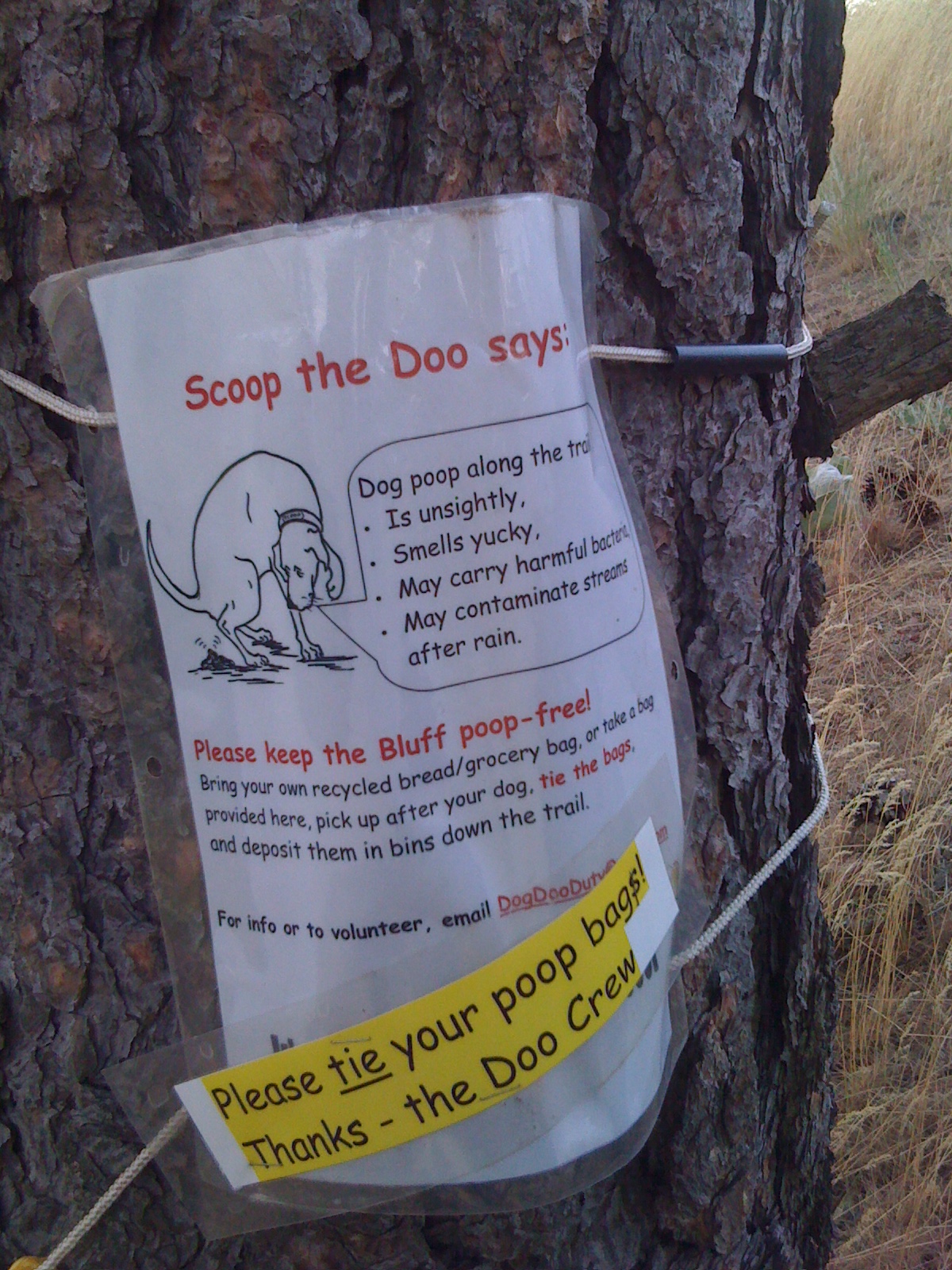
Ecology’s environmental educator in Spokane, Brook Beeler was walking on the South Hill bluff the other day when she saw this sign. that she said was posted by a fellow walker.
The sign is so right-on and so timely, that we wanted to share it with as many people as we could. It goes hand in hand with a compelling new video released in the Puget Sound area that, as of July 21, had been viewed 60,000 times on You Tube. If you haven’t seen it, take a peek .
This very successful recent video is one of the ways Washington communities are educating their residents about pet waste and pollution. It was produced by a consortium of cities and counties around Puget Sound.
But dog poo isn’t just a Puget Sound area problem. It’s a problem in Eastern Washington too. It’s a problem in Spokane. Why?
Polluted stormwater runoff is the leading water pollution problem in our state’s most populated areas. When it rains, pollution on the land washes downstream, moving that pollution along into our waters.
Regulations alone cannot keep Washington’s waters, including the Spokane River and other rivers and lakes in Eastern Washington, pollution-free. We have learned that people will generally do their part to change their behaviors and prevent pollution if they have an awareness of the problem, and if they know what to do.
By far, the least expensive way to fight pollution is to prevent it in the first place. Cleaning our waters is much more costly. Pollution problems in the Spokane River, are good examples of how expensive cleanup can be.
One simple thing that many of us can do to help keep Washington waters clean and germ-free is to “scoop the poop, bag it, trash it” when walking our dogs. Visit Ecology’s blog here for more information.
The money for the Dog Doogity video project is funded from a dedicated environmental account approved by Washington voters when they passed Initiative 97, the Model Toxics Control Act, in 1988.
This money isn’t from general taxpayer funds. This particular fund, the Local Toxics Account, provides funding to local communities to help them develop local stormwater programs that meet local needs.
Jani Gilbert is communications manager for the Eastern Regional Office of Washington Department of Ecology.