
Community gardens growing in value to communities
8 steps to consider when starting your own
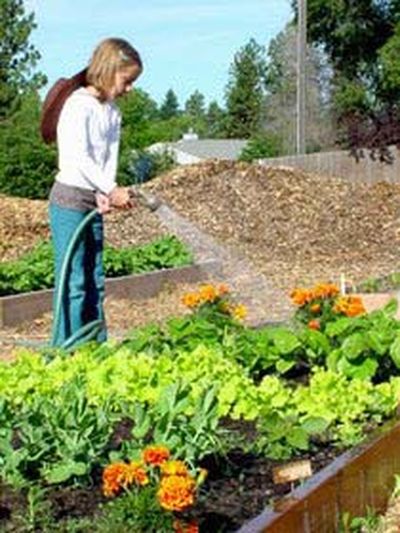

From Brown’s Mountain to Mead, people have been bringing neighborhoods together with the simple idea of growing fruit and vegetables.
The bounty community gardens yield is measured not just in the harvested food, but the bonds formed and barriers dissolved. Participants soon realize is that they’ve discovered common ground, rich and budding with possibilities.
“Community gardens can be so vital to the health of a community,” said Pat Munts, community gardens coordinator for the Spokane Regional Health District’s Health Communities Project. “They grow food and in the process, they grow communities.”
Munts, also the small farms coordinator for WSU Spokane County Extension, brings 40 years’ experience of vegetable gardening, and a solid track record of establishing gardens in the Spokane area.
Many gardens are limited to the neighborhoods they are established in, however a growing number are open to the public, something Munts focused on two years ago. Her ultimate goal: to establish community gardens in every neighborhood throughout Spokane.
“There is not a neighborhood that wouldn’t benefit from a community garden,” said Munts. “They not only increase physical activity and give people access to healthy, nutritious food but they get neighbors to interact and form relationships which in turn make our neighborhoods safer. They add beauty to neighborhoods and heighten awareness and appreciation for living things and they can increase property value in low-income neighborhoods.”
It has been shown that low-income neighborhoods where community gardens have been established, has seen increases in value of several thousand dollars within five years.
Also, when problematic groups within a neighborhood, like gangs, are approached to take part in a community garden, they can surprise organizers and become positive contributing members of the community due to the feeling of belonging.
There are many ways to start a community garden, maybe within your neighborhood, school, friend groups or a local organization.
The following guidelines, as outlined by the American Community Garden Association, and elaborated on by Munts, can guide you through the process.
1) Gather Neighbors and Community Members: Choose a well-organized coordinator/master gardener. Form committees. Consider aligning with an existing 501(c)3. Decide on a name, budget and administration.
2) Find a Site: Identify the owner of the property. Do you need a lease agreement? A site should be relatively flat and get at least six hours of sun each day. Consider water availability. Consider installing taps so each individual is responsible for their own water. Do a soil test for contaminants and fertility. Determine how people will access site. Close proximity to a bus stop is good.
3) Create and Build: Clean the site. Develop a design. Orient beds north to south to get maximum exposure to sun for entire garden. Gather resources. Organize work crews. How large should plots be? Plan for a storage and compost area. Raised beds are good for people with mobility issues.
4) Create the Gardening Community: Are there conditions for membership? Dues? Regular meetings? Will gardeners share tools? Establish “Lack of Use” policy—what will happen if a bed is neglected?
5) Insurance: Try to find an agent who has worked with social agencies in the area before.
6) Managing Your Garden: What are short and long-term objectives? How are decisions to be made? How will work be shared? Who does what? How will you raise money? Do you want to be incorporated, be a club, or create a non-profit?
7) Vandalism: Fencing is the best way to alleviate this problem. How will it be handled when crime happens?
8) Funding: Have a budget and mission statement ready when approaching local businesses, churches, community organizations and neighborhood councils. Sell them on this “great idea” rather than just asking for money. Seek in-kind services and labor, and large charitable grants from large companies with foundations that award grants, especially if you are connected to a 501(c)3. Budget for scholarships for those that can’t afford their own plot.