
Food Access Coalition leads discussion about creating a local food system
Local governments create detailed plans for transportation, land use, population growth, education and economic development, but what about food? As a fundamental need, shouldn’t some thought go into ensuring that our community has a sustainable plan for accessing healthy, safe food?
The Spokane Regional Health District (SRHD) and the Food Access Coalition believe so, and since January 2009, have been conducting interviews and mapping our neighborhoods to paint a telling picture of Spokane’s current food system. In early June, approximately 150 concerned citizens congregated at the Unitarian Universalist Church to enjoy a meal prepared by David Blaine of Latah Bistro, to hear the results of the study, and to share ideas for creating a healthier, more affordable, locally-based system.
The SRHD will release its full report, entitled “Food and Health in Spokane County: A Closer Look” as a part of Sustainable September, but the overview presented last night explained the primary challenges facing Spokane in ensuring that all its residents have equal, affordable access to locally grown, nutritious food.
Maps of Spokane’s neighborhoods, color-coded by average income, showed that grocery stores in low-income areas are fairly evenly distributed, with the exception of West Central and Riverside (downtown). In both of these neighborhoods, 40-50% of residents receive food stamps. For West Central residents, the only close option for purchasing food is at convenience stores.
Nancy Tauzin, a nutritious specialist with SRHD, explained that lack of access to healthy food, the inability to afford quality food, and the metabolic changes that stress and a “feast or famine” lifestyle create all contribute to higher rates of obesity and diabetes among our poorest communities. The study found that in Spokane, approximately two in three adults and one of four youth are either overweight or obese, and slightly more than 7 percent of adults and 5 percent of youth have diabetes.
The solution, the report suggests, is a locally-based food system that involves the cooperation of individuals from all segments of the food system (growers, processors, distributors, sellers, consumers and composters). Spokane is on its way, hosting 26 community gardens, three teaching farms, 12 farmers’ markets, and at least 15 CSA’s (Community Supported Agriculture).
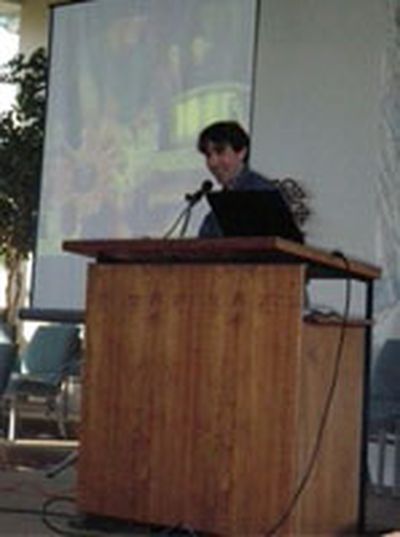
To help provide motivation and perspective, the SRHD invited three speakers to weigh in on the discussion. Jeremy Smith, author of “Growing a Garden City,” inspired the audience with stories of the most vulnerable individuals in Missoula contributing to the local food movement, and in doing so, helping themselves and others in ways that went far beyond physical nutrition.
Smith shared the story of a 16-year-old female drug addict with a shaved head who was living on the streets of Seattle. She was on her way to juvenile detention, along with approximately 500,000 other youth in our country who enter the system each year. But instead, this girl chose to enter a farm/work therapy program. In doing so, she helped herself rebuild, and helped create a program that delivered the food she was growing to people without access to farmers’ markets - low-income seniors, developmentally disabled adults, and military veterans.
“I got choked up the first time I saw this in action,” Smith told the audience, “the most vulnerable members of our community, caring best for one another - the low income seniors provide the at-risk teens with work experience and a sense of purpose, and the teens in turn offer companionship, hope for the future, and convenient, affordable, local food.”
As for the troubled 16-year-old? Her hair grew back, and she is now a sophomore in college, studying to be a therapist.
Smith left the audience with an encouraging message: “Growing food, the most ancient of occupations, can solve the most modern social problems, from poverty and addiction, to the sense of disconnection that is so destructive a part of everyday life. Based on this core principal, everyone is necessary and everyone belongs. Together, good food, a good life and the community of a garden city is available to all.”
Dr. Viki Sonntag, activist and economist, shared her research findings that indicate that by spending locally, we can make a huge impact on the size of our community’s economy. She cited the explosion of Portland’s food carts as one example – for a relatively small amount of money, an individual can start a business, make a living, and bring healthy, affordable food to diverse neighborhoods.
Dr. Dave Johnson, president and founder of Vivacity, a company that helps employers support healthier employees, showed the audience charts and graphs depicting the clear link between healthier communities and lower health care costs.
The evening ended with a Q & A session and a call for continued participation. SRHD and the Food Access Coalition strongly encourage people to continue the discussion that began last night, and to become actively involved in creating a sustainable, cooperative, local food system for Spokane. For more information, contact the Food Access Coalition.