
Festival highlights organic beer, sustainable living
Portland event grows over time but reduces waste
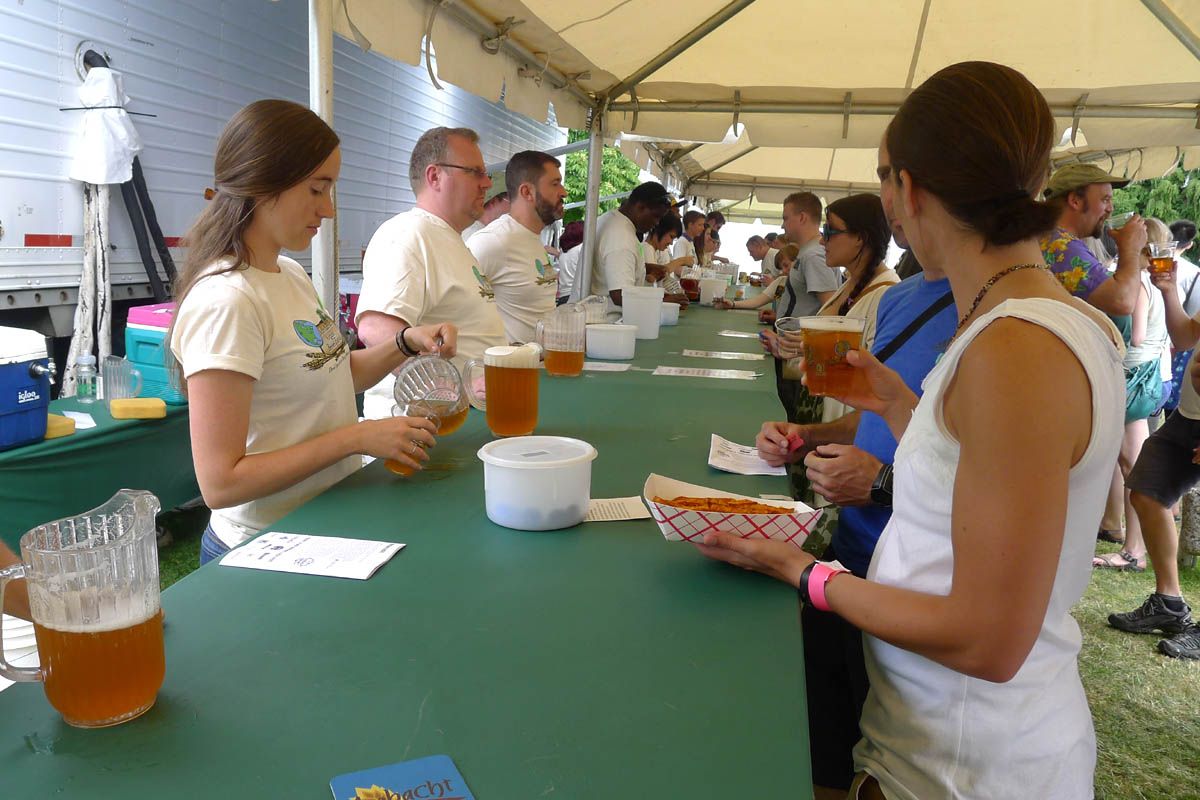
Sometimes an event’s motto tells you all you need to know: “Drink organic, save the planet one beer at a time.”
The North American Organic Brewers Festival is a melding of great organic beer and sustainable living principles. This year’s event, held June 24-26, featured more than 50 organic beers and attracted some 20,000 people to Portland’s Overlook Park.
Anyone who has witnessed the amount of waste produced by an event like this understands its downside. Mountains of plastic cups and food-related waste are unfortunate byproducts of such events. But that’s not the case with the NAOBF, which produces almost no trash while promoting sustainable living.
Longtime Portland brewer Craig Nicholls founded the NAOBF in 2003. Nicholls started creating beers with organic ingredients in the mid-90s, initially as part of an effort to keep Portland on the cutting edge of the craft beer movement. His idea would eventually become much more than that.
“My original idea was to persuade the breweries in town to produce at least one organic beer and dedicate a tap to it at all times,” Nicholls said. “At the time, I had worked in brewing for a number of years and I thought we were becoming predictable and boring. Everyone was producing a set list of beers. We needed a new approach and the organic angle seemed like a smart way to go.”
The organic beer concept grew out of Nicholls’ own commitment to and interest in sustainable living. He believes education and exposure leads to awareness, which can produce passion and eventually action that makes the planet a better place.
He discovered via extensive research that beer had historically been produced using a variety of locally grown, organic ingredients. A bit of experimentation sold him on the idea that sustainability and great beer were a perfect match.
“The NAOBF was probably more about promoting organic beer in the beginning,” Nicholls recalls. “But it quickly became a forum to promote sustainable practices and the beers that support them. We push the sustainability angle to the extent that I think we will add that to the event title, probably next year, when it may well become the North American Organic Brewers and Sustainable Living Festival.”
A few significant festival facts:
• The event is located on Portland’s MAX line and near high bicycle traffic routes. Attendees receive discounts on their tasting mug by showing they rode a bike or took public transit to the festival.
• Attendees sample beer from reusable and compostable cornstarch cups produced in a zero-waste, solar-powered facility. There are no lids, straws or plastic.
• All of the beers in the festival are certified organic. The ingredient that gives brewers the most trouble is hops, because hops are extremely difficult to grow without pesticides and other chemicals. Organically grown hops may one day satisfy the demand, but that day is not yet here.
• Food vendors use compostable plates and utensils, and also must show proof that the items they sell are made from organic ingredients.
• Onsite recycling stations are supervised by recycling czars, who ensure discarded items are placed in the appropriate bins.
• Festival volunteers wear organic cotton and hemp t-shirts.
• All event signage is recyclable.
Reducing the amount of waste is clearly a major objective of the festival. The collection of the compostable tasting glasses is a great example. Instead of having attendees toss used cups in a bin as they leave, Nicholls uses up a bin with cup-size tubes that let discarded cups stack perfectly, thus maximizing the number of cups per bin.
“Expanding our oversight and creativity helped us reduce the amount of trash from last year’s NAOBF to about 400 pounds,” Nicholls, said. “I expect us to get down to 200 pounds or less this year and to zero pounds next year. Getting to that number means we have to set strict rules for event vendors and make it easy for festival attendees to put items in the appropriate bin.”
The example set by the NAOBF has helped push other festivals in Portland to reduce the amount of waste they generate. Even the granddaddy of them all, the Oregon Brewers Festival, which attracts 80,000 beer fans to Waterfront Park in late July, is taking a hint.
“The OBF is the festival everyone wants to be,” said Nicholls, “and my festival is designed after what they do. But they historically produce a lot of trash and I know it doesn’t have to be like that.”
Working with OBF founder and organizer, Art Larrance, Nicholls has promoted the idea that going green is good for the environment and business.
“I’ve talked to Art about making doing several things that are green and will actually save him money,” said Nicholls. “For example, they are considering a switch to a compostable cup like the one we use at the NAOBF. They will also improve their on-site recycling efforts.”
Because he pioneered the idea of running large events with sustainable principles in mind, Nicholls receives regular requests for advice on how to do things the green way.
“I get emails from around the world,” he said. “People have heard about what we’re doing and want information on how to run a sustainable event. I’m happy to offer my advice. The NAOBF is one of the first events of its kind and it’s attracted some good attention. I’m proud of that.”