
Soldier’s mom says Afghan war changed her son

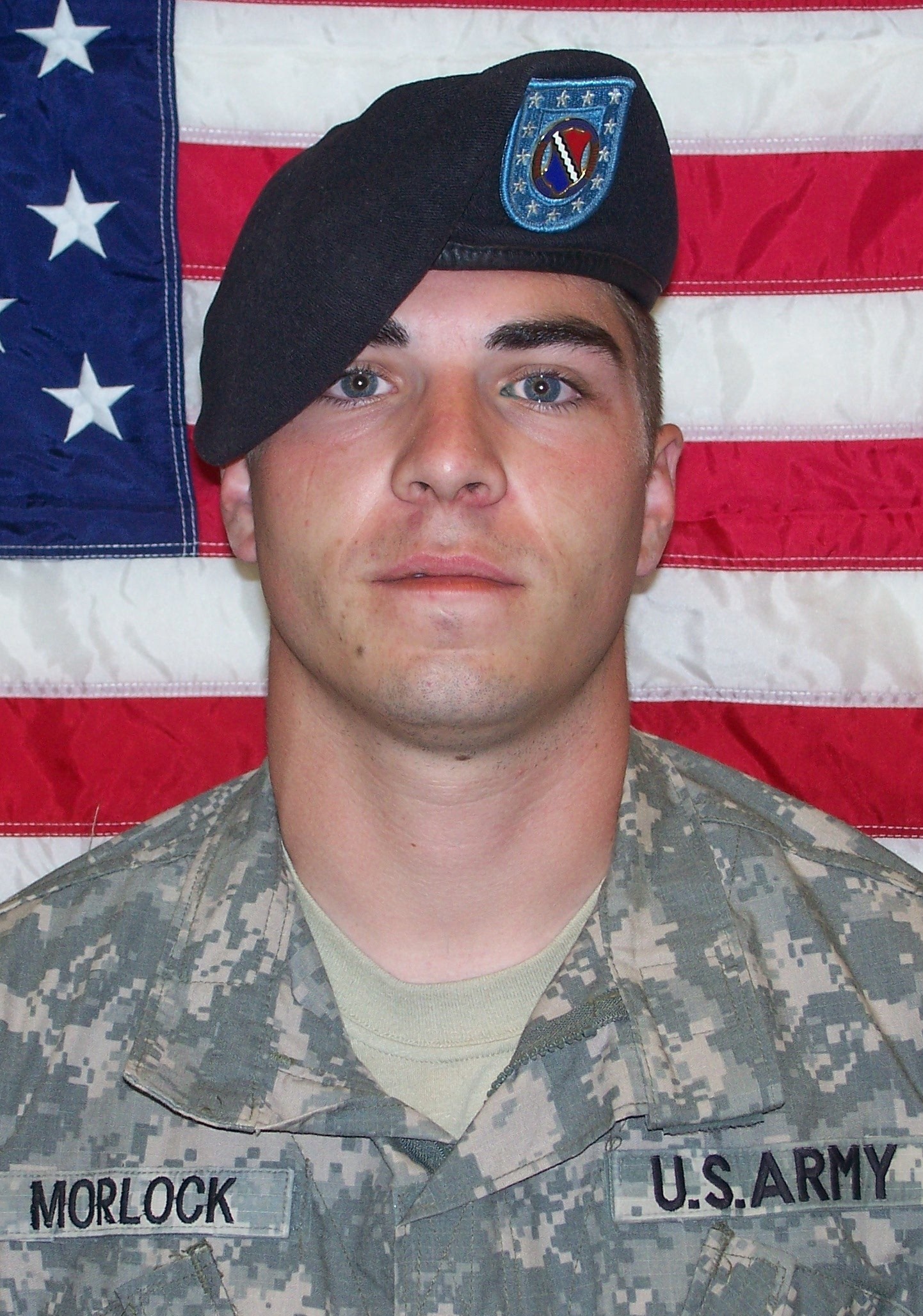
WASILLA, Alaska – When Spc. Jeremy Morlock returned home last spring for a respite from the war in Afghanistan, he lacked the brash confidence that characterized his playing days as a high school hockey star. He was jumpy, constantly looking over his shoulder and terrified of returning to his platoon fighting in the southern province of Kandahar.
When his stay in Alaska ended, he could not bring himself to depart. He went AWOL for several more weeks to spend time with his family and girlfriend. Finally, he rejoined his unit.
“He thought he was going to be killed. He literally believed he would not come home. He told us that almost every day,” said Audrey Morlock, the soldier’s mother.
Morlock survived his tour of duty. But not as a free man.
Held in solitary confinement at Joint Base Lewis-McChord in Washington state, Morlock is one of five soldiers from his platoon in 5th (Stryker) Brigade, 2nd Infantry Division accused of participating in the murders of three unarmed Afghans in January, February and May of 2010.
Morlock’s court-martial trial is scheduled to begin today, with the defendant expected to agree to a plea deal that would result in a prison term of up to 24 years with a possibility of parole earlier.
His agreement to testify in future trials will likely make him the star witness against the other charged soldiers – Staff Sgt. Calvin Gibbs, Pfc. Andrew Holmes, Spc. Michael Wagnon and Spc. Adam Winfield.
In a plea document obtained by the Seattle Times, Morlock portrays Gibbs as a key figure in the murder plots. Gibbs talked about unlawful killings in Iraq and then noted how easy it would be to stage similar killings in Afghanistan.
In the plea document, Morlock also makes a previously undisclosed allegation that a sixth soldier was involved in one of the plots.
In pretrial hearings, attorneys for the other accused soldiers have challenged Morlock’s version of events, saying that he has made substantial errors in his recounting.
Morlock, 23, has gained considerable notoriety through a videotaped interview with investigators, which was leaked to the media, that details the killings. Morlock also is one of two soldiers who posed kneeling next to the body of a slain Afghan.
Morlock’s brigade arrived in southern Afghanistan in the summer of 2009 at the onset of a major push by U.S. forces to gain control over rural areas that were Taliban strongholds. Morlock was quickly initiated into the war.
“I have been here barely for two months, and I don’t think that I will ever be able to talk about some of the things that have happened,” Morlock wrote to his mother.
By late fall, Gibbs was outlining what he referred to as “scenarios,” in which platoon members could kill unarmed Afghans and drop grenades and other “props” by the bodies to make them appear to be legitimate battlefield casualties, according to Morlock’s plea agreement documents.