
Illuminating your search for the right bulb
Consumers can be confused about incandescents, LEDs, CFLs
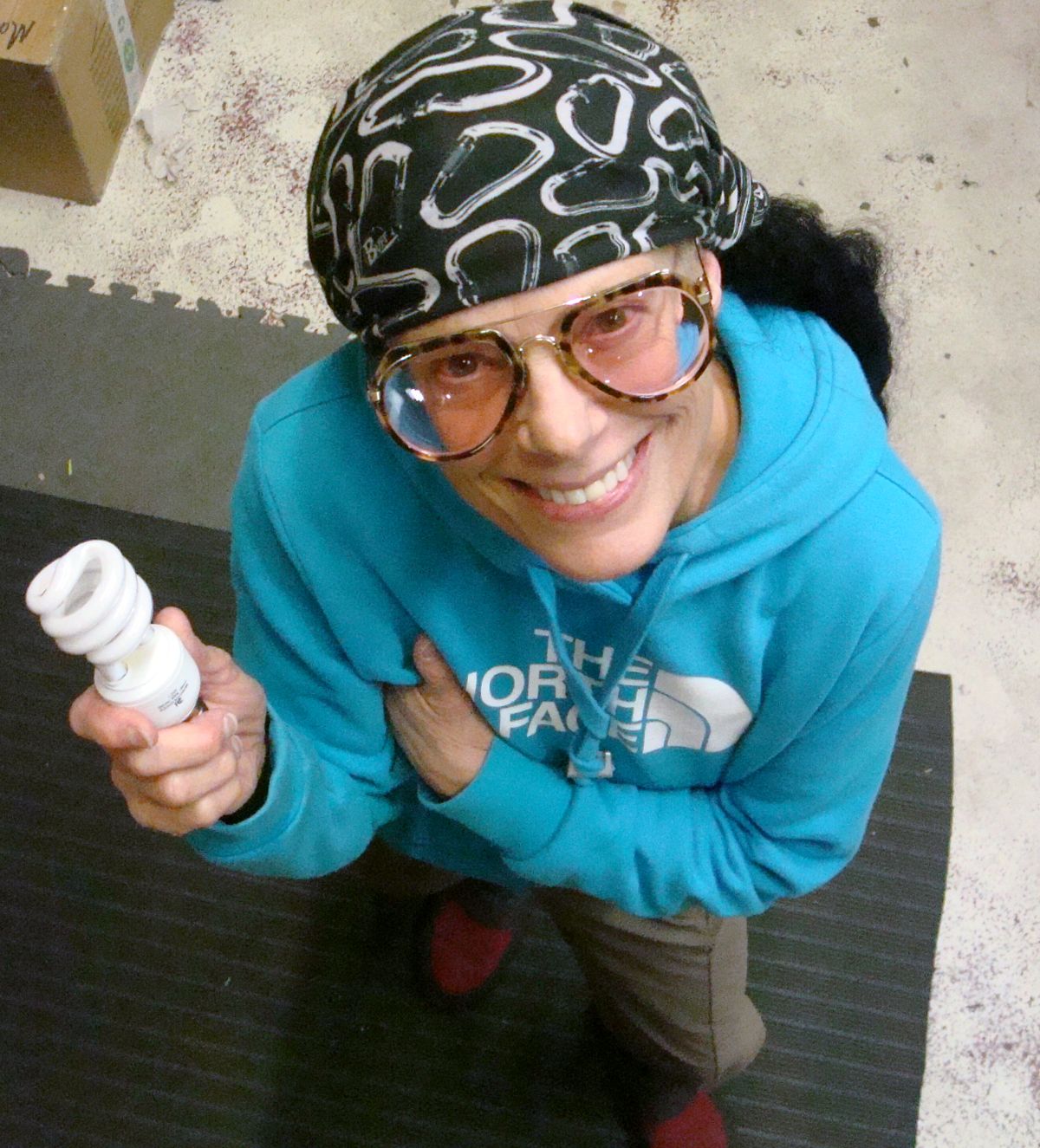
The old joke asking how many members of a certain occupation or demographic group (usually blondes or lawyers) it takes to screw in a light bulb may lose some laughs when someone tries to make an educated, responsible decision about bulbs.
The choice between an incandescent, CFL (compact fluorescent) or LED (light-emitting diode) bulb requires a measure of cost, efficiency, longevity, light quality, and potential impacts to the environment and human health.
Help has arrived.
Incandescent “Heat” Bulbs
Incandescent bulbs make light by heating a metal filament wire to a high temperature until it glows.
“An incandescent bulb is not a light bulb, it’s a heat lamp which gives light,” says Ravi Bahal, president and CEO of Visual Dimensions, an international LED lighting company that, as of about a year ago, took up shop in Spokane.
“It is 90 percent heat and 10 percent light, so only 10 percent efficient.”
According to Bahal, many cooking ovens use incandescent because of the heat they produce, and buildings with this old technology are unnecessarily taxing their HVAC systems by raising the indoor temperature by 6-10 degrees, from lighting alone.
In 2007, Congress passed an energy bill to phase out inefficient incandescent, starting in 2012. In response, some people have reported hoarding bulbs because they prefer their warm, steady glow to the slightly bluish, flickery light of CFLs.
The Push for CFLs
The federal government and many utilities, including Avista, are pushing a transition to CFLs, which can last up to 10 times longer than incandescents and produce 55 percent heat and 45 percent light, a significant improvement.
CFLs run about $3 per bulb, compared with less than $1 for incandescent), but according to the U.S. Energy Star Program, pay for themselves within about 6 months, due to energy savings.
To help promote the transition, Avista is sending a free Lighting Efficiency Kit with eight CFL bulbs to all electric customers. So far, approximately140,000 homes in Washington and Idaho have received them, and Avista states everyone should receive them by December. The utility company says once bulbs are installed, residential customers can expect to save up to $93 over the bulb’s life.
Bahal, instead, asked the mail carrier to return his. He believes the mercury found in each CFL bulb poses an unnecessary danger to human health and the environment.
In large quantities, mercury can lead to inflammation of the lungs, kidney damage, gastroenteritis, restlessness and shaking. Swallowing large amounts can be fatal.
Avista states that each CFL bulb contains approximately 4 mg of mercury – about 1/5 of the amount contained in an average watch battery.
The EPA warns consumers that if they accidentally break a CFL bulb to immediately evacuate the area, air out the room for at least 5-10 minutes by opening a window or door, shut off central forced air heating/air-conditioning, and place all bulb debris and cleanup materials outdoors in a protected area until it can be properly disposed of.
According to the Scientific Committee on Health and Environmental Risks - an independent committee that advises the European Commission on consumer safety, public health and the environment - when a CFL bulb breaks, the level of mercury vapor in the air can briefly be relatively high. The vapor rapidly turns to liquid droplets that can stick to surfaces or dust for some time, and could be dangerous if inhaled or swallowed.
But according to a 2010 SHER committee opinion, broken CFL bulbs are “very unlikely to pose health risks to people.” It determined that “compact fluorescent lamps offer a net environmental benefit compared to the other light bulbs considered, even when mercury content is taken into account.”
The Environmental Protection Agency concurs: “The total amount of mercury that could be released into the environment through breakage and improper disposal is small compared to the amount of mercury that doesn’t get released into the environment because Americans are choosing energy-efficient CFLs, reducing demand for electricity….CFLs reduce demand for power, which in turn reduces amount of coal burned.”
What about LEDs?
Bahal advocates a practical, third alternative: LED, which have a long lifespan and contain fewer materials like mercury, lead or arsenic.
“We have what we have and we must make the most of it. For too long we have plundered the planet, and if we continue going the way we’re going, what are we going to leave for our children and grandchildren?”
It is this resolve that drove Bahal to form Visual Dimensions in 1995, and to continually educate businesses and individuals about LEDs.
Bahal invites potential customers to contact him anytime.
“If you call me at 3 a.m. and say, ‘Ravi, I want you to review a project,’ I’ll be there.”
Bahal claims his bulbs provide 97 percent light and 7 percent heat, last 7-25 years depending on usage, fit into existing fixtures, and contain no mercury or other hazards like lead or arsenic. Each bulb costs $15 to $75, and Ravi tells customers who install his product to expect to save up to 95 percent on energy costs.
He said one homeowner asked him to swap out every bulb, and ended up with a dining room chandelier with five 60-watt bulbs.
“I did his entire house - and it looks like Vegas when you drive by – for 230 watts,” he said.
Bahal clarifies that not all LED products are identical. Visual Dimensions products are made in Korea and he said they contain the purest LED chips; other manufacturers use less pure chips, which he said can decrease efficiency, longevity and light quality.
Bahal says he is eager to teach consumers about lighting options without necessarily pushing sales of his own product, but doesn’t mind hoping that Visual Dimensions will gain more market share.