
Picking the right tree for a Green Christmas
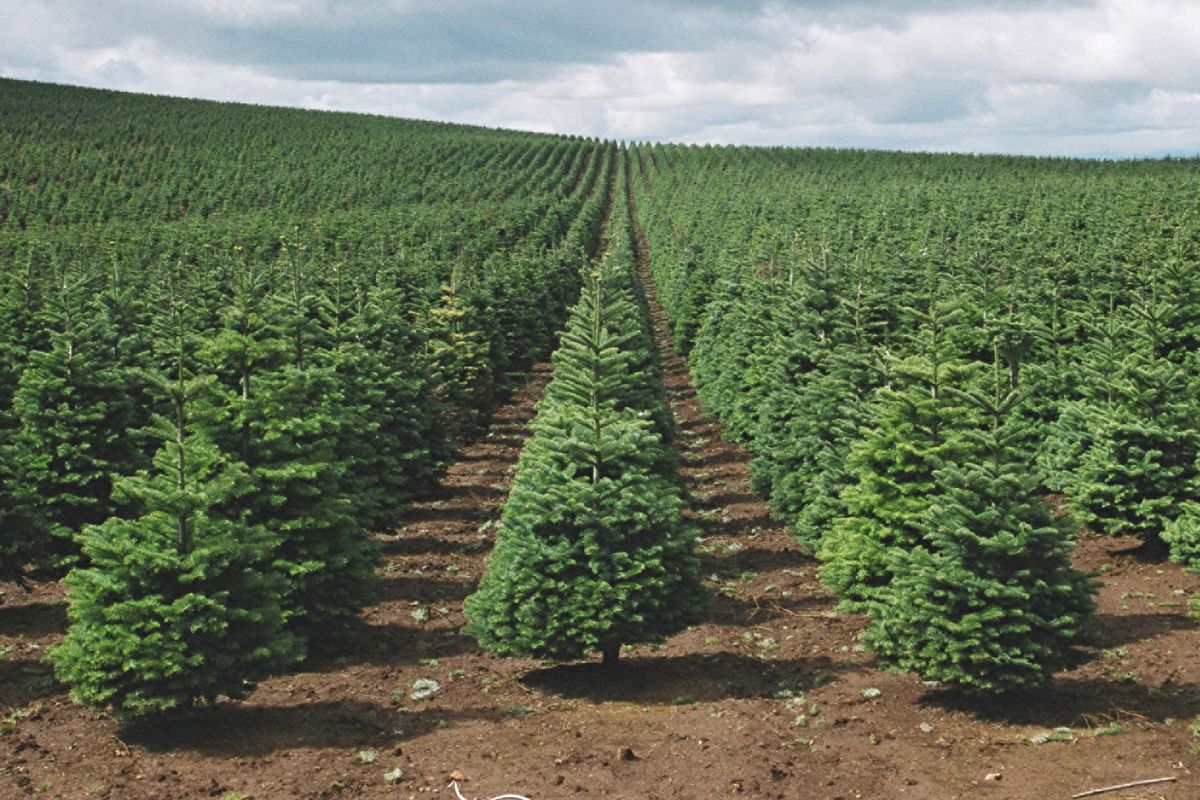
The holiday season brings with it the inevitable choice between an artificial tree and a green tree. Fake trees have gotten more attractive in recent years. “Should I go fake or green?” It is not a decision to be taken lightly.
Let’s start with a few Christmas tree basics, courtesy of the National Christmas Tree Association, based in Chesterfield, Missouri:
• The retail value of the fresh tree market in 2010 was $976 million.
• Artificial trees accounted for another $530 million, despite that fact that real trees outsell fake ones by a 3-to-1 margin.
• The largest share of fresh trees, 76 percent, are purchased from pre-cut lots at places like WalMart, Home Depot and on lots sponsored by non-profits. The remaining 24 percent are acquired on U-cut lots or cut in forests.
• The percentage of trees purchased at U-cut farms increased from 29 percent in 2006 to 33 percent in 2010. During that same period, sales at retail lots declined from 25 percent to 13 percent.
• Although people often think fake trees are gaining in popularity, their yearly sales stabilized around 8-9 million between 2004 and 2010, after peaking at 17.4 million in 2007. They appear to be getting less popular.
• The assumption that real trees have lost their grip on the market is also false. Sales reached 27 million trees in 2010, down slightly from 28.2 million in 2008 and 2009, but in line with the 27.1 million sold in 2004.
For those considering artificial trees, the primary benefit is that they can be used many times. That’s it. Fake trees are typically produced in Chinese factories under less-than-ideal working conditions. They are made from petroleum-based materials that endanger worker health and pollute areas around plants via the emission of known carcinogens.
While in use, artificial trees are more dangerous than people generally think. The additives used in construction (lead is a biggie) may become airborne and cause respiratory issues. The idea that artificial trees can’t catch on fire is a myth. When they do burn, they can be deadly. Disposal is also an issue.
“The smoke released when an artificial tree burns is hot and very toxic” said Mike Jones, Sales Director at Yule Tree Farms in Aurora, Ore. “On the environmental side, artificial trees release toxic chemicals and take hundreds of years to decompose when they are finally discarded and wind up in landfills.”
Most environmentalists agree real trees are a better choice. Real trees reduce carbon emissions by producing oxygen and absorbing carbon dioxide while growing. When the holiday season is over, trees can be recycled in the form of mulch used in gardens, landscapes and agriculture.
The primary hesitation with real trees is that most of today’s holiday trees are farmed. That’s right. A typical holiday tree is not cut down in a forest these days. Today’s typical holiday tree is grown on a tree farm much like any other crop.
What’s wrong with that? The problem is that farmed trees often require repeated applications of pesticides and fertilizers during their growth cycle. These materials are an environmental hazard in growing areas and can lead to health problems for humans and animals in homes.
How much pesticide residue is left after trees are harvested and brought to market is a matter of some dispute, as are the risks associated with it. Some of the chemicals break down with exposure to rain and UV light. But no one knows for sure how much residue remains or how dangerous it is.
The majority of fresh trees found on lots at big retailers and non-profits come from plantations in states ideally suited for conifer growth. Oregon is the No. 1 producer in the country, followed by North Carolina. Other big producing states include Michigan, Washington, Wisconsin, New York and Virginia. Most of these trees are sprayed with pesticides.
As with the growing popularity of locally grown, organically produced food, naturally-grown holiday trees have been gaining popularity in recent years. Not only are they fresh and healthy in the home, they cause less environmental damage because they don’t not rely on synthetic fertilizer and pesticides while growing.
The USDA launched a Certified Naturally Grown tree program in 2002. In Oregon, the Coalition of Environmentally Conscious Growers was founded in 2007. Its goal is to certify the environmental practices of Christmas tree farms via a rigorous auditing process. Roughly 25 percent of the state’s growers participate in that program and the number is growing.
Yule Tree Farms is part of the coalition. It uses a process called Integrated Pest Management, which leans on natural and mechanical methods to control pests and competing weeds. These methods minimize the amounts of chemicals used in the production process.
“We’ve learned that the health of the trees reduces pesticide use, as healthy trees are much less prone to infestation,” Jones said. “We use planting methods and grass barriers to control erosion; we protect ditches, streams and our neighbors with natural barriers and buffer zones from any chemicals we do use.”
Yule Tree Farms, as well as other members of the Coalition, ship trees around the country and a around the world, Jones says. Nonetheless, that doesn’t mean they are easy to find.
People who want a tree grown with environmental values, regardless of where they reside, need to hunt for them. Purchasing a tree on a lot typically means buying blind. However, trees grown with environmental values will almost always have a tag verifying compliance with the USDA standard or other certification, such as the Coalition in Oregon.
Organically grown trees found on U-cut lots probably won’t be tagged, but the lot will almost certainly advertise compliance with some standard. Those shopping for trees free of chemical residue and grown with sustainable values in mind will want to closely evaluate claims closely.