
Small local farmers taking up global fight against genetically-altered seeds
David-Goliath analogy can describe lopsided opponents
This is the second part of continuing coverage of columns on the topic of genetic manipulation, agro-giants, and the right to farming. For part 1, read here.
This fight is not a clash of the Titans. In the genetically-engineered/genetically-modified arena, we’re talking David – informed public and activists, small holders of farms, scientists not in corporations’ pockets, and peasant farmers – vs. Goliath – Monsanto, biotech companies, groups like the Gates Foundation, our own government, and scientists in the pockets of corporations.
The debate is real and has been grabbing recent headlines, including:
• Biosafety at Risk with Genetically Engineered Crops
• Future of Africa at Risk with Bioteach Companies’ Land Grabs
• Five Bowls of Rice a Day and Still No Nutrition for GE Golden Rice
• GE-resistant Superweeds Suck Soil Nutrition and Kill Food Crops
• Maize Varieties Dating Back 9,000 Years Better than GE Corn
• The Green Revolution Has Failed
• More than 160,000 People Displaced After Biotech Land Steal
• 9 Million Mouths to Feed by 2050 – AgroEcological Farming Wins Hands Down
And closer to home –
• Eastern WA Farmers Concerned about GE/GMO Pollen and Seed Trespass
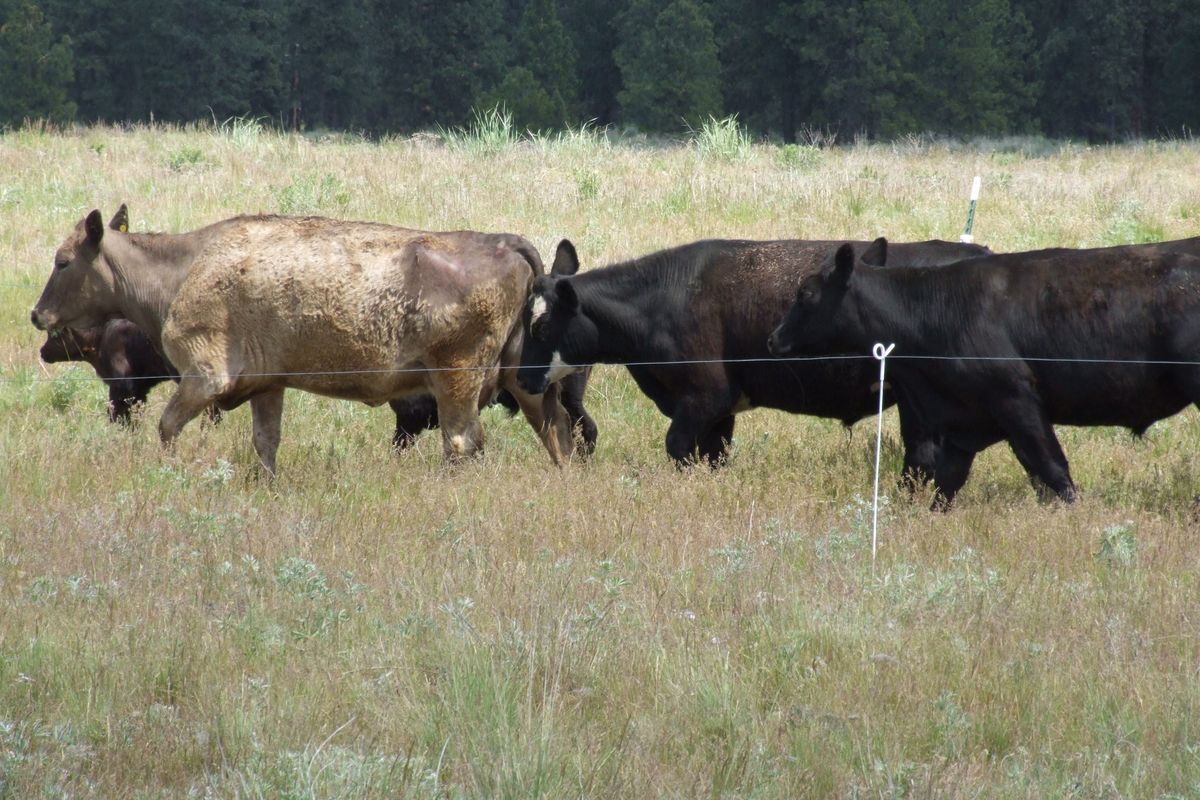
That particular piece introduced readers to Maurice Robinette, a fourth-generation rancher and farmer from the Lazy R Ranch near Cheney. His daughter, Beth, a recent graduate of Evergreen State College, is helping dad add value to organic and holistically raised beef. We’ve featured him here at DTE – here.
As a disclaimer, I served with Maurice for a time as a Leadership Team board member of Washington Sustainable Food and Farming Network (www.wsffn.org) helping frame and guide issues affecting Washington farmers and food producers from a sustainability point of view.
The issues of genetically modified alfalfa came up often in over-a-beer conversations. Maurice is up on the global scene and knows we live in a world where corn, soy, canola, cotton, sugar beets and commodities from these fuel-intensive and pesticide- and fertilizer-demanding crops like sugar (high fructose corn syrup), oils for biofuel and grains for cattle, chicken, pig and fish “farming” have taken over the marketplace.
Organic, sustainable and agroecological farmers and supporters – the Davids in the biblical archetype – are fighting back. It’s a tough row to hoe, though.
“I’m worried that genetic trespass may result in a loss of my beef customers precisely because there are no GMOs in it,” stated Robinette in a recent Crosscut article.
He’s got the credentials – a master’s in rural sociology, certification in holistic cattle ranching, work with Washington State University and others on model programs to revive grassland and protect wild native species of plant, bird, mammal and insect and soil bacteria.
Robinette is not alone; there is a cadre of farmers, ranchers, producers and human food eaters who want a future for their children’s children in a world of climate disruption and energy shortages.
The goal of organic and sustainable farmers like Robinette and others is to not only make a living but to preserve seeds and heritage livestock and fishstocks so genetic pools stay vibrant and natural.
But the Goliaths, like Monsanto, supported by Bill and Melinda Gates and hedge fund impresarios and multinational outfits, have muscle behind them — $1,500 an hour lawyers, Supreme Court justices, politicians, and lobbying firms that make the propaganda machine of despots like Hitler look small-time.
(Check out past DTE articles here, here and here about the Gates Foundation’s genetically engineered food program, Alliance for a Green Revolution in Africa and the Seattle-based group, AGRA Watch.)
The Bill and Melinda Gates Foundation is pushing the Frankenstein science and monopoly tactics employed by banks, governments, and corporations which are basically taking other countries’ land and resources to orchestrate a huge global experiment on seeds and crops, using lab techniques that have been proven to not enhance food security.
The basic result is a wedge into regional solutions to food and hunger, both arising in the past four decades in this so-called Green Revolution and into the future when climate change and peak oil and shortages in phosphorus and challenges of continued soil degradation and crop nutritional-drain will be the issues of the day.
“The green revolution is at the very center of the problems of agriculture in the 20th and 21st centuries. In brief, the green revolution was the export of the American-style industrial and mechanized model of agriculture to the third world… The green revolution was one of the single largest non-military undertakings of the twentieth century. In terms of massive use of human resources, first-rate scientific expertise and public funding, it was comparable to the Manhattan Project and the Apollo space program.”
“The green revolution failed. After decades of relentless work, world hunger has not been ameliorated. The world does not have less hungry people today, but more. Considering the vast human and financial resources that went into this endeavor, it is no exaggeration to state that the green revolution was one of the biggest failures of the twentieth century.
In spite of its painfully obvious failure, the green revolution’s protagonists and spokespeople stubbornly refer to it as a success, that it was one of the most noble and successful humanitarian undertakings of all time. In light of the persistence of this triumphalist discourse, one can also say that the green revolution was also one of the major deceptions of the last century.”
This long passage, necessary here, I believe, is from a rare individual in the media – Puerto Rican journalist Carmelo Ruiz-Marrero who directs the Puerto Rico Project on Biosafety. He is also a Research Associate of the Institute for Social Ecology, a fellow of the Environmental Leadership Program, and a senior fellow of the Society of Environmental Journalists.