
Portland bringing back bike sharing
Updated plan faces final approval in December
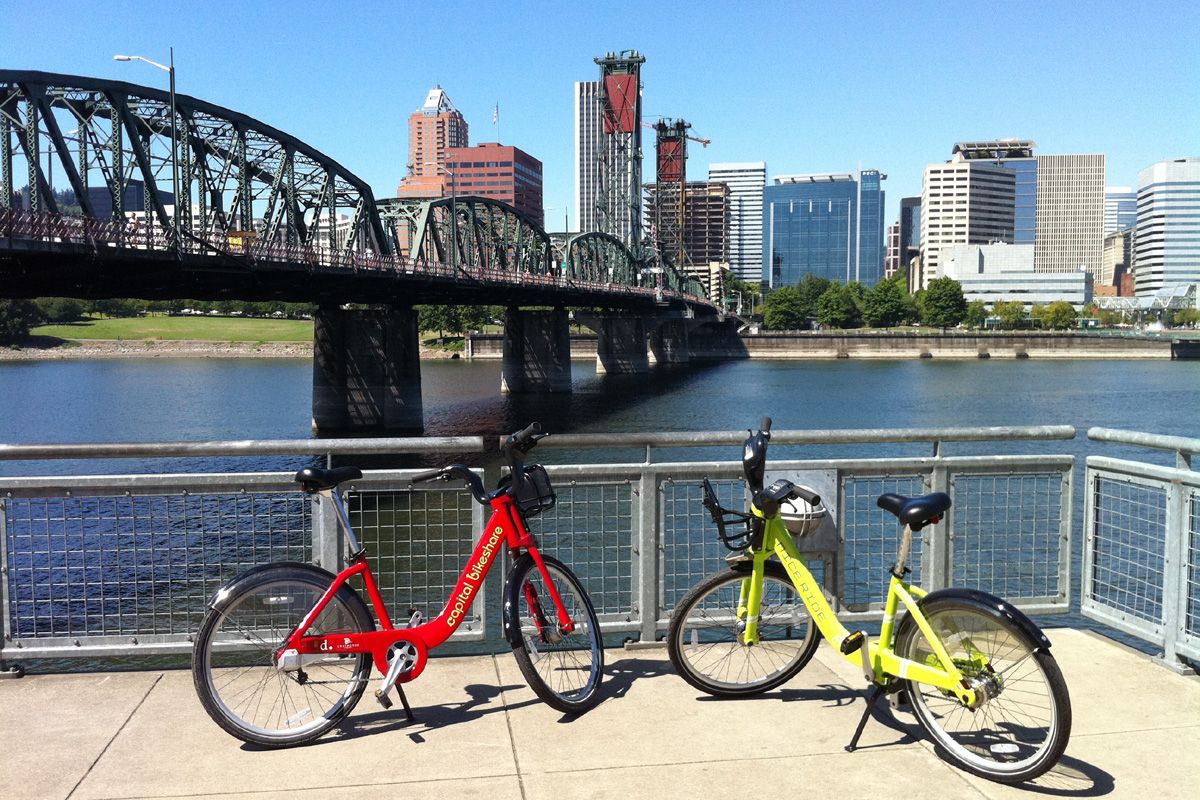
After years of study and consideration, Portland recently approved the idea of spending $4 million to establish a community bike sharing program. If approved by Metro regional government later this year, bike sharing would launch in 2013.
The program was one of four transportation initiatives suggested by the City Council as a means of tapping $9 million in flexible federal funding. The four suggested plans target cycling and pedestrian improvements around the city. About half of the bike sharing cost is expected to come from private sources.
“We’ve been pursuing this program for several years,” said Dan Bower, project manager with the Portland Transportation Bureau. “Bike sharing systems work well in a number of US cities and we believe the idea will work here.”
City planners believe the program they have in mind appeals to business people, commuters, students, tourists and others.
“The proposed bike sharing program is a structured, high-tech system similar to what is being used successfully in other cities,” Bower said. “It is a big step forward from the old Yellow Bikes concept.”
The Yellow Bikes program of 1994-1996 was an unstructured, no-tech program in which bikes were placed throughout the city for use by anyone with no restrictions or cost. Bikes were either stolen or wound up being vandalized or destroyed.
The new program would require registered users to check out a bike by credit card, membership card, or cell phone from automated kiosks situated around the city. They then use the bike to complete their commute, run errands, etc. The bike is then returned to a kiosk, but not necessarily the one it came from. Unlike car sharing, bike sharing systems allow for one-way trips and provide short-term membership options.
“Bike sharing is a great mobility tool,” Bower said. “There are more than 230 bike sharing programs worldwide and the number is growing.”
Urban planners view bike sharing as a concept that somehow defines a city as world class. Thousands of bike commuters use bike sharing systems in Montreal, Miami, Denver, Minneapolis and other cities. Washington State University also was the first university to create a bike sharing program.
Portland’s regional public transit agency, TriMet, which operates the MAX (light rail) system, as well as buses and street cars, would likely benefit from bike sharing. The program would give transit users added flexibility for making the final connection home or to work. Bike sharing has the added benefit of reducing the growing number of bikes on trains and buses.
“As we’ve seen in other cities, public bike share could provide TriMet customers with another option to get to and from MAX stations and bus stops,” said Colin Maher, bike and pedestrian access planner at TriMet. “Potentially, this means less time waiting and a shorter walk without needing to bring your own bike on the train or bus.”
The city hopes to obtain private matching funds to supplement the federal money. Regence BlueCross Blueshield, which sponsors the bike sharing system in Minneapolis, has expressed an interest in Portland’s program.
Bower said bike sharing is a good fit for the Regence mission and he is fairly confident the company will step in and provide as much as half of the needed funding. Kaiser Permanente has also expressed an interest in and support for the bike sharing concept.
As with other cities, Portland’s bike sharing network (initially 75 stations and 750 bikes) will be run by a contracted vendor. Alta Bicycle Share, a Portland-based company that operates bike sharing systems in Washington D.C., Boston and Melbourne, Australia, is a possible choice.
Capital Bike Share, a subsidiary of Alta Bicycle Share, is expanding its bike sharing network in Washington D.C. after less than a year in operation. The system there has grown to more than 13,000 users and 1,100 bikes. Capital is preparing to add 32 new locations this fall.
Despite the apparent benefits, support for Portland’s bike sharing program is not universal. There is opposition from several quarters, largely focused on needed improvements in sidewalks, pedestrian crossings and bike lanes in neglected areas of the city.
Commissioner Amanda Fritz wants the city to get moving on sidewalk and other pedestrian-related projects in southwest Portland. She also wonders why, if bike sharing is such a great idea, private companies aren’t initiating systems on their own. Fritz voted against the bike sharing recommendation.
Some Southwest Portland residents agree with Fritz and claim the current plan ignores many long-needed sidewalk and crossing improvements in that area.
Marianne Fitzgerald, president of Southwest Neighborhoods, told the council it shouldn’t spend millions on bike sharing when there are parts of the area where a lack of sidewalks and crossings impede access to public transit.
Even avid cyclists have chimed in against the planned bike sharing plan, expressing a need for improved bike lanes and safer crossings before a bike sharing network that would result in additional bike traffic.
Portland Mayor Sam Adams’ office has been supportive of the bike sharing program, which it sees as part of a comprehensive transportation plan.
“We believe bike sharing and improvements in bike and pedestrian safety are not mutually exclusive, but complementary,” said Dan Anderson, interim communications director at the mayor’s office.
A final decision on the allocation of federal funding will be made by Metro in December, when it votes on the bike sharing plan, as well as recommended improvements in sidewalks, bike lanes and pedestrian crossings.