
For Greeks, bailout fate worse than debt
Can country and its culture emerge from reform intact?
LONDON – The massive new bailout approved for Greece early Tuesday should rescue it from immediate bankruptcy. But can the country survive being saved?
No matter how you cut it – and plenty is being cut – Greece is still only at the beginning of a long-term retrenchment and reform program that will inflict yet more pain on its people, who already have seen their living standards plummet.
The question, analysts say, is whether the country can come out the other side of the process with its democracy, economy and society all intact.
From almost unprecedented infringements on national sovereignty to a radical overhaul of the economy, the $170 billion bailout program approved by European finance ministers – its second for Greece in less than two years – will leave little of Greek life untouched. Yet even backers of the plan can’t guarantee that it’ll succeed in the face of fearsome market, political and popular pressures.
“There are downside risks – this is clear. It’s not an easy program,” said Christine Lagarde, the head of the International Monetary Fund. She was one of the bleary-eyed negotiators who emerged from 13 hours of talks in Brussels, Belgium, to announce the new rescue package.
In exchange for the billions of dollars in emergency loans, plus the forgiveness of more than $100 billion in debt owed to private bondholders, Greece has committed itself to years of brutal public spending cuts that will slash wages and pensions and push tens of thousands of people out of work.
It also has pledged to such measures as privatizing state assets, liberalizing the labor market and modernizing its tax-collection system, all of which would, in theory at least, make Greece more productive and competitive.
But the package put together by Greece’s Eurozone partners, led by fiscal disciplinarian Germany, remains focused on ever-greater austerity as a means of reducing government debt and deficit, with virtually nothing to encourage economic growth in the near term.
Many Greek citizens and analysts feel the country is being condemned to a slow and excruciating death as the economy keeps shrinking and the mountain of debt becomes correspondingly larger. Greece is being subjected to shock therapy, they say, only without the therapy.
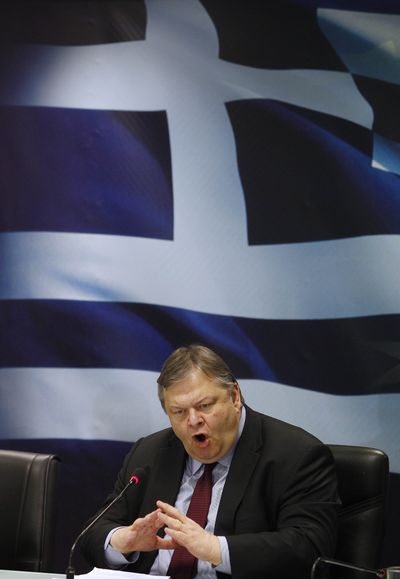
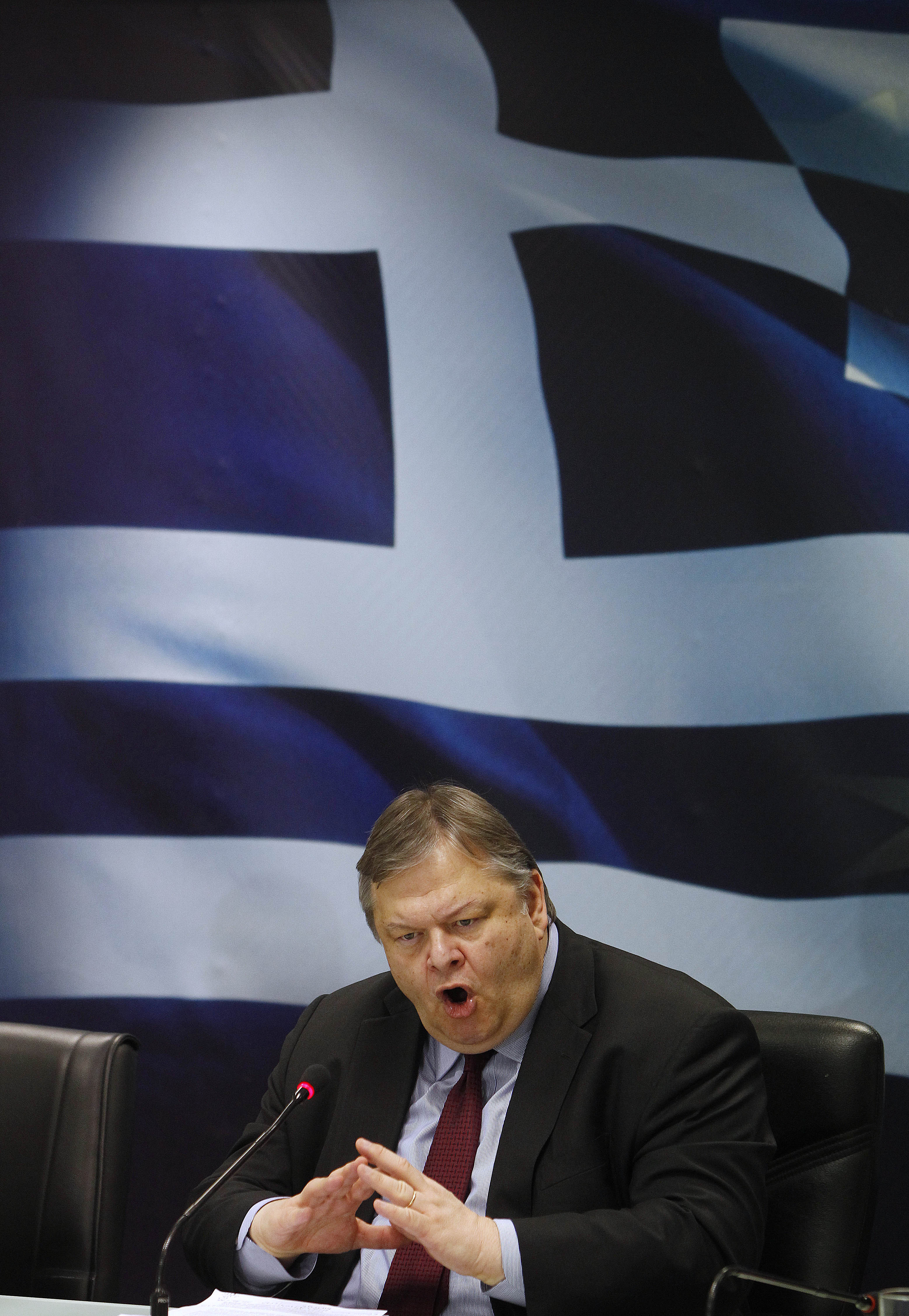
That helps explain why there was little jubilation in Athens over the eleventh-hour deal to save it from default, even though the pugnacious finance minister, Evangelos Venizelos, tried to sell it to his fellow Greeks as a “new opportunity” to reinvent their country.
European finance officials had scrambled Monday night to find other ways to bring down Greece’s debt load, eventually strong-arming private creditors to take a 53.5 percent loss on their holdings of Greek debt and persuading the European Central Bank to forgo profits on its purchases of Greek bonds.
A leaked confidential report exposed Eurozone officials’ misgivings over their recipe of piled-on austerity; it warned that public anger and bureaucratic resistance could hamper the Greek government from following through on its pledges to reform, as already happened with the first bailout Greece received in May 2010. Few analysts believe Athens is in much better position today.
To prevent a repeat, European officials have imposed controls on Greece that critics warn stifle democracy in the nation whose ancestors invented it.
Officials from the EU, the IMF and the European Central Bank are now permanently to be stationed in Athens to track its progress on reform and ensure that it prioritizes repaying debt over virtually all other expenditures.
The heads of Greece’s main political parties were forced by fellow Eurozone leaders to guarantee, in writing, that they would abide by the bailout package’s terms no matter the outcome of a general election expected in April. Even more extraordinary, the German finance minister suggested that Greece postpone the election.
Simon Tilford, chief economist at the Center for European Reform in London, warned that the disdain some countries are showing for Greece’s democratic and civil institutions is dangerous.
“We’re at a very critical juncture not just for the Eurozone but for the EU. … People are suggesting that Greece is a uniquely ungovernable country, uniquely untrustworthy,” Tilford said. “Whichever government is in charge of Greece over the next year or 18 months will be put in an impossible position.”