
Has rough season for college hoops taken luster off March?
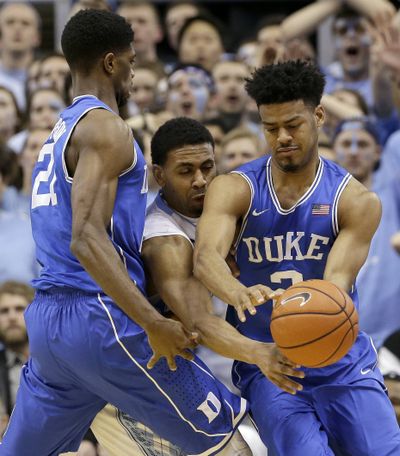
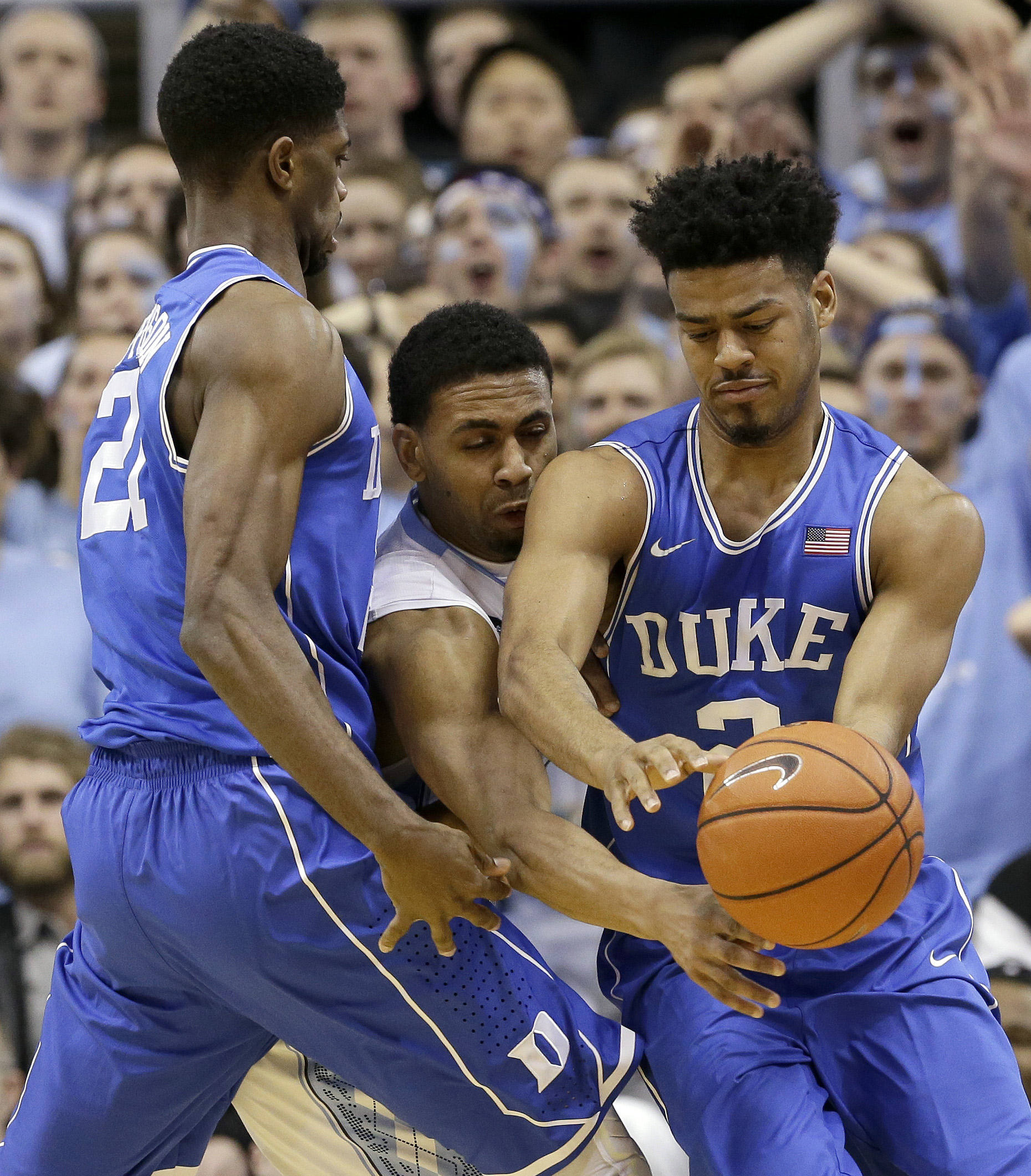
KANSAS CITY, Mo. – On a cold night on Tobacco Road, North Carolina and Duke went back and forth in an overtime thriller. It was gripping, edge-of-your seat stuff. Tense down to the final second.
In short, it looked nothing like the Blue Devils’ game against Florida State nine days earlier, when the teams missed five 3-pointers, two free throws and committed five turnovers all before the first media timeout. The Seminoles led at that point 2-0.
“Never seen a media timeout with a score quite like this,” tweeted ESPN analyst Jay Bilas, an outspoken critic of the current state of college hoops. “Maybe in baseball.”
Bilas is not alone in his concern for the current state of college hoops. Scoring is at a near-record low this season. Fouls are soaring. Attendance has dropped precipitously in many places, and television ratings are struggling to reach last year’s levels.
“When you think about it, it’s a spectator sport,” said Utah State athletic director Scott Barnes, the chairman of the NCAA tournament selection committee. “So how folks view it – I guess, watchability – would be a big piece of it. Are they entertained?”
The fact that the upcoming NCAA tournament, long-considered recession proof, has struggled to build buzz is perhaps the most damning evidence of the dire state of the game.
Attendance in men’s Division I basketball has fallen seven straight seasons, from an average of 5,327 in 2006-07 to 4,817 last year.
Not that life has been easy on broadcasters, either. ESPN and CBS, two networks with a long college basketball tradition, have both weathered a decline in ratings this season.
The NCAA tried to intervene last year, instituting a series of rules reforms designed to boost scoring and free up offenses to do what they do best. They have failed to stick.
In interviews conducted by the Associated Press with more than a dozen coaches, players and administrators, a few ideas continually came up, dealing either with the layout of the court of the mechanics of the game.
On the court, several officials suggested widening the lane, which would curtail some of the physical play in the post while allowing more freedom of movement. They also suggested extending the 3-point line to the NBA arc, which would revive the midrange jumper.
In terms of game play, the NCAA is already experimenting with shortening the shot clock to speed up offense (see: this season’s NIT). Some officials, including Big 12 Commissioner Bob Bowlsby, also want to reduce the number of available timeouts, forcing teams to play through adversity.
“It’s a difficult task to get rule changes through coaching groups because people who are influential in those coaching groups like rules the way they are,” said Bowlsby, a longtime athletic director and former chairman of the NCAA tournament selection committee.
“Somehow,” Bowlsby said, “we need to think about the good of the game.”