
Wolski steps into soloist role for symphony
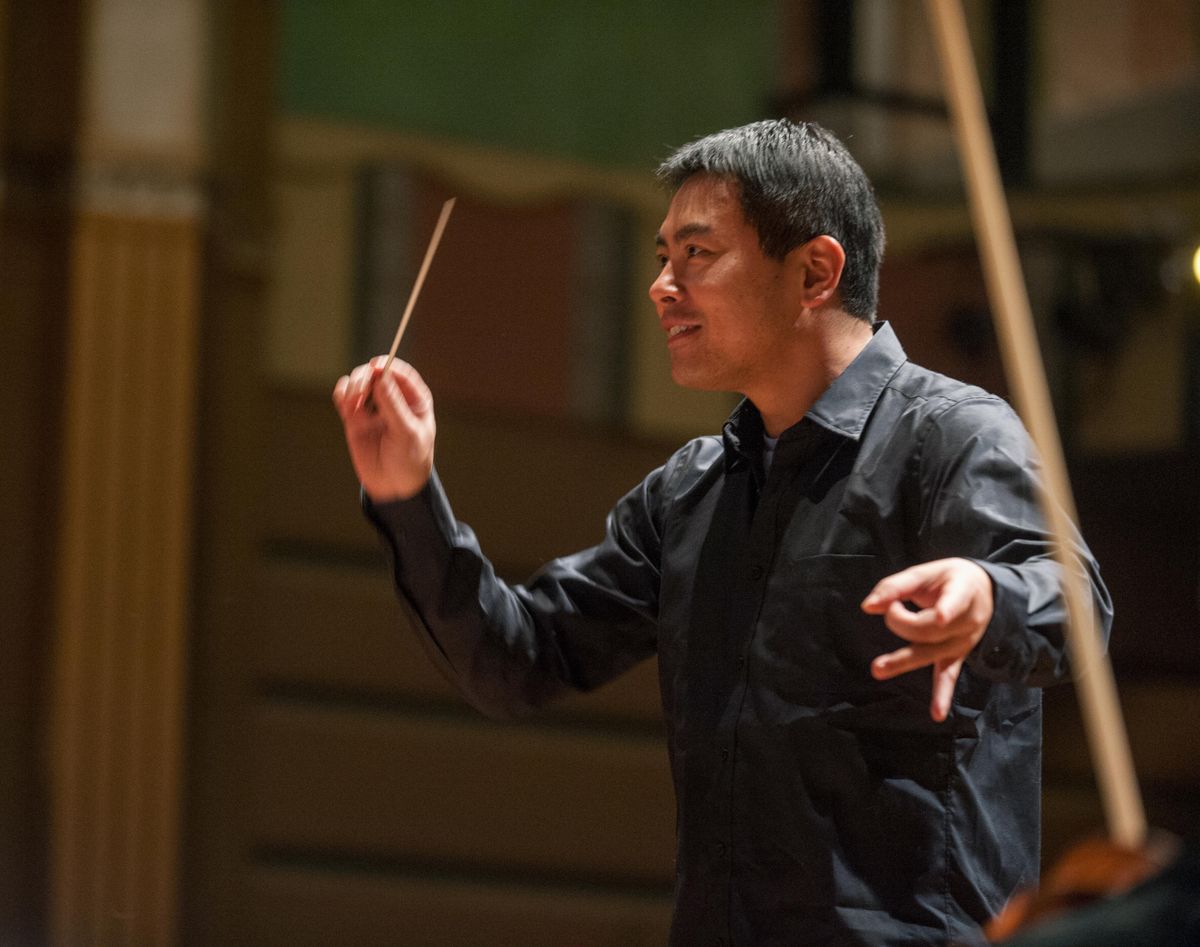
Most of the time, the Spokane Symphony’s Classics concerts showcase a traveling soloist. But this weekend’s Classics performances will feature a solo by one of the symphony’s own: concertmaster and principal violinist Mateusz Wolski.
“This is the one time during the season where I actually get to sit out and not play the rest of the program,” Wolski said.
That program, titled “Scottish Fantasies,” features three pieces that were written by non-Scots yet cull from the rich musical traditions of Scotland: “Orkney Wedding and Sunrise” is by English composer Peter Maxwell Davies; German composer Felix Mendelssohn penned Symphony No. 4, known colloquially as “Scottish”; and German Max Bruch composed “Scottish Fantasy.” The concert will be conducted by Morihiko Nakahara.
Wolski will be soloing on the Bruch piece, which weaves snippets of Scottish folk songs into its four movements.
“I’ve been bugging (music director and conductor) Eckart (Preu) to put it on the program for the last few years,” Wolski said of the Bruch composition. “It’s one of those pieces on my bucket list, so I’m very excited to play it.
“It’s very splashy, it’s very romantic, it has very sentimental parts. You just go through a tremendous range of emotion. … There’s a drama to the whole thing. It’s very approachable as well because it just sounds so familiar.”
Wolski compares Bruch’s writing style to the stylings of a jazz vocalist: There’s plenty of virtuosity, but it’s also open to individual interpretation.
“You put on a recording of it, and everybody has a slightly different take on it,” Wolski said. “In essence, the piece works on its own as a work of art, but it also gives the performer quite a bit of leeway to make it their own.”
Bruch reportedly wrote “Scottish Fantasy” with renowned Spanish violinist Pablo de Sarasate in mind to perform it, and it serves as a showcase for a virtuoso violinist while relying heavily on an accompanying harpist.
“When you have good musicians in the orchestra, you try to find ways to collaborate a little closer with them,” Wolski said, singling out symphony harpist Earecka Tregenza as someone he’d long wanted to work with. “(Tregenza) is a fantastic player, and the piece heavily relies on the use of the harp. You have that confidence that this piece is the one we should be playing.”
This weekend’s program will no doubt inspire mental images of rolling countrysides, lochs and Scottish sunrises, but Wolski hopes the audience will be taken on an emotional journey as well.
“Ultimately, you want there to be a transformation happening from the time they come into the concert hall and the time they leave,” he said. “My goal in life as a musician is to touch people. We say that music is food for the soul, so if I could be a master chef and create a meal that would be substantial and that people would love to come back for more, then I did my job as an artist.”