
Renfro murder case advances to district court
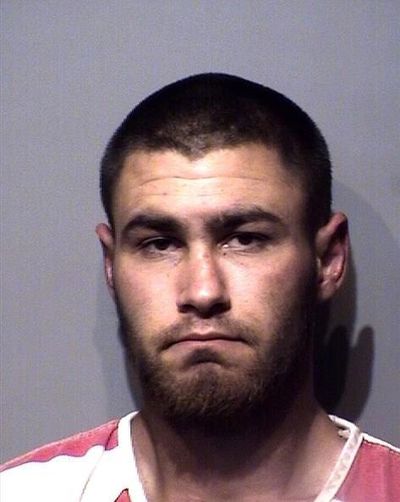
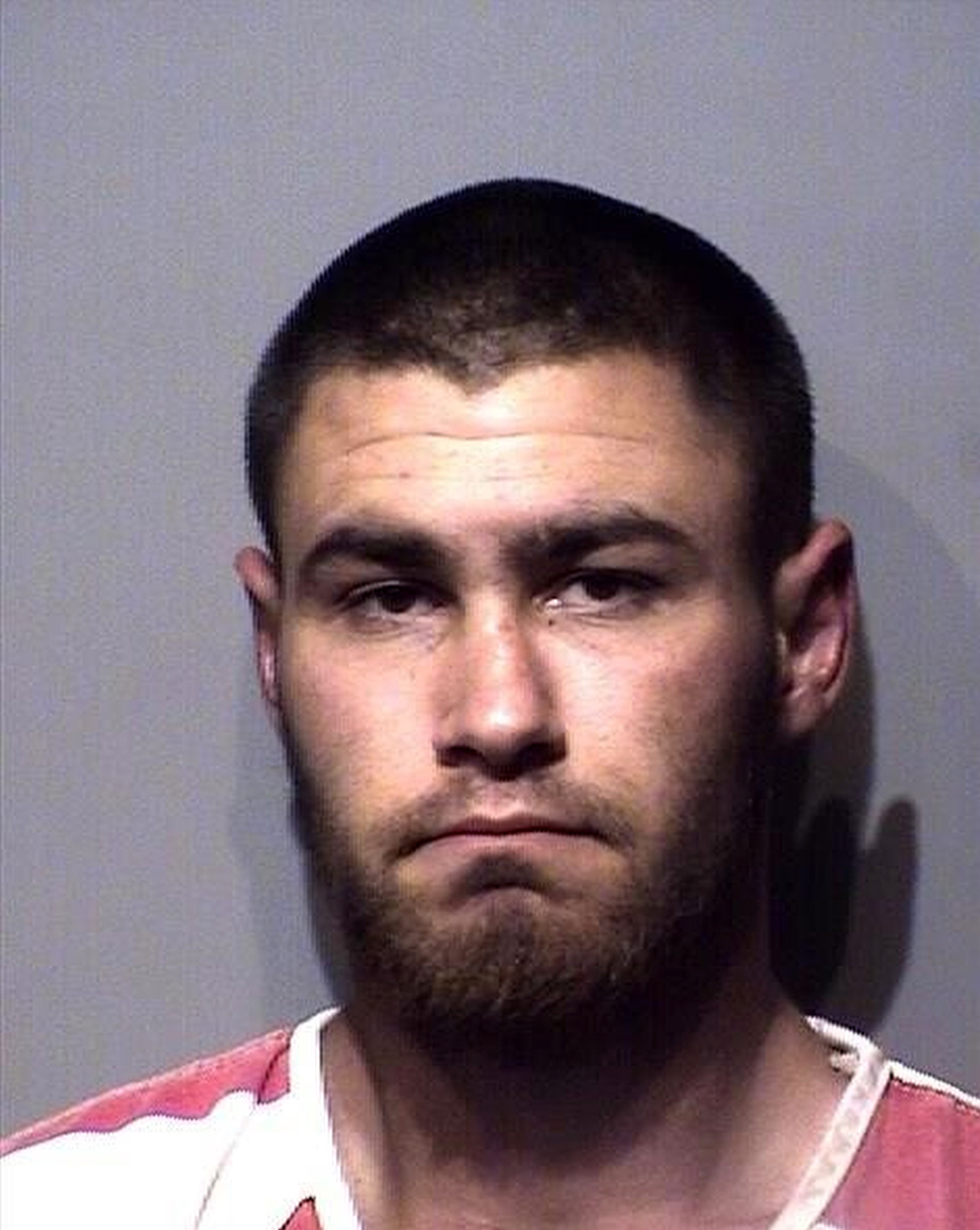
Jonathan Daniel Renfro will proceed to 1st District Court on a charge of first-degree murder in the May shooting death of Coeur d’Alene Police Sgt. Greg Moore.
First District Senior Magistrate Barry Watson decided this morning that Kootenai County prosecutors had presented sufficient evidence in a probable cause hearing to keep Renfro in custody and advance the case to district court on six felony charges, which also include grand theft, robbery, concealing evidence, removing a gun from a police officer and eluding police.
Renfro, 27, remains in jail on a $2 million bond. He could receive the death penalty if convicted on the murder charge. He has not entered a plea to any of the charges.
Renfro is accused of shooting Moore in the face early in the morning of May 5 in a northwest Coeur d’Alene residential neighborhood after the officer stopped to question Renfro and run his identification through police dispatch. Renfro, who was on felony parole at the time, allegedly was carrying a stolen Glock pistol in his jacket pocket and feared Moore would find the gun and arrest him, according to court testimony.
Watson said he viewed Moore’s body camera footage that showed the shooting and the minutes that preceded and followed it, and that he also watched a 2-hour interview of Renfro conducted by detectives after the defendant was found and arrested that morning in Post Falls. In the police interview, Renfro waived his Miranda rights, did not ask for an attorney and repeatedly admitted that he shot Moore, according to testimony in the two-day preliminary hearing held last week.
The judge said prosecutors had presented evidence that Renfro shot Moore as Moore was lawfully discharging his duties as a peace officer, and that Renfro knew he was dealing with a police officer.
Watson further said he was satisfied with the evidence that Renfro was in possession of a stolen Glock pistol when Moore stopped to talk with him; that Renfro did remove Moore’s Glock handgun as the officer lay wounded on the ground; that Renfro robbed Moore by taking the gun by force; that Renfro concealed the stolen Glock he had in his pocket during the police stop, by later tossing the gun into a field on the west end of Post Falls as he was fleeing police; and that Renfro did elude police by driving Moore’s police car at a high rate of speed while being chased by a Post Falls police officer.
In his closing arguments this morning, Kootenai County Deputy Prosecuting Attorney David Robins told Watson that the video recording from Moore’s body camera clearly shows the officer’s contact with Renfro and shows the defendant’s arm and the gun come up and fire at the officer.
“That evidence is compelling and powerful to establish it was the defendant who shot Sgt. Moore,” Robins said.
In addition to the physical evidence, Renfro made “a myriad of statements” in his police interview that prove he shot Moore, he said.
Reading excerpts from the transcript of the interview, Robins said Renfro admitted he was afraid Moore would find the gun in his pocket, and that Renfro alluded to his desire not to go back to prison on a parole violation for being a felon in possession of a gun.
“That’s his motive, your honor,” he said.
Robins added that Renfro lacked any justification or excuse for shooting Moore. The defendant told investigators Moore was “really nice and respectful” in the encounter, the prosecutor said. But when Moore spoke into his police radio and looked down at Renfro’s driver’s license, “that’s when I shot him,” Robins quoted from the interview transcript.
When one of the detectives asked Renfro if anyone else was involved in the shooting, Renfro replied, “Oh, no, I pulled the trigger. I’m the monster. It doesn’t matter if there was anyone there or not,” Robins read from the transcript.
Asked if he tried to give the wounded officer first aid, Renfro told the detectives, “I thought about it, and I thought he was already dead,” according to the transcript.
Kootenai County Public Defender John Adams argued the state fell short of its burden on all the charges.
Prosecutors did not present sufficient evidence that Moore was acting in the lawful discharge of his duties as an officer when he stopped to question Renfro and run a check on his driver’s license, Adams said. Therefore, the charges of first-degree murder and removing a gun from a police officer are not valid, he argued.
Adams questioned what justification Moore had in stopping and detaining Renfro, who he said was walking down the sidewalk at 1:30 a.m. dressed appropriately for the weather and time of day.
“He’s got to have something more than that,” Adams said of Moore’s reason for the stop. “In America you can walk down the street at 1:30 in the morning without being accosted by the police,” he said.
Adams also said prosecutors did not corroborate that Renfro’s gun was stolen, so the possession of stolen property charge doesn’t apply. He also contested the evidence that Renfro concealed that gun by tossing it away in a field near a Wal-Mart store.
“All he did was throw the gun out in a field,” Adams told the judge. “It wasn’t concealed.”
The robbery charge doesn’t apply, Adams continued, because there’s no proof that Renfro used force or a threat to remove the gun from Moore’s unresponsive body. “He was not cognizant of what was happening,” Adams said of Moore. “He didn’t resist.”
As for eluding police, Adams said prosecutors did not show substantial evidence that the fleeing suspect, driving Moore’s patrol car at 90 mph or more in a 45 mph zone, was likely to endanger people or property.