
Drowned migrant refugee toddler Aylan Kurdi becomes symbol of crisis
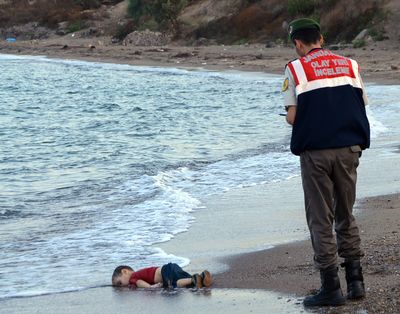
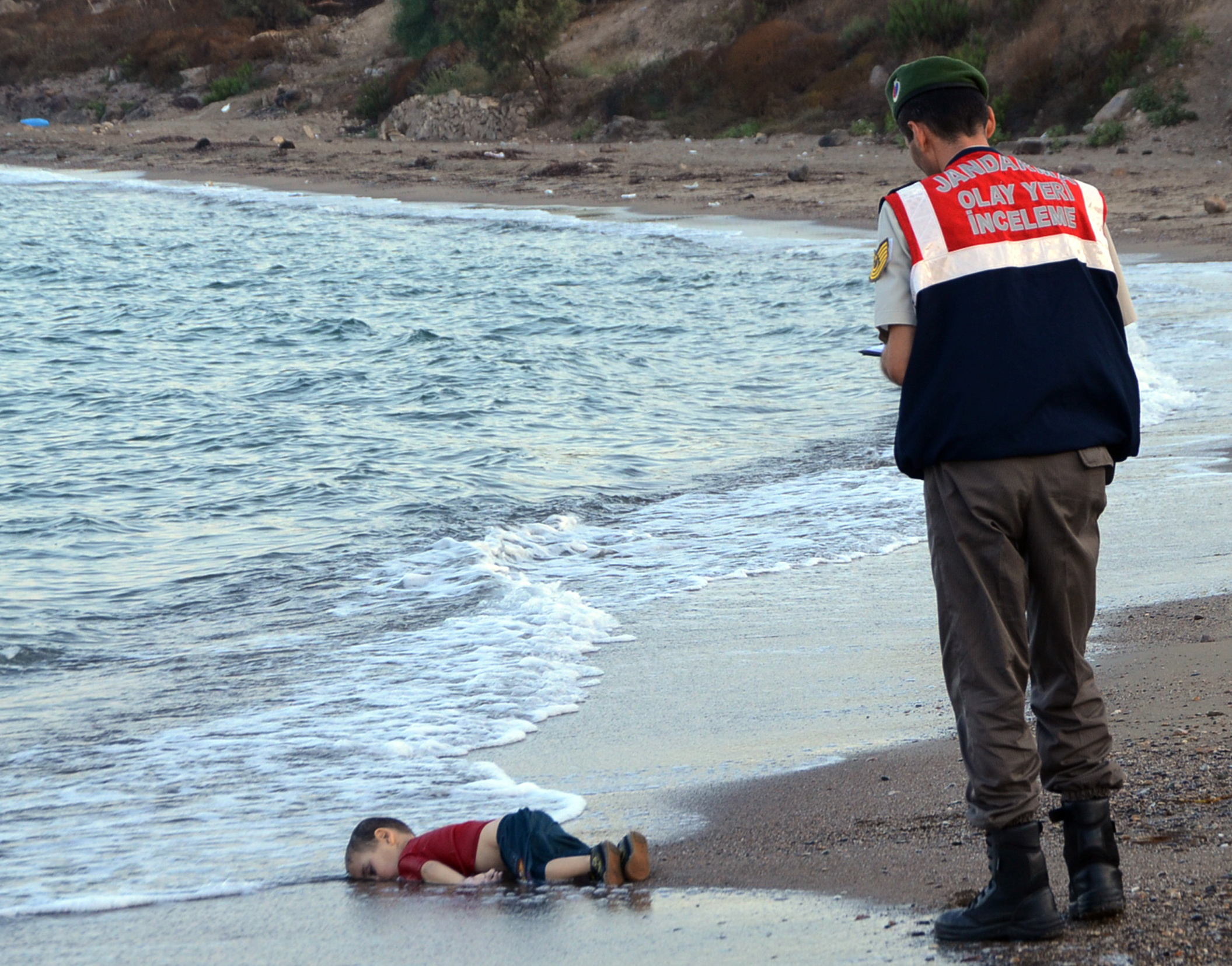
ISTANBUL – The little boy on the beach had a name, and it was Aylan.
Searing images of the Syrian toddler’s drowned body, washed ashore after the raft carrying his refugee family capsized off the Turkish coast, pricked consciences worldwide and galvanized passionate debate over the international response to the enormous tide of migrants arriving on Europe’s shores.
On Thursday, a day after photographs of the then-anonymous child lying dead in the surf went viral online – his small, pale face slightly turned to one side, his rump-up posture achingly familiar to the parents of any napping toddler – a fuller portrait emerged of a family rendered desperate by fighting in their hometown, Kobani.
The family was called Kurdi, and relatives said 3-year-old Aylan, sometimes called by the Kurdish variant Alan, drowned along with his 5-year-old brother, Galib, and their mother, Reyhana. The child’s father, Abdullah, survived to break the terrible news by phone to family members at home and abroad, plunging even their loss-racked hometown in northern Syria into mourning.
“People feel sorry and afraid,” said Selava Saleh, a Syrian Kurdish activist volunteering in the sprawling refugee camps outside the southeastern Turkish town of Suruc, home to thousands of refugees from Kobani. “Many of them have relatives who will go on those boats.”
The haunting episode put an unforgettably human face to the tragedies at sea that have killed more than 2,500 migrants and refugees this year, many of them Syrians fleeing a civil war that has raged since 2011. Tens of thousands more are on an arduous trek across Europe, making their way through fields and cities and across barbed-wire border fences to try to reach one of the wealthier northern nations such as Germany or Sweden.
Propelled by the grim and graphic images, the story of Aylan and his family was front-page news across Europe, provoking particular soul-searching in Britain, which has taken in only a fraction of the 800,000 migrants Germany expects to receive this year. The London-based Independent published the pictures, along with a strongly worded editorial headlined: “Somebody’s Child.”
“If these extraordinarily powerful images of a dead Syrian child washed up on a beach don’t change Europe’s attitude to refugees, what will?” it asked.
Abdullah Kurdi gave an anguished account of the aborted journey to Turkish journalists in Bodrum, the resort town where the bodies washed up. He said the boat filled with water soon after launching.
“We had no life vests,” the Dogan news agency quoted him as saying. “People panicked when water filled the boat and it sank. My children slipped from my grasp.”
He wants to bring his family home to Kobani for burial, he said.
Tima Kurdi, of Vancouver, B.C., who is Abdullah’s sister, initially told Canadian media that the family had embarked on the perilous boat journey only after its bid for legal entry to Canada was rejected. She later said, however, that no formal request for refugee status had been made on Abdullah Kurdi’s behalf, saying one was filed, and rejected, on another relative’s behalf.
Three years ago, the family had fled dangerous Kobani, the town along Syria’s border with Turkey that leaped to global prominence last year as an emblem of the menace posed by the Islamic State group. Kurdish defenders, aided by U.S.-led airstrikes, drove back the besieging militants in January, but Islamic State fighters later infiltrated the outskirts of town and killed scores of people in chilling house-to-house executions before again being repelled.
Aid workers, even those faced daily with harrowing scenes of hardship, groped for words to characterize Wednesday’s tragedy at sea, in which 12 people were thought to have drowned. Yet such sinkings have become commonplace; more than 150 people drowned off the coast of Libya last week.
“It is unacceptable that we have children dying like this in the 21st century,” said Lado Gvilava, the Turkey chief of mission for the International Organization for Migration. “It’s hard to see how this can be allowed to happen.”
Describing Aylan’s fatal journey, Turkey’s coast guard was quoted in Turkish media reports as saying two boats carrying a total of 23 people had set off separately early Wednesday from the Akyarlar area of the Bodrum peninsula, a prime launching point. Their destination, the Greek island of Kos, lay just 2.5 miles away.
But smugglers, avid for the $800 or more that each passenger pays for the short voyage, have been sending people to sea in watercraft more suited to a lakeside picnic. Turkey’s Cumhurriyet newspaper ran images of one of the boats the migrants were said to have traveled on: a tiny inflatable raft with small plastic oars.
The newspaper said it was believed that the raft had been manually inflated by someone blowing into it, like a backyard toy.
“These smugglers are getting more ruthless,” said the International Organization for Migration’s Gvilava, saying his organization had received reports of passengers being forced off the craft at the midway point, leaving them still far from shore.
Turkey’s Anatolia news agency said four people, one of them a Syrian, were arrested in connection with the fatal crossing, but were believed to be low-level intermediaries.
Turkish social media users were the first to sound the alarm over Wednesday’s disaster. After Dogan published pictures of a Turkish paramilitary policeman coming upon Aylan’s body and then gingerly carrying him away with latex-gloved hands, the Turkish-language hashtag #KiyiyaVuranInsanlik (“Humanity washes ashore”) became a world trending topic on Twitter.
The horrific nature of the images sparked debate about whether disseminating them on social media or in print was an affront to the dignity and privacy of those involved. Many of those who retweeted or posted the photos online said they had hesitated for those reasons and more, but were driven by an overriding sense of calamity unfolding before their eyes, albeit virtually.