
Pope Francis addresses U.S. Congress before New York visit
NEW YORK – Pope Francis plunged into the melting pot of New York after reminding the country of its immigrant origins in the first papal speech before Congress on Thursday. Over an intense 40 hours that started with an evening prayer service at St. Patrick’s Cathedral, where he gave a deeply meaningful thank you to America’s nuns, he will address world leaders at the United Nations, participate in an interfaith service at the Sept. 11 memorial museum at ground zero and celebrate Mass at Madison Square Garden.
The pope, who’s making his first trip to the United States, also planned to visit a school Friday and take a processional drive through Central Park.
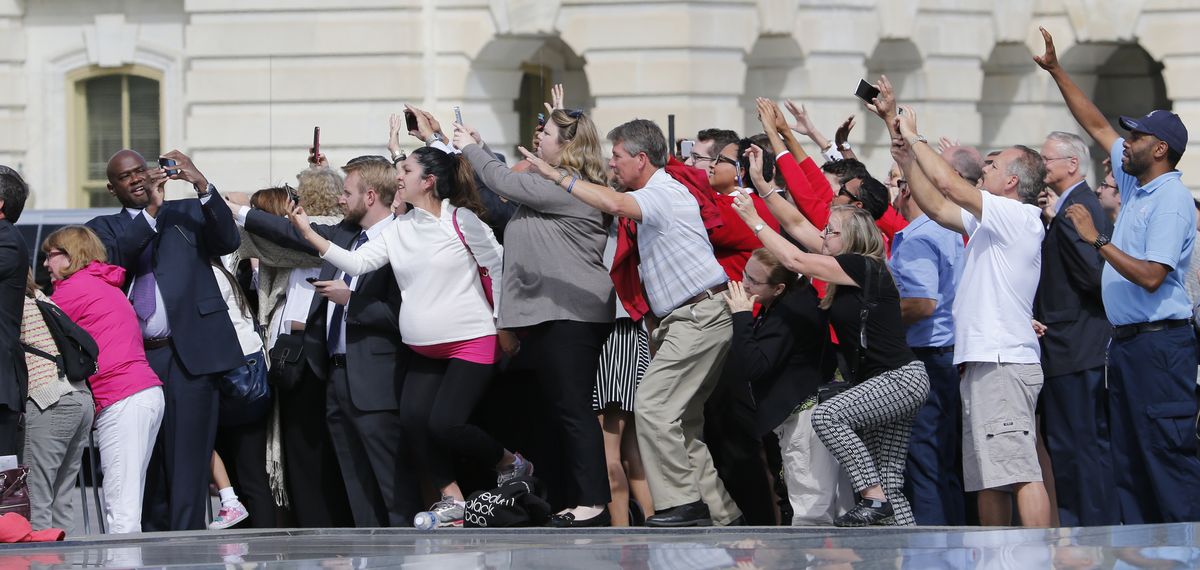
The popular pontiff received a raucous welcome on his first visit to New York. Thousands of people lined the streets leading to St. Patrick’s to greet him, cheering, waving flags and adoringly chanting his name as he gestured toward them from his popemobile. On the steps of the recently spruced up cathedral, dignitaries including Gov. Andrew Cuomo, Mayor Bill de Blasio and U.S. Sen. Charles Schumer welcomed him. Later, inside, nuns in the pews erupted in applause when he thanked them for their service.
The pope opened his visit to New York by expressing his solidarity with Muslims following a Mecca pilgrimage stampede in Saudi Arabia in which more than 700 people were killed. He offered a prayer for the victims from the St. Patrick’s altar.
“In this moment of prayer, I unite myself with you all in prayer to God, our father, the all-powerful and merciful,” he said.
In Washington earlier Thursday, the pope had waded into bitter disputes while speaking to Congress.
The remarkable sight of the pope speaking in the House chamber seemed to delight lawmakers of all persuasions, though he offered an agenda more to Democrats’ liking. Besides his focus on climate change and immigration, he denounced arms sales and seemed to allude approvingly to the Iran nuclear deal and recent actions by President Barack Obama’s administration to open relations with Cuba, done with his urging.
Republicans, too, heard something to like in his references to the sanctity of life and family relations, reminders that even the more open Catholic Church over which Francis presides still condemns abortion and gay marriage.
For all the spectacle, it seemed unlikely the pope’s visit would break congressional inertia on the issues dear to him.
The packed House chamber included Supreme Court justices, Cabinet officials and lawmakers of both major political parties, some of whom bowed their heads in deference as Francis walked down the center aisle to approach the dais where presidents deliver their State of the Union speeches.
Behind the pope sat Democratic Vice President Joe Biden and Republican House Speaker John Boehner, the first and second in line to the presidency, both Catholics.
Francis, in deliberate and accented English, noted many lawmakers descended from immigrants.
“Let us treat others with the same passion and compassion with which we want to be treated,” he said. “Let us seek for others the same possibilities which we seek for ourselves.”
His appeal comes amid the worst refugee crisis since World War II: Europe has been overwhelmed by hundreds of thousands of people fleeing war in Syria and Iraq, and there are widespread conflicts and poverty in Africa. In the U.S., tens of thousands of families and unaccompanied minors from Central America have surged across the southern U.S. border as violence has flared at home.
For now, Congress has deadlocked on immigration legislation, and the chances for progress have only grown more remote amid the hardline rhetoric of the U.S. presidential campaign. Republican front-runner Donald Trump, who watched the pope’s New York motorcade from the Trump Tower balcony, has painted Mexican immigrants as criminals and has said he would build a wall along the border and force Mexico to pay for it.
Francis has called for a more welcoming attitude toward migrants across the board and has backed that up with a modest welcome of his own: The Vatican recently took in two refugee families and has committed to care for them while they await their asylum applications.
On another contentious subject, he advocated abolition of the death penalty in the U.S., something that enjoys support from a number of lawmakers of both parties at the federal level.
In calling for action on the climate and to combat poverty, he took care to insist he was not anti-business, as some conservatives have suggested. He quoted a Catholic teaching document that calls business “a noble vocation, directed to producing wealth and improving the world.”