
Who needs bingo? N.C. retirees repair chairs at Aldersgate community
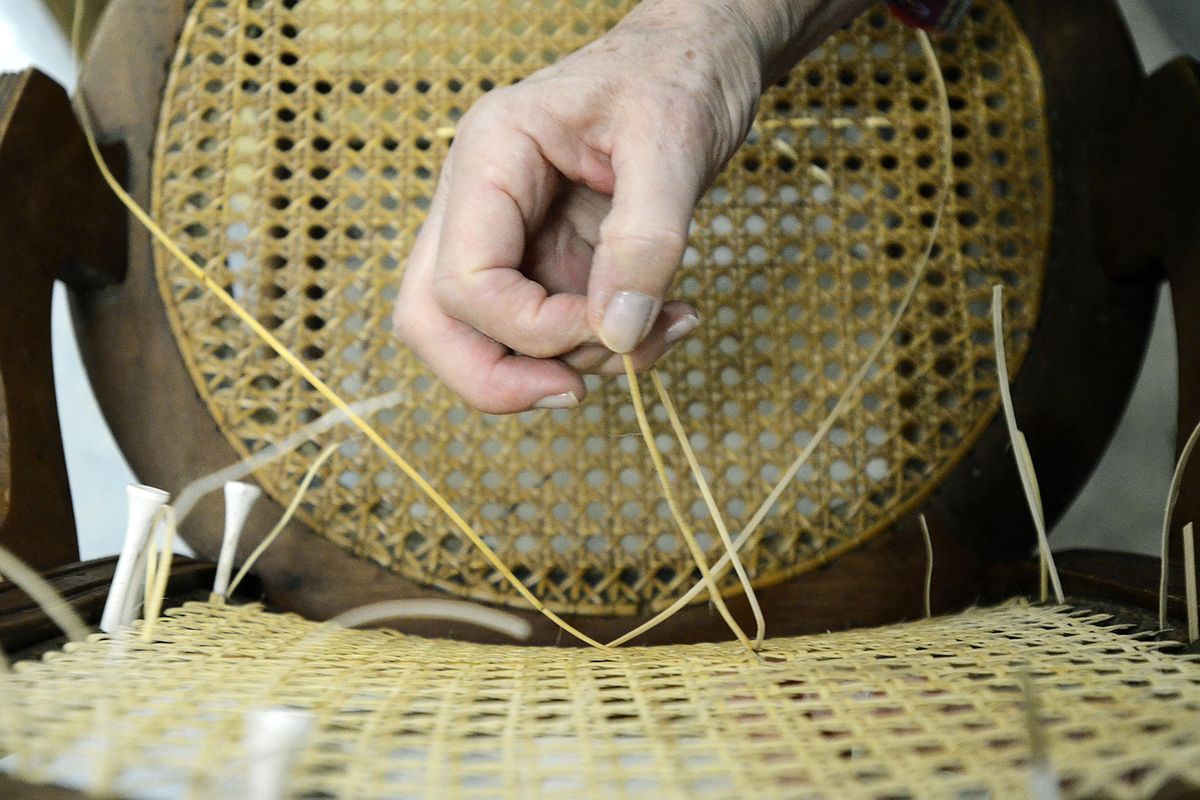
CHARLOTTE, N.C. – Dorothy Laye sits quietly as her hands precisely weave a pattern on an old cane chair. None of the people around her, or their chatter, pose a distraction.
Laye, 76, worked for 34 years as a math teacher in Charlotte-Mecklenburg Schools. Now retired, she spends some of her free time restoring old cane chairs.
Mending the cane chairs isn’t a second career. And although it could be called a hobby, her work isn’t done for free. Laye and other residents at Aldersgate, a nonprofit continuing care retirement community, meet twice weekly to restore chairs for the paying public.
It’s part of an ongoing change at retirement centers, where bingo and other traditional forms of recreation are taking a backseat to more meaningful activities for many residents. Retirees are interested in lifelong learning, whether through a college lecture series, political discussions or arts and crafts activities, said Jeff Weatherhead, the chief operating officer at Aldersgate.
“It gives people an opportunity to invest in themselves and tap into skills maybe they didn’t know they had,” he said. “Communities like this aren’t intended for people to come and just exist.”
As Laye put it: “My makeup is such that I need something to do.”
Clients bring in worn chairs, some passed down through the years. Fees range from $35 to $150 per chair, and Aldersgate repairs about 60 chairs in a typical year.
Theresa Yoder of Midland, N.C., has overseen the program for the last six years. She teaches participants the patterns and offers feedback and assistance.
When Yoder began oversight of the basket weaving and chair re-caning program she had about eight participants. Now, there are about 15 residents who are regulars, she said.
The group has become like a little family, Yoder said. She meets with new participants one-on-one to get them started. Along with the chair re-caning, Yoder also works with residents who weave baskets, many donated to local nonprofits.
Aldersgate was originally founded in 1943 as a community for retired Methodist ministers. Today, it has about 350 senior residents and is expanding.
Whether basket weaving or re-caning chairs, the work is mathematical, Yoder said, and it makes her students have to really think about what they are doing.
The types of services offered include mending rush chairs, cane chairs, rockers, hand-woven chairs with holes and machine woven chairs with pressed-in seats.
While Yoder is there to help her students, she isn’t afraid to tell them when they need to fix mistakes. “They work really hard to do good, quality work,” she said.
Seated at a table with cane piled on it, Bill Tucker works on a child’s chair. He said he enjoys the work and keeping busy.
Tucker, 81, also worked for 31 years in Charlotte-Mecklenburg Schools. He said Yoder held some sway in luring him into learning the chair business.
“She said, ‘Why don’t you try it,’ and like other things in life, I got hooked,” he said. “The challenge is No. 1. To see it to your satisfaction is the real reward.”