
Bonded by fire
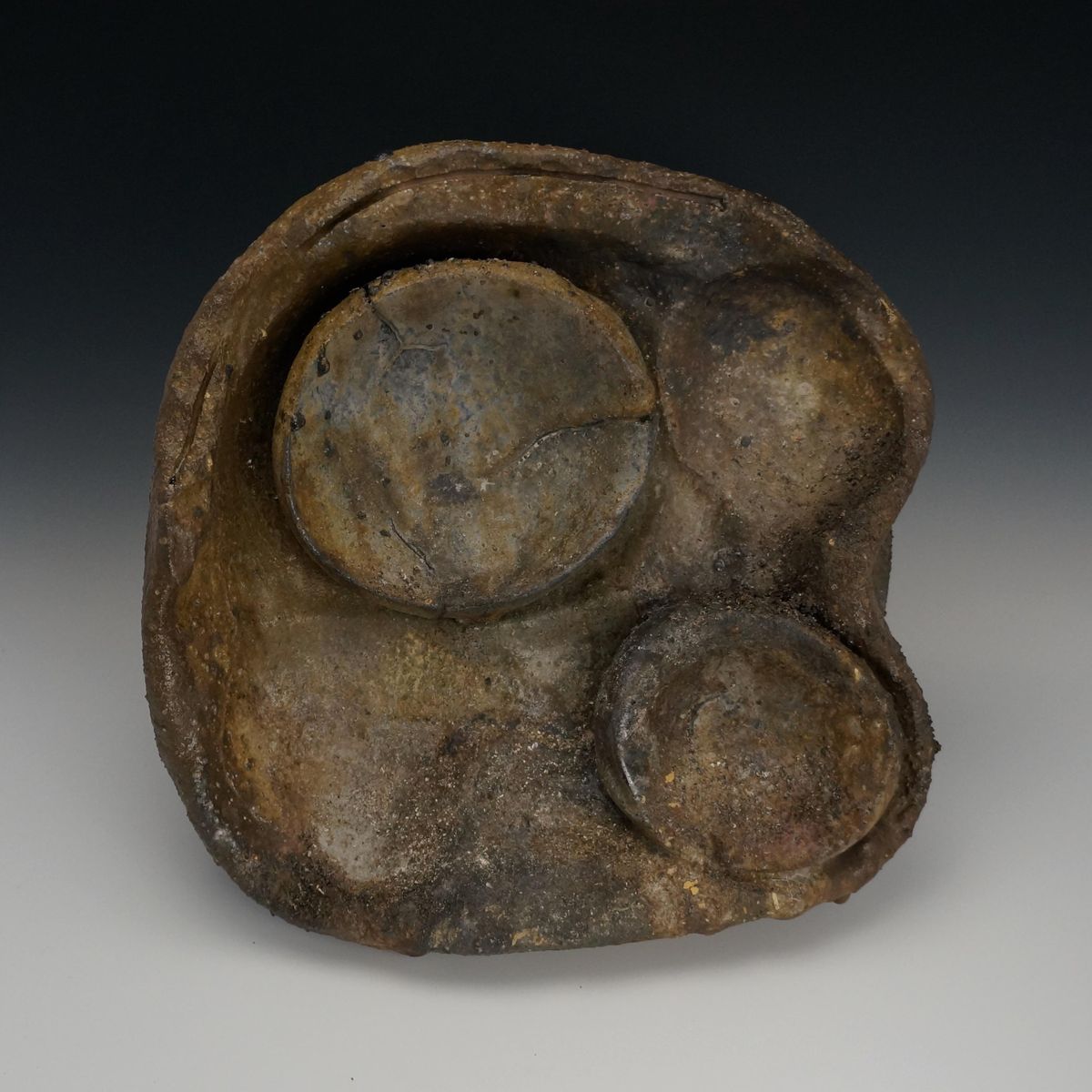
Unless you’ve spent all night with creative friends stoking an epic fire roaring high into the starry skies, you might not grasp how profound a wood-fired kiln experience can be.
The three artists and operators of Spokane’s Trackside Studio Ceramic Art Gallery – Gina Freuen, Chris Kelsey, and Mark Moore – say the ancient process has enriched their art, and even their lives.
“Those people you fire with are like family,” Freuen said.
After years of traveling around the Pacific Northwest to enjoy the fruits of wood-fired and soda kilns, Freuen recently took the plunge and rebuilt her own kiln. She turned her midrange gas kiln on her North Side property into a high-temperature soda firing kiln.
The flames from her kiln can shoot 10 feet above an already towering narrow chimney. “This is not a city activity,” Kelsey said.
In addition to exploring the art of wood firing, the three artists run a gallery and studio catering to those who enjoy high-quality ceramics, and to those looking to learn more.
Trackside participates in First Friday Art Walks, when Freuen, Kelsey and Moore show their own new works. The trio also regularly mounts exhibitions by visiting artists. They sometimes host workshops in their working studio or off-site, from demonstrating the potter’s wheel and throwing clay, to learning how to master firing processes and achieve superior glazing results.
The trio had to draw on their combined decades of knowledge in firing processes to build the traditional wood-fired kiln on Freuen’s property. The kiln reaches temperatures above 2000 degrees. They built troughs leading to the fire pit so that the artists can insert baking soda at peak times. The soda vaporizes and is carried on the flame throughout the kiln, creating a glaze when it lands on a piece.
Now, three or four times a year, the trio reaps the rewards of the same ancient process that ceramics artists have used for thousands of years. It’s physically demanding work. The fire has to be fed every few minutes, around the clock, for three straight days. But the resulting richness of the wood ash, flashing and reduction effects is worth it, the artists say. During the firing, the ashes of the wood fuel fall naturally upon the ware, marking the surface of the pieces with soft, dappled imagery.
Just loading the 50-cubic-foot kiln with “greenware,” or unfired works of clay pots, cups and sculptures, takes two full days. How the ceramicists choose to lay their pieces on the shelves and where they place them with regard to the fire source affects the final product.
“The day we unbrick the entrance to receive the gifts of the kiln is true Christmas,” Freuen said.
For millennia, the excitement of the kiln has been not knowing exactly what one will get after it cools.
“With an electric firing kiln like this one in the studio, it’s just like a giant digital toaster,” Moore said, pointing to a large kiln plugged into the wall at Trackside. “You just push buttons and walk away and the results are predictable.”
“With wood firing, you never know,” Kelsey agreed. “That’s what makes it exciting.”
When you stoke a three-day fire together, you tend to grow close. But the art of the three principal Trackside artists couldn’t be more different.
Freuen, who ran the Northwest Museum of Art and Culture’s ArtFest for a decade, has enjoyed a 40-year career in the region’s ceramic arts scene. Her background in drawing is evident in her whimsical ceramic works, which include deeply personal designs carved into the pottery. Trailing vines, flowers and birds dapple her surfaces. Often her works will include human figures seeking solace or reaching out for their own spaces in the world.
Kelsey’s background as a musician with an interest in geology plays a part in his pieces. He sculpts jazz rhythms as though they were curving landscapes. He explores how geologic forces can weather and erode shapes and produce fascinating forms.
Moore is inspired by the clay with which he works and the forces that can render it to dust. His shapes tend to be bulbous and organic. Some he suspends on wires like the bones of dinosaurs.
Kelsey and Moore are the founding members of Trackside. They opened their gallery 10 years ago as both a working ceramic studio and a boutique sales gallery and monthly exhibition space.
Kelsey grew up in Montana where he played drums in rock and country music bands. He studied photography and sculpture at Montana State University-Billings and moved to Spokane in 2001.
Moore is from Pendleton, Oregon, and moved to Spokane in the late 1980s to attend Gonzaga University, where he studied political science and history.
The two ceramicists met when they both taught at Northstar Ceramics Center, (now the Clay Connection). The Trackside studio space became available at a time when both men were ready to focus on creating and showing their own work. Freuen came on board four years ago.
The front room of Trackside, located next door to the Kolva-Sullivan Gallery, is the gallery space for exhibits. The back half of the space is the studio, with working kilns and shelves of cups, vases, pots and sculptures for sale by the artists. The gallery is open by appointment during the week, and the artists encourage the public to call and pop over any time.
“Why go to Pottery Barn to buy a mass-produced bowl or tea set when you can get a one-of-a-kind work of art by a local artist?” Freuen asked.