
Where for care: Range of affordable sexual health service options is slim in right-leaning region

Affordable sexual health options in the Lewiston-Clarkston Valley are difficult to find.
The Public Health Idaho North Central District, with offices in Lewiston, Moscow, Orofino, Grangeville and Kamiah, discontinued all of its reproductive health options two years ago. Two nonprofit “crisis pregnancy centers” offer ultrasounds, and one, which opened Friday, provides free testing for sexually transmitted diseases and infections.
The two centers swing notably “pro-life” and are not required to be licensed to perform any of the health care options they offer. Technicians require little background to take ultrasounds for pregnancies or administer STD/STI testing. Pullman Planned Parenthood is essentially the only affordable center in the region that offers a diverse array of health and sexual health services.
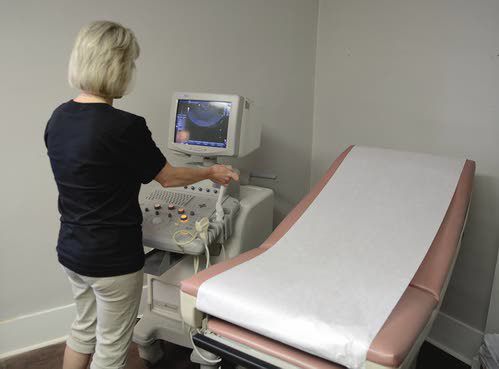
The stated mission of Life Choices and Reliance Center, the two crisis pregnancy centers in Lewiston, is to help women with unplanned pregnancies navigate their options. Abortion is not included in those options.
Women trying to make one of the most difficult choices imaginable regarding their health have few options in Idaho in general, and the valley especially, if abortion is something they may consider.
‘We stand by our Christian values’
Both of the Lewiston centers have language on their websites that hints at abortion, and an internet search for abortion services in the region puts Life Choices near the top of the results. But neither center refers patients to abortion services, instead offering information that supports the centers’ goals: having women with unplanned pregnancies carry to term, whether they choose adoption or rearing the child.
Life Choices Executive Director Christine King said the center is faith-based but doesn’t follow a particular denomination.
“We don’t refer or offer birth control,” King said. “We’re hoping to break cycles, we believe that sex is intended for marriage. We stand by our Christian values and our morals.”
Crisis pregnancy centers have been criticized for being “manipulative” and “tricking” women seeking information about abortions into carrying a child to term. King rejects those characterizations and said Life Choices is clear in advertising the center’s priorities.
“We do not turn them away if they want an abortion,” King said. “We totally don’t want to change their, how do I want to say this, we want them to feel like they have options; if abortion is a choice they want to make that’s their choice, and we are not trying to talk them out of it.”
The Life Choices website has a tab on abortion and clearly states it will not refer or perform the procedure. The information also repeatedly encourages setting an appointment to have an ultrasound at the office or discussing options.
“Remember, as a patient, you have the legal right to change your mind about an abortion decision at any time before the actual procedure begins,” the website states. “Whether you choose abortion, parenting or adoption; if you think you might be pregnant, make sure you have an ultrasound before you make your choice.”
Beyond pregnancy testing, Life Choices offers family planning, educational classes, free diapers and other child care products, adoption referrals and post-abortion support. The center also offers “abortion reversal” referrals. If contacted by a woman who has taken the first of two pills to medically terminate a pregnancy prior to 10 weeks from her last period, the center offers referral to a physician to help the woman try to stop the abortion if she has second thoughts.
The first pill, mifepristone, is taken 24 to 48 hours before taking misoprostol, which initiates expelling an embryo. Abortion reversal involves hormone treatments of progesterone used before a woman takes the second pill, but neutral studies of the effectiveness of abortion reversal have shown mixed results. After mifepristone is taken, there is a 25 percent chance the fetus will survive, and a significantly smaller chance of malformation of the child.
A 2015 National Institutes of Health review of 1,115 articles about abortion reversal struggled to find quality data about progesterone treatment’s effectiveness. “In the rare case that a woman changes her mind after starting medical abortion, evidence is insufficient to determine whether treatment with progesterone after mifepristone results in a higher proportion of continuing pregnancies compared to expectant management,” according to the study.
Still, Idaho requires doctors to inform patients about abortion reversal after mifepristone is taken.
About 600,000 American women have an abortion each year. The Centers for Disease Control and Prevention reports around 91 percent of legal abortions are performed at less than 13 weeks gestation. The CDC reported 22 percent of abortions were medically induced in 2014, the most recent figures available. In Idaho during that same year, according to the Department of Health and Welfare, 1,353 abortions were performed, dropping slightly from 1,375 abortions in 2013. In Nez Perce County, 43 women had abortions in 2014, up slightly from 35 in 2013 and much lower than the peak of 80 in 2004.
Options are limited
Heather Lawless used to work for Life Choices but recently started her own nonprofit, Reliance Center. Located in downtown Lewiston the center offers most of the same services as Life Choices, with the addition of testing for sexually transmitted diseases and infections. With physician John Rudolph acting as medical director, Reliance Center also offers “abortion reversal” treatment, and plans are in place to expand coverage in the area with mobile ultrasound and STD/STI testing out of a van. Lawless said the “mobile unit” will serve smaller, more dispersed communities like Troy, Kendrick and Pomeroy.
Her center won’t talk women out of seeking abortions, Lawless said.
“We are under the pro-life umbrella, but we want people to live an abundant life,” she said. “When considering abortion we tell her about the options we have and give info that tells her what those procedures are. It’s medical truth, you know scientific truth. Nothing we do is meant to coerce or steer it in any direction at all.”
Options for reproductive health in the Lewiston-Clarkston Valley are limited to the two centers or a family doctor. Planned Parenthood in Pullman offers multiple reproductive health services at free or reduced costs. It also has the capability to offer a chemically induced abortion up to 10 weeks. But for any abortion procedure other than chemical abortion, the only regional option is Spokane’s Planned Parenthood. Pullman Planned Parenthood public affairs director Paul Dillon said the small size of the Pullman center and inability to staff a full-time qualified professional makes offering surgical abortions unlikely.
Dillon pointed out that the nonprofit center offers a long list of services beyond abortion.
“It is a busy health center. We have patients traveling from Idaho, especially the Moscow area, Lewiston and elsewhere,” Dillon said. “Patients come to us because they don’t have anywhere else to go. There have been attacks on access to abortion, and it’s something that we really fight for and believe should be safe and legal and accessible.”
The Pullman center was shut down for six months after an arsonist set the clinic on fire in September 2015. Pullman Police Department Cmdr. Chris Tennant said a suspect was never identified, and the case remains unsolved. Video surveillance inside the building showed a flammable object thrown through a window; no one was inside, and no injuries were reported.
Dillon said the dearth of sexual health options leads many to the available crisis pregnancy centers, and he finds the information they provide dubious.
“I have to think that crisis pregnancy centers often run with a hidden agenda to block patients access to accurate info about all their options,” he said. “They are not medical clinics. But they portray themselves as such. They are unregulated because often they are unlicensed medical facilities and don’t have the same standards to protect patient privacy records.”
The U.S. Supreme Court heard arguments in March in a case seeking to require licensed and unlicensed crisis pregnancy centers to inform patients about contraception, abortion and prenatal care. Several left-leaning justices as well as those on the right appeared to side with striking the regulations imposed on the crisis pregnancy centers, saying the regulations unfairly targeted the centers specifically.
Regrettable departure
Public Health nurse Mike Larson said the North Central District dropped reproductive health services after its only qualified nurse retired and the position went unfilled. Larson said affordable sexual health care is an essential resource and encouraged anyone needing it to rigorously research options.
“We provided all options, and our education was as factual and non-biased as possible,” Larson said. “That’s an important thing. I regret not being able to fill that.”
The clinic didn’t provide abortion services, but navigating the various regulatory hoops to secure federal and state funding for any kind of reproductive care was difficult, Larson said. He said two of the seven public health districts in Idaho recently canceled reproductive health options.
“The inability to secure a practitioner was the main cause,” he said. “I don’t think it’s a coincidence that the two smallest (health districts) were the first to go. I wish we had the magic touch or silver bullet to solve this problem. Removing ourselves from those programs was one of the hardest growth changes this organization has gone through. We view it as a core function. We have a passion for that and believe in how important those services were, and we still do.”
Her own reasons
Lawless’ Reliance Center had its grand opening Friday. Like any woman navigating the often black-and-white abortion debate, Lawless has her own reasons for being pro-life. She said she was born after numerous doctors advised her mothers to abort. Her mother was a nurse herself and was told by physicians that the possible complications were too much of a risk and that she should terminate the pregnancy.
Lawless said her mother choosing to have her emboldened her own feelings on the importance of having children in an unplanned pregnancy, and she felt a call to give back. She also had an unplanned pregnancy in her 20s, and she said she wouldn’t go back and change her mind and couldn’t be happier with her 14-year-old daughter.
“I always just felt like I want to give back and help people realize they can live an abundant life; I want to make a difference in this community,” she said. “Lots of women find out they’re pregnant and are in a situation where they need to know all their options. There are some who like to push certain options, but I think women need to know all of their options.”