
Neighborhood bounded by old and new: Mix in Latah/Hangman area poses challenge for neighborhood council
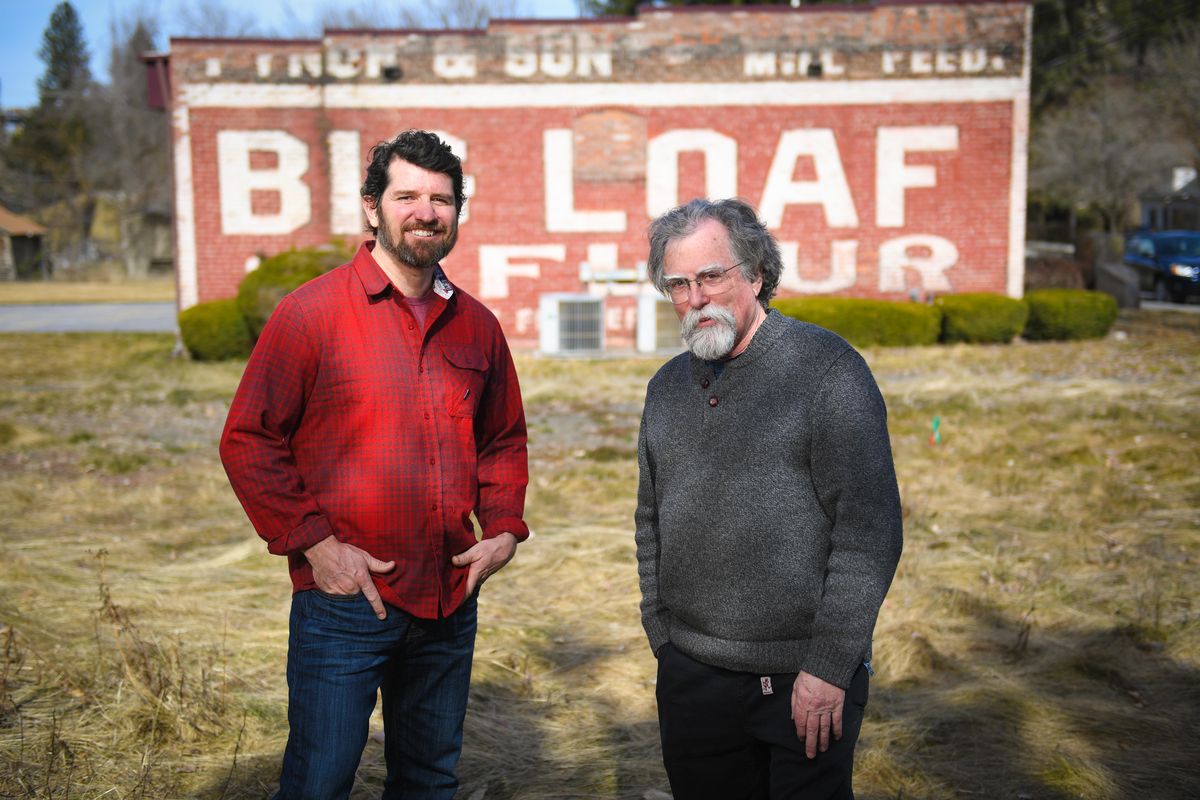
Spokane’s neighborhood councils rarely have their own offices; the Latah/Hangman Neighborhood Council holds its quarterly meetings in the break room at Yoke’s Fresh Market on Cheney Spokane Road.
“We all march in there and head up the stairs like we own the place,” said council chair Kai Huschke. “It’s kind of funny.”
The Latah/Hangman council presides over a long, narrow neighborhood that begins at High Bridge Park and runs south, through the Latah Valley, to the end of Campion Park at Hatch Road. Latah/Hangman is really two neighborhoods: the old neighborhood, known as Vinegar Flats, and the burgeoning developments along U.S. Highway 195.
“When the boundaries were originally conceived, none of this (the development) was here,” said Huschke. “It was all open space.”
According to vice chair Patrick Davidson, residents from the new development show little interest in the old neighborhood. “They don’t come to the meetings until new development makes their lives worse,” he said, laughing.
Council priorities reflect the neighborhood’s dual nature. Farming and wildlife conservation inhabit the council’s dreams, while zoning, traffic and jurisdictional confusion cause most of its headaches.
The council wants to raise the neighborhood’s agricultural profile. “There’s been voiced desire by the city … to beef up local food production,” Huschke said. “This neighborhood would be a prime candidate.”
Organic farmer James Schrock, a regular at council meetings, would like to turn the farming community into a destination like Green Bluff.
“Instead of having to drive 40 minutes to Green Bluff, wouldn’t it be nice to just drive 10 minutes away?” Schrock said.
Said Huschke: “The proximity would be great, and I think that would fit the desire of the people wanting to maintain the character of the neighborhood.”
“People don’t want to see that (farmland) just be snapped up and a lot more houses or apartments put on, and just become a bedroom access to downtown,” he said.
The council is putting up a fight against a proposed trail along Latah Creek, citing erosion and habitat problems.
“The idea is to put a human trail in an area we should maybe just leave alone,” said Huschke. “We already have trails in the bluff; why don’t we just enhance those instead?”
A recent series of Housing and Urban Development zoning changes left the council unable to use its Community Development Block Grants, prematurely ending a sidewalk project along Inland Empire Way.
“That cut off our ability to put money into the sidewalk,” Huschke said. “Every year we’d been adding chunks … to eventually connect sidewalks on both sides of the street.”
Before rezoning, the council put playground equipment in High Bridge Park; it also added playground equipment and a basketball court to Wentel Park.
Wentel Park remains a Vinegar Flats social hub. “Lacrosse teams and other sports teams use it,” said Huschke. “I’ve seen people out training dogs there.”
“We’ve played Ultimate Frisbee down there every Sunday for the last eight years,” Schrock said. “We played like 400 Sundays in a row.”
While zoning issues haunt one end of the neighborhood, jurisdictional confusion haunts the other. The U.S. 195 corridor is under the purview of the Department of Transportation, turning the new developments into something of a regulatory no-man’s land.
“Most of it is private-development covenant stuff,” said Huschke. “There are no rules and regulations within these developments that define their [role] within the greater neighborhood.”
Traffic counts on U.S. 195 have spiked over the past 20 years. Vice chair Patrick Davidson, a council member since 1991, used to cross the highway during his morning walks. “There’s no way to walk across in the morning anymore, between 7:30 and 9:30,” he said. “There’s no break in the traffic.”
Efforts to control traffic flow have mostly fallen on deaf ears. “We collected about 180 letters, 180 different families down here, and wrote a letter asking for traffic slowing on 195,” said Davidson. “It was a nonstarter; we got one response, and it was a form letter.”
Lacking authority, the council has little influence. “It becomes a very sticky situation for communities to get involved in,” said Huschke. “But it’s the reality that (growing) neighborhoods face.”
The news isn’t all bad. A recent bond approval has the council optimistic about bringing STA bus service back to the neighborhood. “The buses haven’t run down here in eight, nine years,” said Huschke. “It would be good to at least have the morning commute times covered.”
A street fair or party in the park might be in the works; Huschke, Schrock and a couple of others are kicking ideas around.
“We have a lot of people who are different kinds of artists – jewelry makers, glass makers, musicians – so we thought it would be kind of fun to feature people’s talents in the neighborhood,” Huschke said.
The council holds two dumpster rollouts a year, in the parking lot at Kop’s Construction. According to Davidson, the neighborhood brings in 2 to 3 tons of metal and 10 to 12 tons of garbage during a typical event.
“We’ll fill a couple of clean green dumpsters, too,” Davidson said. “It’s cleaned up the neighborhood quite a bit.”
The wildlife along Latah Creek is varied, and even a little exotic. “Every animal you see in Spokane, we see down there,” said Schrock. “All the way from moose to mice.”
Said Davidson: “There’s an area going upstream, within the city, where there’s usually a family of otters.”
ventboys@outlook.com