
Grip on Sports: The WIAA makes another attempt to bring some balance to high school sports

A GRIP ON SPORTS • When it comes to high school sports, every school just wants an opportunity to compete. How to ensure it happens is something high school administrators have been searching for since there were peach baskets on gymnasium walls. The WIAA decided Monday to try something old and something new in its latest attempt. Read on.
••••••••••
• To continue the theme, the Washington Interscholastic Activities Association also tried something borrowed. And the changes may leave everybody blue.
It seems appropriate. Everyone who has ever had children is wedded to the high school sports scene, whether their kids competed or not.
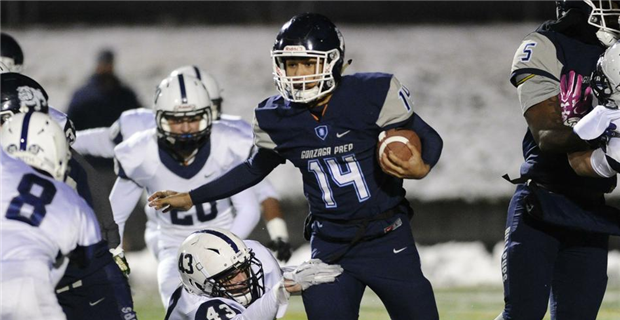
Athletics are a big part of high schools as they can serve to unify a diverse student body. My brother-in-law, a former high school principal, always felt the football coach was a crucial hire, in that a successful football season raised a school’s self-esteem and set a tone for the entire year.
Whether that is true or not, high school sports are more than a front door to the local school. In many places it is the living room.
So what the WIAA’s Rep Assembly decided yesterday has ripples throughout the state.
Schools have always been lumped together in classifications of like-sizes. Big schools compete with big schools. Smaller with smaller. But how that was decided has changed over the years.
When I first took over as high school sports coordinator at the S-R years ago, there was a hard cap. In other words, if your school’s enrollment was between two numbers, your school was in a certain classification. That made sense on one level, but it tended to skew the state tournament competition, as there were quite a bit more 4A and 3A schools, say, then 2A ones. But each state tournament consisted of the same number of participants.
That didn’t seem right. So the WIAA decided to split the classifications evenly, having all the schools submit their enrollment numbers, then putting 20 percent of the schools in each classification. Seemed liked a fair way to even out the opportunity.
Except there was a loophole. Schools were allowed to opt-up, to move up classifications. A Gonzaga Prep, to use a local example, could play in the 4A ranks even if its enrollment dictated it should be in 2A.
To balance the classifications, another school would be pushed down to 3A.
By the time everything was done, the classifications may have been balanced, but there was little time to organize leagues and such. It was a logistical problem.
And there is another problem, one that has increased the past couple decades. Money can buy success. With the advent of expensive club sports and training, the rich programs only became richer. Two schools of like size in enrollment may not be anywhere close in athletic achievement as athletes at a richer school were more polished coming in.
That gap has only been growing larger.

The WIAA tried to address both problems yesterday. The percentage formula, which seemed so promising a decade ago, is gone. The state is back in the hard-cap camp. If your school has a WIAA-approved-formula enrollment of 923, it will be a 3A school, even if 35 percent of all schools have the same enrollment.
(For a breakdown of classifications by enrollment, see Dave Nichols’ story.)
Schools will still be allowed to opt-up, though, so the WIAA could end up with 30 percent of schools in the 4A, 25 percent in the 3A, 15 in the 2A, 15 in the 1A and 15 percent in the B.
Won’t that make it twice as easy to win a state 2A baseball title, say, as a 4A one, which was the argument in the past? Nope. If that happens, the size of the state tournaments will be adjusted accordingly. In other words, the 2A state baseball tournament could have half the number of participants as the 4A.
It is seen as a way to balance opportunity.
That’s one change. But there is another one that promises to make an even bigger impact.
The WIAA will use economic factors in determining enrollment, moving in a direction some other states have tried recently. For example, say there are two schools next to each other. Each has 1,345 students passing through their doors every day. But School B, on the left side of the street, has only 22 percent of its students receiving free or reduced-prices lunches. Its enrollment, under the new WIAA mandate, is still 1,345. It will be a 4A school. School A, a couple miles away, has 75 percent of its students receiving lunch help. Because it is above the state average of around 43 percent, School B’s enrollment would drop enough for it to be a 3A school.
Two neighboring schools of the same size, two different classifications. Of course, if School A wanted, it could opt-up to 4A. School B, however, couldn’t opt-down to stay in the same classification with its neighbor.
In theory, School A now has a better chance to compete.
Will these changes work? No one knows. As soon-to-retire WIAA Executive Director Mike Colbrese told the Seattle Times’ Nathan Joyce yesterday, “there is no perfect system.”
And no truer statement has ever come out of the WIAA offices.
• The Bing Crosby Theater was the site of last night’s “Super Stories” event with Jerry Kramer and Mark Rypien. Dan Thompson has all the particulars from the Bing in this story. And Sam Adams, who emceed the event along with Dave Boling, joined Larry Weir for the latest Press Box pod.
• I grew up a Rams fan. Even attended a game in the early 1970s in the Coliseum. Watched and cheered as Jack Youngblood played the Super Bowl on a broken leg. But since moving to the Northwest, I have adopted the team of my children and left my childish fandom behind, just as the Rams did to Los Angeles years ago. (That was the catalyst to abandon my support.) They are back in the City of Angels, but my allegiance hasn’t returned. Dave Cook, the sports information director at Eastern Washington, however, never wavered. More power to him.
•••
Gonzaga: Monday is poll day. Jim Meehan has the story of the men holding on to the fourth spot in both polls, while Jim Allen passes along the news the women moved up to 15th. Jim also previews the week ahead. … Theo Lawson tells us how he voted in the men’s poll.

WSU: A special teams contributor has left the Cougar program. Theo has more on Kainoa Wilson’s departure. … Elsewhere in the Pac-12, the self-induced disintegration of the Oregon softball programs continues, and that made The Register-Guard’s Austin Meek wonder why the baseball program wasn’t treated the same by UO administrators. … The conference’s women’s basketball race has a top, a bottom and not much of a middle. … Speaking of the top, Washington is in control of the men’s basketball race, but Arizona State looms. … Utah is relying heavily on a freshman. … In football, the Arizona schools hired new running back coaches from different backgrounds. … It looks as if Graham Harrell and USC are going to get together.
EWU: Around the Big Sky, it took overtime last night, but Northern Arizona got past Southern Utah at home.
Preps: As we said, Dave has a story on the changes. So do the Times and others. The WIAA also decided on Colbrese’s successor.
Seahawks: Every Hawk fan should be interested in what happens to Earl Thomas, right?
•••
• I can remember when the WIAA was wrestling with how to balance the classifications just after the turn of the century. The percentage method seemed like a brilliant fix. A decade later, it’s gone. Funny. Until later …