
Emotional support dogs in school? Animals may help grow the class menagerie in Spokane Public Schools

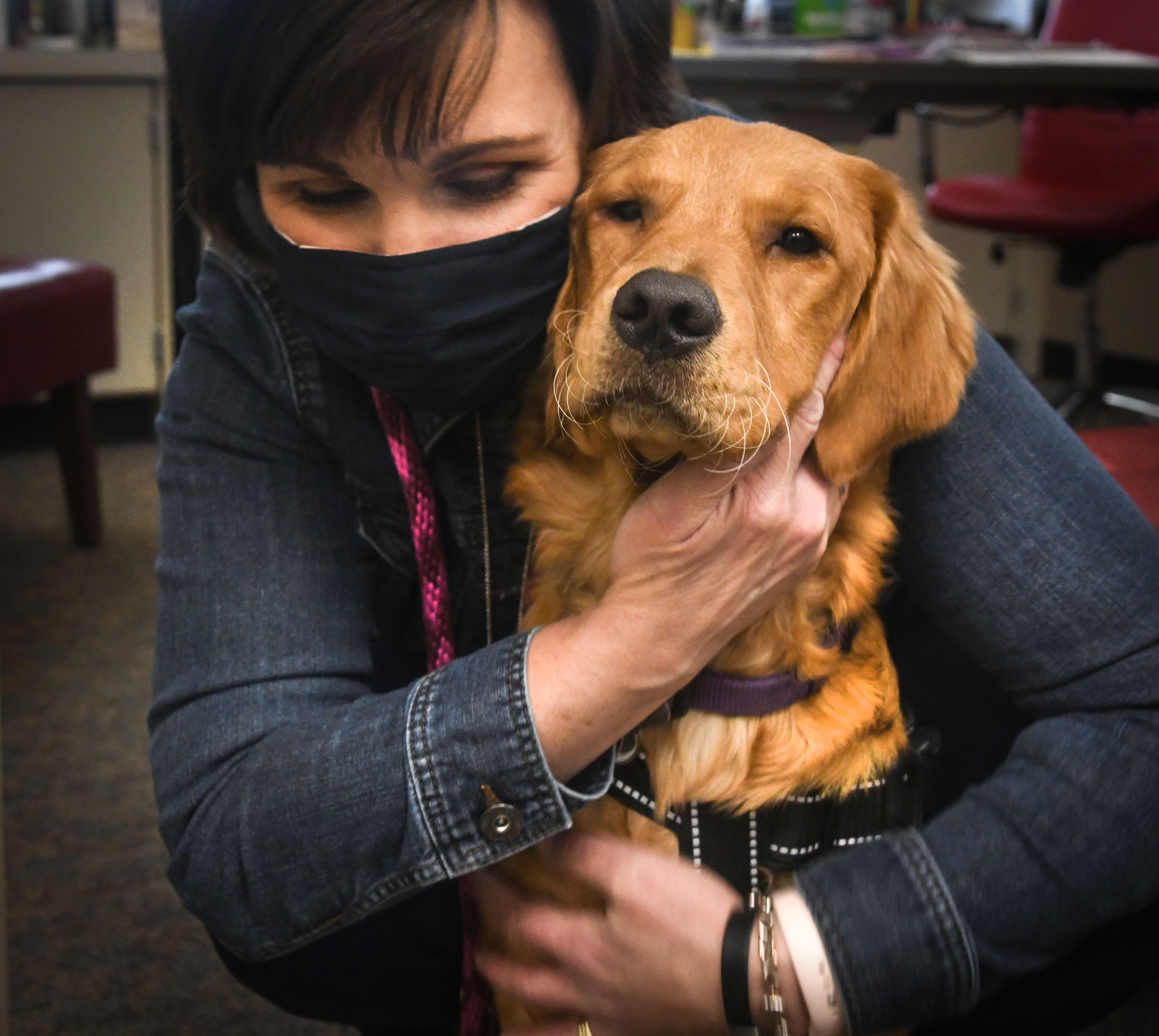
At Regal Elementary School, Lucy the golden retriever is opening hearts.
Owned by Principal Tricia Kannberg and her family, Lucy has been at Logan since the first day of school, but she’s getting more attention now that most students are back in-person.
“She’s is doing such a great job, and the kids have really enjoyed having her in school,” Kannberg said of Lucy, an emotional support dog.
Lucy also may be opening the door for more animals – and not just dogs – to make a difference in local schools.
“I’m very supportive and strongly encourage this,” Superintendent Adam Swinyard said after a recent visit to Brown Elementary and its emotional support dog.
The district is considering language that would set guidelines for therapy and emotional support animals and their role in schools.
Last week, the Spokane school board got its first look at new language that spells out the role of animals in the classroom.
Most of the language addresses “therapy animals,” though it might as well apply to all animals.
It recognizes the “benefits from working or visiting with a therapy dog, including reduced stress, improved physical and emotional well-being, lower blood pressure, decreased anxiety, improved self- esteem and normalization of the environment, increasing the likelihood of successful academic achievement by the student.”
Lucy has been doing just that – in the halls, classrooms and in Kannberg’s office, where on Friday a young student was visiting.
“The younger kids are always excited to see her,” Kannberg said. “The older kids are stoic, but they love to have that interaction in the morning – it’s a great, calming way to start the day.”
That’s also true for the staff, who, according to Kannberg, “love to bend down and give her belly rubs.”
There are a few caveats, however. Some people are uncomfortable with dogs or other animals.
Some dog breeds don’t have the right temperament to be around children; and some individual animals may be ill-suited to the hectic environment of a school building.
“If you have a staff member who can put the time, that’s ideal,” Kannberg said. “You have to be attentive to the dog’s needs as well.”
For that reason, Lucy doesn’t stay the entire school day, but leaves at about 1 p.m.
The district must consider other factors prior to granting or denying requests to allow live animals in a specific building.
They include the potential educational benefits of including the animal in programming; an appropriate plan for control; health concerns and allergies and other issues.
The proposal also details guidelines for therapy dogs, including certification for handlers, immunization of the dog and insurance.
Language is expected to be approved by fall.
In the meantime, Lucy is doing her thing.
“Even for this one year it’s been such a positive thing,” Kannberg said. “I think we’re going to be facing some of the social-emotion issues for some time, and she’s made a big difference.”