
Gardening: Prepare containers, soil for starting seeds
This is the third in a series of articles on how to set up to grow your own vegetable and flower starts indoors.
The advantages are that you have a wider choice of varieties to choose from than if you rely on what’s available at the nursery and after the initial setup costs for your growing system, you will save money on buying plants, especially if you are growing them for a large garden.
You should be close to getting your seed order in and have your light system ready to go. There is a lot of competition from the 20 million new gardeners we have because of COVID. You should seed peppers in early February.
The best place to set up your grow operation is in a space that stays between 60 and 70 degrees to get good germination. Furnace rooms, warm basement rooms, bedrooms or even a space in the kitchen work well. Greenhouses, unless heated, are only for hardening off seedlings before they are planted in the garden.
Containers
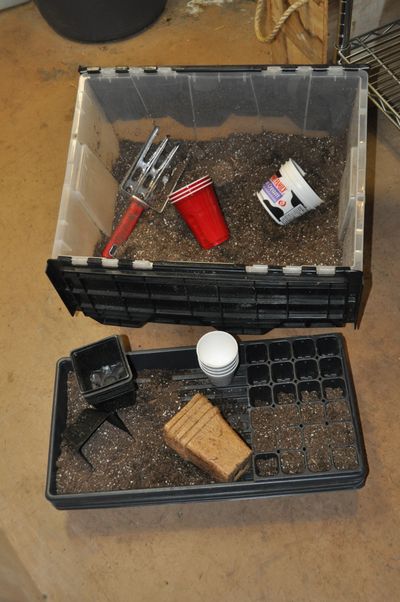
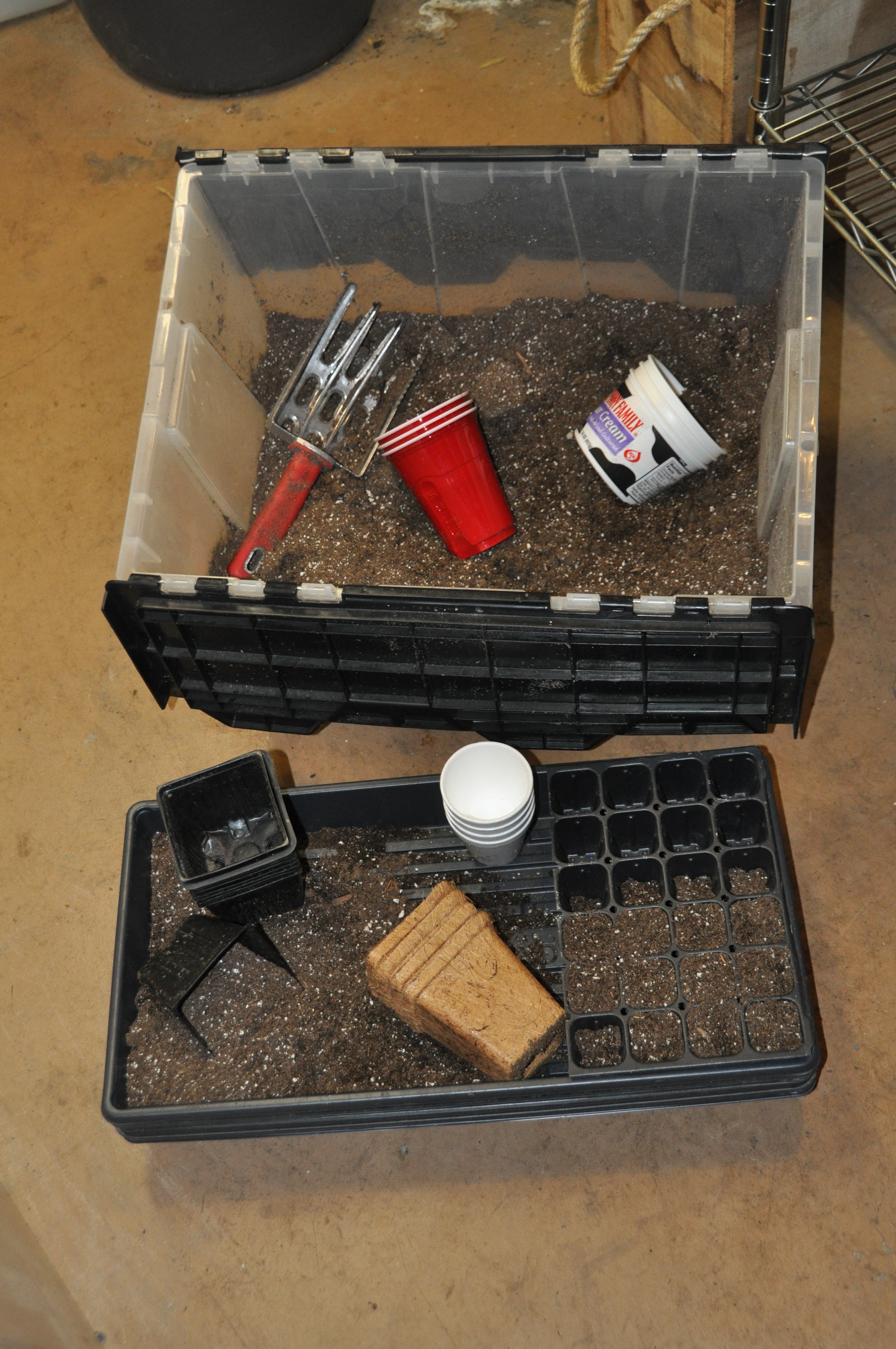
Almost any container that can drain can be used to start seeds. Drink cups, cottage cheese or yogurt cups, rolled newspaper cups on up to the commercial coir fiber or peat pots and the flats of plastic trays found at the garden stores. Punch several holes in the bottom of nondraining containers so they drain. Do not use egg cartons. The cells are too small, and the seedlings are too difficult to get out of the cells without damaging roots.
You will need to set your pots in a flat tray with no holes to catch the drips from watering. Cookie sheets and cake pans from the second-hand stores are great. Commercial growing flats with no holes are good because they are sized to accept many of the commercial pots to create an efficient use of space under your lights. You can find the commercial pots and flats at independent garden centers like Northwest Seed & Pet. The commercial flats and pots are reusable, or you can save the pots you buy plants in for reuse. Wash them well before reusing them.
Soil
Ideally, you should use a fine soilless potting mix to start your seeds. Referred to as germination mix, the fine texture of the soil won’t crust over as easily and inhibit the seedlings’ ability to push into the light. Germinating mixes are also designed to drain well but still hold enough moisture so the tine new roots don’t dry out. Ordinary potting mix can be used if you pay close attention to your watering. Germinating mixes will be found at the independent garden centers. Because the mixes are usually dry, I store mine in a big plastic container with a tight-fitting lid and add enough water to moisten the soil enough to resemble a wrung-out sponge before I use it.
Tip of the week: We are supposed to get some sun this week. Visit your plants and think about your garden plans. Finish your seed orders soon.
Pat Munts can be reached at pat@inlandnwgardening.com.