
Tundra Swans make annual return to dance on Hauser Lake
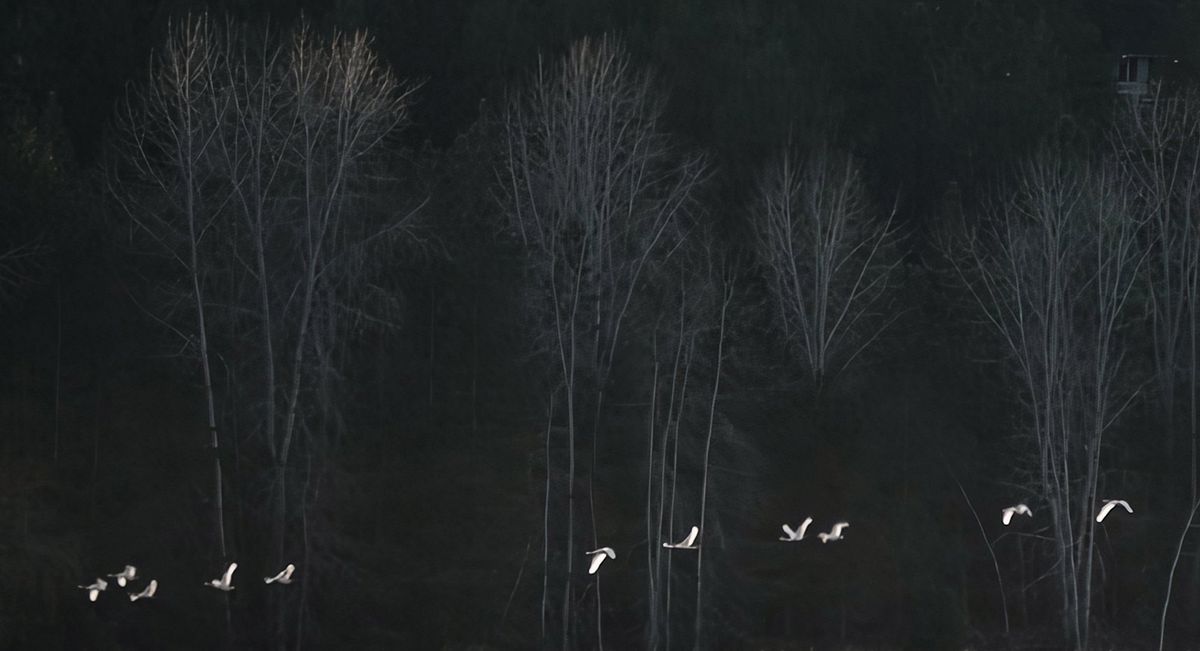
The day’s first light reveals Ragged Ridge in the cold predawn above the north end of Hauser Lake in North Idaho. Below, in the seasonal flooding of wetlands stirs the hard scrabble of wildlife locals from raptors to river otters.
It’s time to get busy living or get busy dying.
Transients have a way of muscling into their territory. Migrations of dozens waterfowl species large and small fly from east to west and north to south and back again foraging and replenishing here without a reservation.
In that early light once a year is the beauty of all the beasts. Nearly 25,000 white feathers cover their bodies and wings that dance across the horizon in a choreographed ballet.
The tundra swans have announced their return.
Brian Plonka / The Spokesman-Review
Hungry and herbivorous, they consume plants below the surface, drilling with long necks in a methodic trance canvasing selected areas of the 5,000-acre lake.
While Canada geese, mallards and others crisscross routes in a mutual feeding frenzy, the tundra swan will dine in private and far away from the others including the humans that inhabit the dryer ground above.
They are tough to get close to. It’s better to wait for them quietly hidden or the tundra swan will signal your intrusion loud and clear and the fleet will move on. They are intelligent and will remember whether particular people have been kind or not toward them. Moreover, they are devout to each other and will mate for life. American novelist Nora Ephron once wrote: “If you’re looking for monogamy, you’d better marry a swan.”
We’ll never have a relationship like we do with the mallards and geese in our shared proximity. The beauty and mystery of the tundra swan is short -lived for only several short days a year as they signal the call to flight and dance away for another 300 or so days until they appear again in the distant horizon.