
New Japanese ordinance prohibits release, trade of invasive species of crayfish, turtle
Washington Post
A government ordinance targeting two invasive species came into force Thursday, banning the trade of red swamp crayfish and red-eared slider turtles and their release into the wild. Violators face penalties of prison or fines.
As the two creatures are popular as pets, the government implemented a decree designating them as “invasive alien species with conditions” under the revised Invasive Alien Species Law.
The law prohibits the raising, releasing into the wild, selling and importing of invasive alien species. But creatures designated as “invasive alien species with conditions” are exempted from certain restrictions. The range of future exemptions for individual creatures will be determined one by one.
Violators face up to three years in prison or a fine of up to 3 million yen.
Red swamp crayfish were brought into Japan as feed for edible bullfrogs before World War II. Red-eared sliders started being imported from the 1950s as pets. Both species are known to breed quickly and cause serious damage to the ecosystem, feeding on fish and aquatic plants.
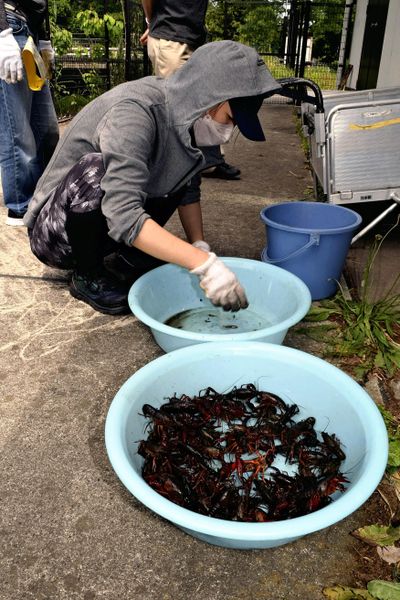
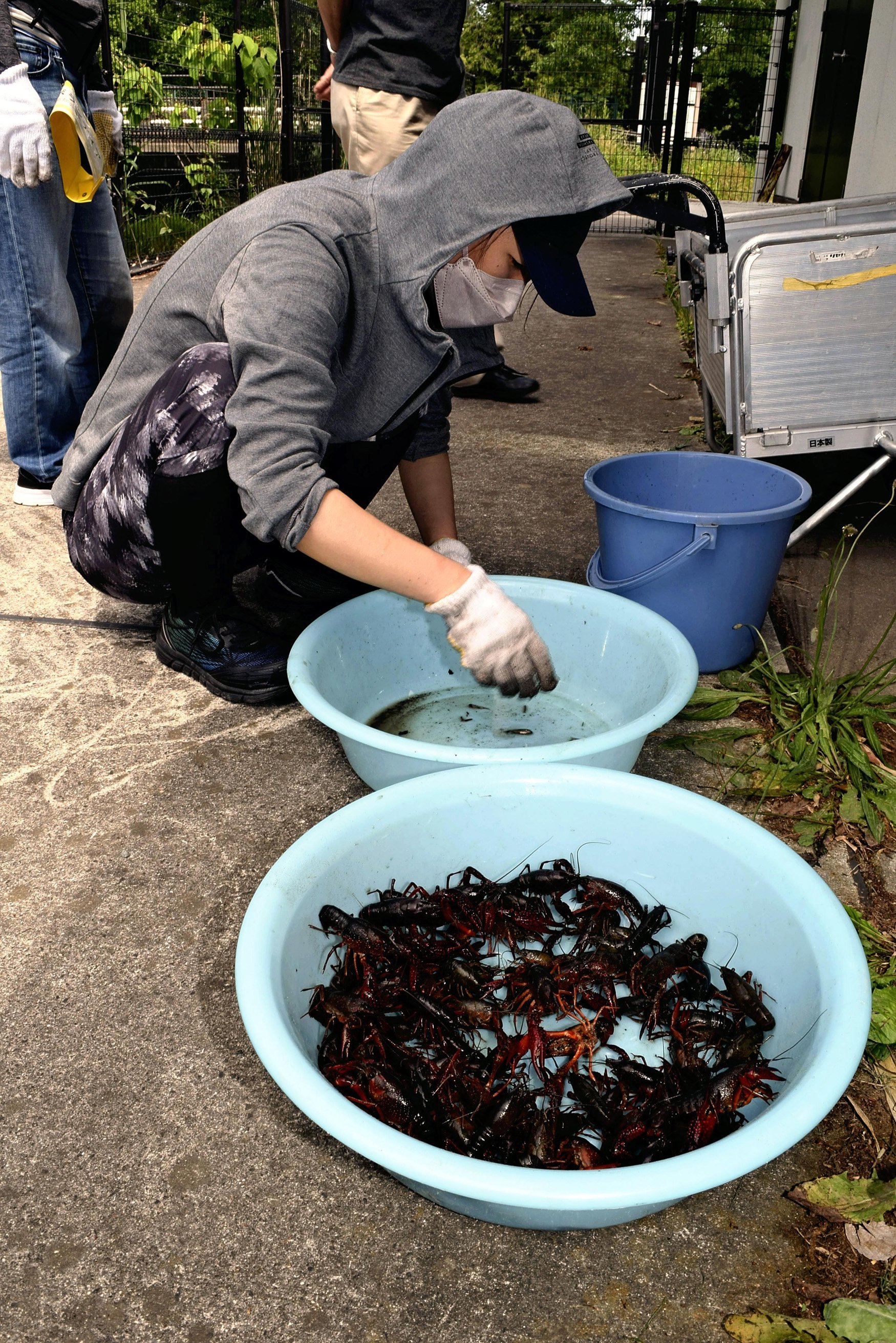
In late May, members of a nonprofit, the Mizumoto Nature Project, were seen setting traps in a waterway in Mizumoto Park in Katsushika Ward, Tokyo. More than 70 red swamp crayfish were caught in less than two hours.
“We should patiently continue efforts to exterminate the creatures,” an official of the group said.
Under the new regulation, individuals may bring home red swamp crayfish they have caught in a pond or elsewhere. But if they find it difficult to keep the creatures, releasing them back into the wild constitutes a violation of the ordinance.
Sales of the two species are also banned at pet shops. Purchasing through other means is also in violation of the law.
The Environment Ministry estimates that 5.4 million red swamp crayfish and 1.6 million red-eared sliders are being kept as pets in homes across the country.
A designation of the creatures as an invasive alien species prohibits individuals from not only trading and releasing them into the wild but also from keeping them as pets. But with the enactment of the ordinance, individuals may continue to keep the two “invasive alien species with conditions.”
“We want to urge people not to bring them back home without careful consideration,” said an official of the Environment Ministry. “If they decide to keep them, we want people to take responsibility for them as long as the creatures are alive.”