
Eva Lassman Memorial Writing Contest second-place high school winner: ‘Valiance of Youth’ by Marcine Thomas
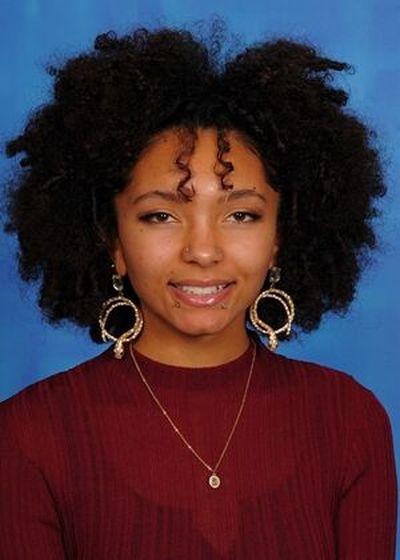
Marcine Thomas won second place in the high school division of the 2024 Eva Lassman Memorial Writing Contest for “Valiance of Youth.” The tenth-grader at East Valley High School was advised by Lori Jacobsen.
‘Valiance of Youth’
Terror, oppression and injustice are words that can ever so slightly assist us in the comprehension of the severity of the Holocaust. Although the Holocaust consumed the lives of those who fell victim, there were those who rose above the subjugation and slaughter to fight for themselves, their people, and their future. Carla Peperzak and Sonia Orbuch were two young women who overcame the horrors of the Holocaust, valiantly combating anti-Semitism.
In 1940, Carla Peperzak was 16 years old and in the process of graduating from high school when the Germans invaded the Netherlands. “I missed so many classes, and failed a few exams. I had no time to study. ” she explains. This was only the beginning of the Nazi domination and the significant influence it took on the Jewish way of life and culture. After the Germans invaded the Netherlands, Peperzak and many other Jewish individuals ceased to continue their Jewish practices. Germans began confiscating Jewish owned bank accounts, automobiles, and radios. They also began closing public universities. Male students were sent to Germany to work in factories performing slave labor, along with the requirement of all Dutch Jewish individuals to wear the Star of David and register within the state with a “J” on their identification papers.
Once Peperzak turned 18, she enrolled in a private medical technology program where she stole a German medical ID and bought a nurse’s uniform. Serving as a nurse for the Germans became Peperzak’s greatest advantage during the Holocaust. Carla’s heroic role in the Underground Resistance included being a messenger for the organization and a “hostess” for hiding Jews. Peperzak assisted at least 40 Jews, the majority of whom she knew. Carla’s involvement with this organization was kept secret from her family, but once Perperzak’s uncle and his family were seized by the Nazis, she knew she had to take action. She secured a farm for them to hide in, then began acquiring spaces to hide Jews in attics, basements, crawl spaces, and barns, mostly in rural Holland. Along with finding places for them to camp, she provided them with medication, food, and information.
Peperzak’s strategy to keep her people informed about the state of the economy and the war was to use the Dutch newspaper. Germany governed the Dutch newspaper, which was not confiscated because it mostly spoke of German affairs. Peperzak was aware that people could still turn in Jews in exchange for money, which is why she had to be extremely precise in her every move. Peperzak would collect the relevant information from the newspaper then bravely face the risk of mimeographing those details. She then offered the papers to the oppressed. “I was 18, 19, 20. I was not married. I did not have any responsibility–only for myself–and that made a big difference…I felt I could help. I had the opportunity.”
The Holocaust was a life altering experience and affected Peperzak deeply. She converted to Catholicism due to fear of being associated with Judaism. Recalling in her testimony, “I was afraid…it’s again, happening all the time, anti-Semitism… and I wanted to get away from that…” but confessed, “that didn’t work, and I ran back to the temple…” Peperzak endured events one cannot imagine, she couldn’t even speak of all she suffered during the war until 50 years later, stating, “It was very, very painful to bring up the memories.”
Comparable to Peperzak’s experience, another woman who became a member of an organization fighting for the Jews at a young age was Sonia Orbuch. In September 1939, Sonia Orbuch was entering ninth grade at the time that Germany invaded Poland. With Nazi encouragement, many individuals within the expanding German Empire turned against their Jewish residents, setting synagogues into flames, destroying Jewish businesses, and assaulting Jews in the streets. The vicious attacks prompted hundreds of thousands of Jews to attempt to evacuate their homes. In 1941, at 16 years old, Sonia was sent to the Lumbul Ghetto along with 8,000 additional Jews . Like other ghettos, the Lumbul Ghetto had terrible living conditions, overcrowding, lack of sanitation, scarcity of food and water, forced manual labor, and extreme violence.
Sonia’s brother and male friends escaped the ghetto to join a male only partisan group, forcing Orbuch and her family into the forest to hide. This was a brutal experience for the Orbuch family due to the harsh winter, and lack of food and water. Later they joined a partisan community where Sonia felt comforted by the normalcy within the community. They cooked, did laundry, socialized and were supportive. “The camp hummed with the sort of human activity I hadn’t known in years.” She was initially given simple jobs, like cooking and aiding the sick and wounded. Her responsibilities would soon increase and she was asked to guard duty along with her nursing. Since she risked torture if she was captured, she possessed two hand grenades, “One for the enemy, and one for myself.”
Eventually, Sonia entered the Battle of Kovel, doing whatever was necessary to assist in feeding and giving medical attention to all. Although Sonia was not medically educated, she did what she could to help. Short on medical supplies, they washed the bandages off between patients and reused them. In addition to her guard duty, she was assigned to perform first aid on missions to plant mines along Nazi train tracks, which would disrupt the transportation of Nazi weapons, food, medication, and other supplies. Orbuch then knew that this was her opportunity to get revenge and this made her feel elated. She saw it as a “blessing.”
Throughout my research of the Holocaust, I experienced a greater understanding of the impact that something as powerful as discrimination could ignite. As a young African American woman, when learning about African American slavery, I always think to myself, “Those are my people. This is my legacy.” I understand not being treated as equal to the human race simply due to the color of my skin, and I feel empathy as a member of a minority group. Those who are not a part of the colored population may not possess related emotions or a connection with the topic as they have not faced similar discrimination. The same is true for those who are not Jewish and do not understand the legacy of the Holocaust. Through my research I have discovered that the lack of sympathy and awareness of the depth of horror of these historical events will only lead to the recurrence of similar events. Refusing to speak out on challenging topics such as discrimination creates a lack of empathy and compassion within humanity. Contributing more love, sensitivity, and understanding while respecting each other’s individuality, differences and abilities will provide us with a more peaceful and harmonious world.