
Spokane Wolfpack isn’t sending shockwaves yet, but semi-pro football team striving to impact community
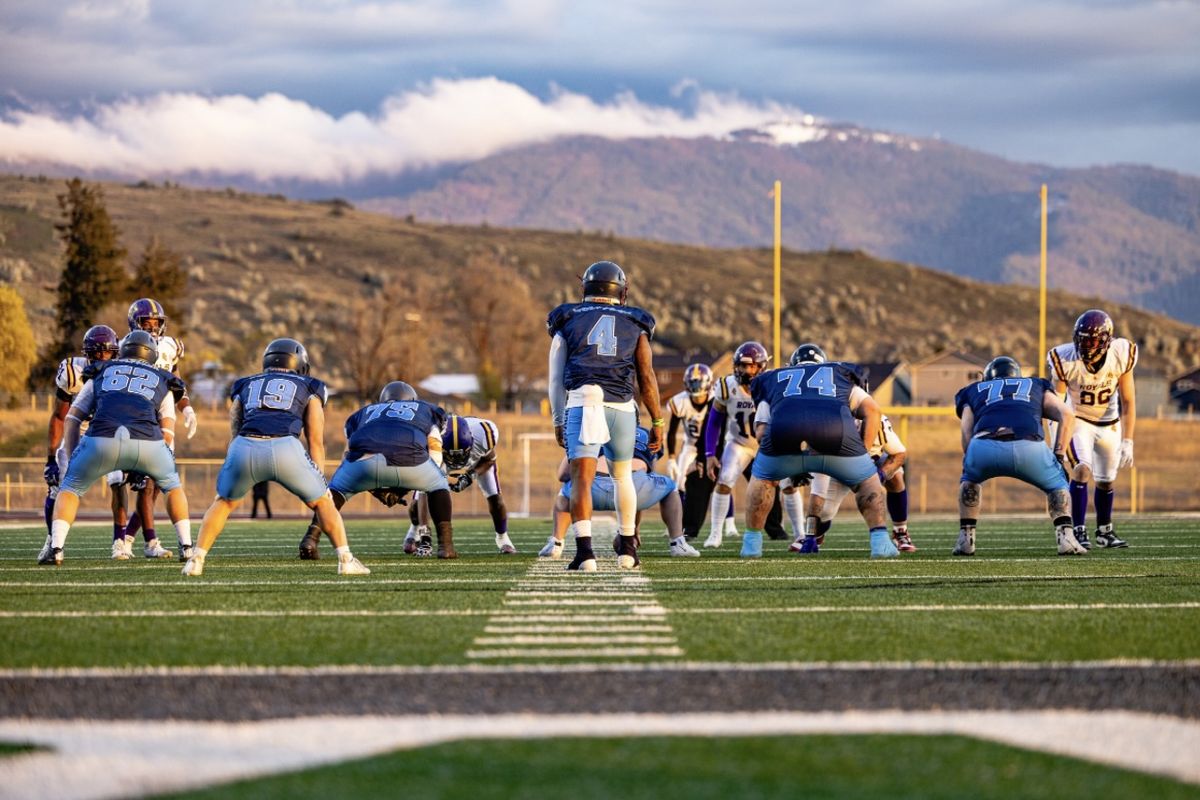
Ever since the beloved Spokane Shock left the Arena Football League in 2015, the Spokane community has had a complicated relationship with football.
There have been multiple attempts to create new franchises and re-establish a football culture in Spokane. Unfortunately, no team has gained much traction in the Indoor Football League.
The Spokane Empire lasted only two seasons, and the second stint for the Shock was equally brief. The primary reasons for the lack of success for these two franchises were financial struggles and a seemingly lack of community engagement.
While there is a feeling of resentment among former Shock fans, the city has yearned for some form of football to return to a city that once housed some of the most passionate fans in sports. Luckily for Shock fans, their old mascot, “Warrior,” has returned to the gridiron as part of a new era of Spokane football.
The Spokane Wolfpack were founded in 2009 as a semiprofessional football team that emphasized community service. Since 2009, the Wolfpack have played in several different semipro leagues and have evolved as an organization. They just finished their second season as a member of the North Division of the West Coast Pacific Minor League, a pay-to-play football league based in the Pacific Northwest.
Mike Thomas, the commissioner of the WCPML, says that the Wolfpack rank among the best in the league regarding their ability to interact with their fan base .
“They rate pretty high up there, definitely when it comes to the community,” Thomas said. “They have a really good impact on their community … one of my favorite teams.”
It will always be hard for Spokane football teams to live up to the reputation the Shock had earned. However, Demetrius Palmer, owner and head coach of the Wolfpack, seeks to gain community support and bring quality football to a town that needs a team to root for.
“My wife and I are looking forward to continuing to build and invest in the community, and hopefully we can gain the trust of Spokane again,” Palmer said. “My motto in life is respect the process.”
The regular season lasts eight weeks from the end of March through the start of June. In the Wolfpack’s second season in the WCPML, they went 6-2, with both losses coming against the eventual league champions, the Grit City Knights.
The Knights had an 11-0 season, claiming their second consecutive WCPML championship and defeating the champion of the California Football Conference Association, the Beach City Giants, to win their first Pacific National Championship.
The Wolfpack has always prided themselves as a dominant defensive group, and they also have a great veteran presence in the wide receiver room.
Though they fell short at home in the semifinals against the I-5 Cobras at Ridgeline High School, this season marked a big step forward for the Wolfpack. Along with finishing the regular season with the second-best record among the league’s seven teams, the Wolfpack pulled off their first ever victory against their rivals, the Everett Royals, in a 48-14 rout.
Palmer has been involved with the organization for a long time, initially playing for the Wolfpack in 2013 and 2014 before acquiring the team in 2019.
“This is probably one of the best seasons we’ve had,” Palmer said. “We have a lot of high caliber players. Our defense is always stout.”
Aside from their performance on the gridiron, the Wolfpack has impacted the Spokane community throughout years of community service, focusing on giving back to the youth.
Every player on the Wolfpack is required to perform at least 10 hours of community service each year. Many of the players coach youth football teams, and the Wolfpack organization hosts speed and agility camps for kids from five to 14 years old. The team is partnered with Toys for Tots, and they often do giveaways. Thomas explained how he grew up in difficult circumstances, and says that is the reason he is so adamant about giving back to the youth.
“It all comes down to the growth, right? So, if we’re impacting our community, we can impact the streets,” Thomas said. “We can impact kids coming out of school and not knowing what to do with their lives.”
Though the Wolfpack emphasize community service, the league itself is built on similar principles. The objective of the WCPML is to provide an outlet for men to keep busy. The concept is that football is a great opportunity for players to improve their mental health and also avoid getting into trouble.
“There’s so many guys out there that are going through issues and need an outlet or need a brotherhood,” Williams said. “You can’t win those trophies without the people on the team. I think men’s mental health in this area is being helped by this league.”
A specific aspect of the WCPML is the age of the players, which ranges from ages 18 to 50, consisting of everything from high school to retired NFL players. The age gap between certain players creates a unique dynamic in terms of athleticism and accountability.
“A lot of these guys get an opportunity to be exposed to what maturity and leadership looks like,” Williams said. “Bettering young men is just as important as winning championships.”
Thomas compared the level of competition in the WCPML to the AFL. Asked about the differences between coaching semipro football and other levels of football, Palmer says there are some similarities.
“With semipro football, you really have to meet people where they are at and really build structure around that,” Palmer said. “We make it feel more like an investment than a chore or something that they’re being forced to do. … For the most part, football is football. The culture of football will never change.”
The Wolfpack are the only Eastern Washington based team in the league. Because of this, members of the team travel from various locations in Washington and Oregon for a weekly practice. They have several team meetings each week, but given the commute each player has, a lot of the scheming and game planning is done through Zoom meetings.
The WCPML also offers players benefits. This season, for the first time, the league awarded the champions with a check of $7,000. About 400 people were in attendance at the championship game and the WCPML used the admission fees to compensate the players from the Knights and the Cobras.
WCPML is partnered with Millenium Ministries, which allows players the opportunity to partake in financial literacy classes. The league is partnered with a trade school, which gives players the chance to learn a trade for free. They are also awarded funding if they need help with housing or paying a down deposit.
“The league is not just a regular football league,” Thomas said. “We are a league that believes in winning on and off the field, giving players the opportunity to learn trades, giving them the opportunity to learn financial literacy.”
In terms of expansion, the WCPML is ambitious as to how far this league can grow and how competitive it can become. Thomas wants the league to expand into Montana, Idaho and other surrounding states before eventually expanding nationwide. While the league has eight teams, only seven played this season due to traveling logistics for the Alaska-based the Frontier Steelers.
The cost of travel is one of the biggest roadblocks for teams in the WCPML. Former Wolfpack head coach and current Cobras head coach Andrew O’Connor recalls having to digitally send money to several of his players so that they could make it to the game. The WCPML does a lot of fundraising in the off-season, and Thomas plans to apply for grants. Thomas claims to have a good system of budget management that he shares with the league’s teams.
Each team pays an entrance fee that is split between all the players, and the head coach of each team serves on the board. Each individual team decides how they want to break up the player fees. The team fund is spent in several ways, including booking fields, booking referees, purchasing uniforms and in the case of the Wolfpack, booking cheerleaders and a dance team.
Referring to the struggle of balancing semipro football and everyday responsibilities, O’Connor said that WCPML players “just have to love the game of football.”
“These guys have a lot of talent and it kind of is just waiting to get tapped into, but they also have families and jobs and lives,” O’Connor said. “It’s kind of a balance between trying to build a super team and win everything and trying to get everybody to live a healthy lifestyle and just be happy with playing football.”
O’Connor developed a “love for Spokane football,” during the early days of the Shock in the 2000s. He played for the Wolfpack in 2014 and took over as the head coach prior to the 2024 season. The Wolfpack lost the first four games of O’Connor’s head coaching stint before he decided to change the playbook. Following this change, the trajectory of the Wolfpack’s season changed dramatically, as the team went on to win the north division and host a playoff game for the first time in many years.
O’Connor and the Wolfpack won the first two games of the 2025 season before schematic disagreements led him to resign and become the coach of the Cobras. The Wolfpack hosted the Cobras in the 2025 season opener, defeating them 18-14 on a last-minute touchdown pass from former Louisiana Ragin Cajun, Harry Peoples, to Vika Young. Following a 37-20 victory against the Washington Ducks, O’Connor left the team, leaving Palmer to take the reins as the head coach.
Bryce Williams, the league’s co-commissioner, creates each team’s eight-game schedule. In the future, the league plans to expand its divisions to minimize interstate travel. A recent leaguewide mandate says each team must live stream their games on watchgamefilm.com.
Thomas goes the extra mile in his efforts to improve and legitimize the WCPML. He wants to see the league grow more than anything. He spends a substantial portion of his time in the offseason formulating highlight tapes for all the players.
Williams had high praise for Thomas and his efforts to improve the league. He has full confidence that the league will continue to expand under Thomas’ control.
“Mike is generally the dreamer when it comes to what the league is capable of. He shoots for the stars and thinks big,” Williams said. “In two years, we’ve already managed to do things that most of these semipro minor leagues just can’t do, and we’ve been able to put Washington on the national stage.”
Thomas credits his faith as the reason for his ambition.
“I’m a true believer in God. God gave me a message to be a strong leader,” Thomas said. “Until I become successful nationwide with this league, I’m not going to stop.”