
Gardening: As growing season ends, take notes for next year
With summer winding down, it’s a good time to take a walk through the garden and note what worked and what didn’t over the growing season. Did some crops wither while others thrived? Was there too much work involved with other crops? Taking notes now will help you do better planning for next spring.
Planting a vegetable garden shouldn’t be a random affair. Careful planning can use space wisely and efficiently, create healthier soil, manage pests and diseases without chemicals, increase pollination and provide physical support between plants in the garden. This series of strategies is often call companion planting, the idea that the selective placement of plants can help each one grow better.
Interplanting earlier maturing crops with later maturing crops uses limited space wisely. By the time the early crops have matured, the later crops are just beginning to really grow. Interplanting also helps provide shade to tender starts or seeds that are slow to germinate. Later in the summer, finishing crops can be replaced with fast growing, cool tolerant crops for a fall harvest.
Rotating crops to different sections of the garden allows crops to take advantage of nutrients left in the soil by the previous crop. Planting vegetable crops from the same plant family in the same place year after year can deplete soil nutrients. By rotating crops, the soil nutrients can be restored over time. As an example, beans and peas are legumes and as such their roots fix nitrogen in the soil that heavy nitrogen users like tomatoes, sweet corn, cucumbers, peppers, cabbage and onions can take advantage of next year.
Insects and disease pathogens often attack certain vegetable families (legumes, cabbage or onions etc.). If plants from the same family are planted in the same place, insects and diseases can build up their presence as they overwinter in the soil. By moving the plant families to a different section of the garden, the insect and disease life cycles are broken up. Examples are moving potatoes to a new area to avoid potato beetles, moving squash to avoid squash bugs or moving onion and garlic to avoid white rot or onion maggots. Planting catch crops to draw away insect pests from preferred crops reduces damages. An example is planting eggplant near potatoes, the potato beetles prefer eggplant.
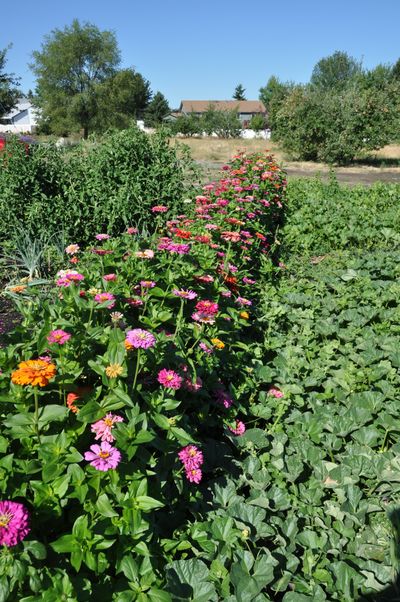
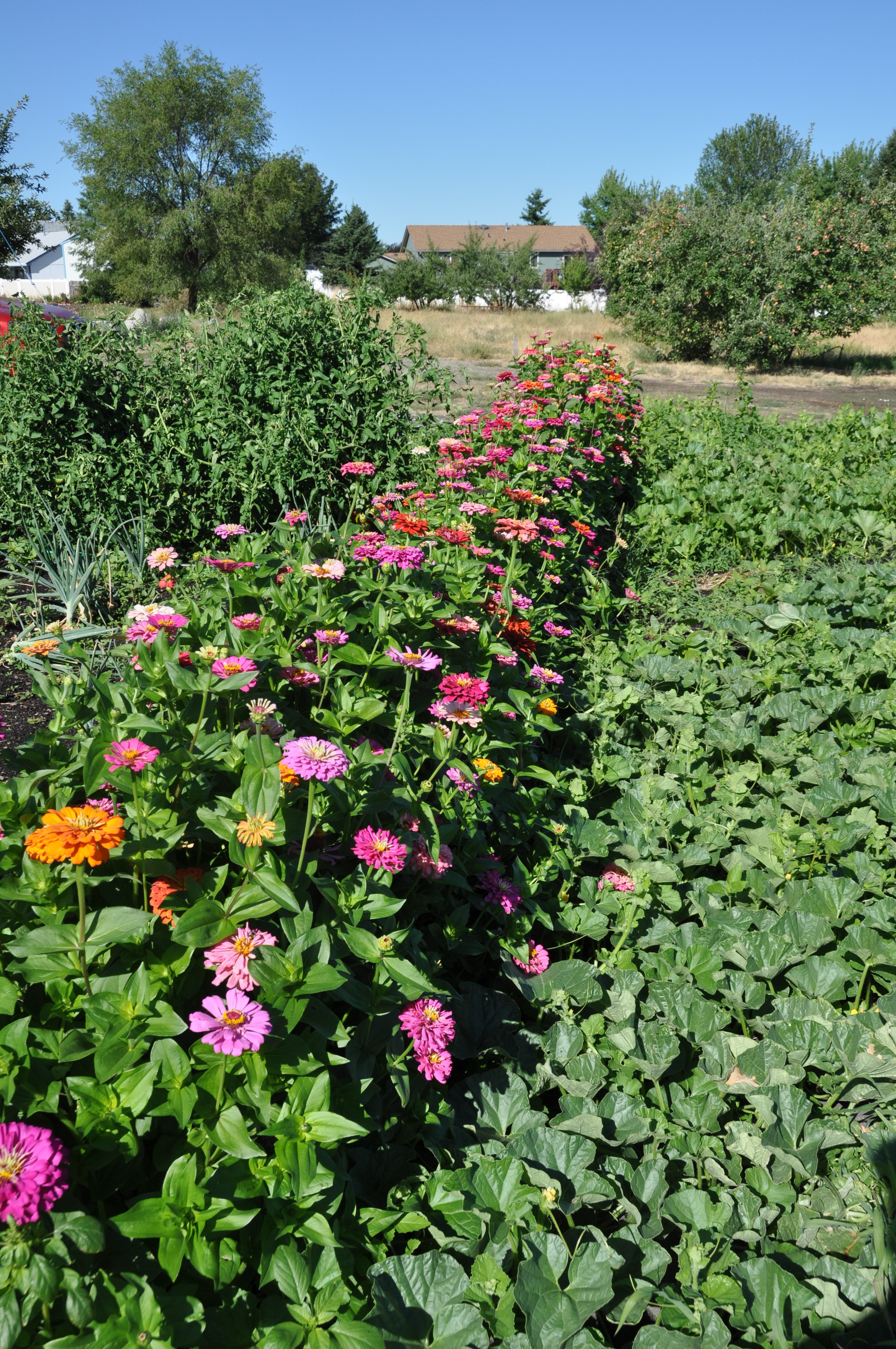
Planting flowers and other beneficial plants together with vegetables adds many benefits. Called intercropping, flowers can be planted among vegetables to draw in pollinators and confuse crop-munching insects enough to drive them away. More pollinators means better pollination of crops Planting marigolds, onions and nasturtiums together near cabbage reduced damage caused by cabbage moths because it disrupts the moth’s sense of smell.
Intercropping different plants can also offer extra support for plants. An example is the Native American three sisters’ garden. In a plot corn is planted first, followed by beans which climb up the corn stalks. Squash is planted around the beans and corn to provide shade and help with water retentions.