
Under growing Arab pressure, Hamas signals new willingness to compromise
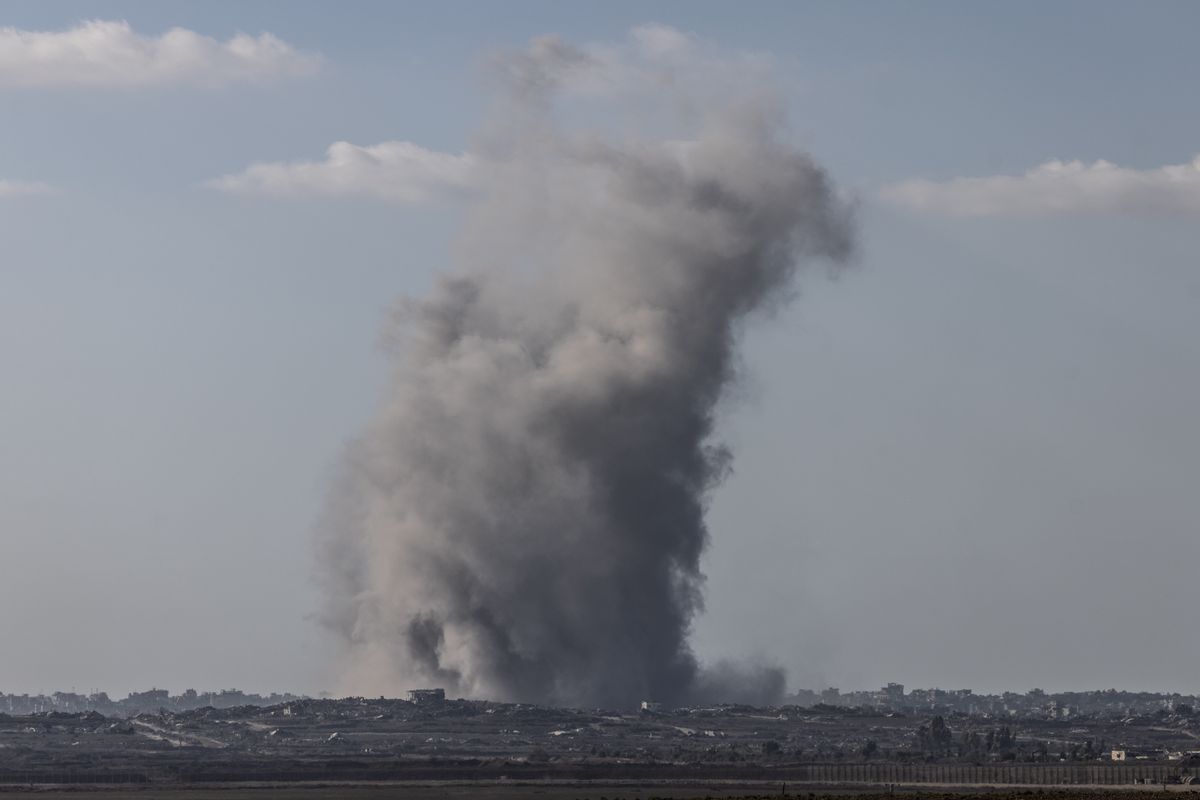
JERUSALEM - The decision this week by Hamas to accept a proposed ceasefire deal with Israel comes amid heightened pressure on the group from Arab governments and other Palestinian factions, which are eager to avert a planned Israeli invasion of Gaza City.
Hamas announced Monday that it had signed off on a new ceasefire agreement, following a flurry of diplomacy in Egypt, where Qatari and Egyptian mediators huddled with Hamas representatives in recent days. The Israeli government, which voted this month to expand the war and occupy more of Gaza, has yet to agree to the proposal.
In a significant development, Arab countries last month came out publicly for the first time in favor of disarming Hamas, a key Israeli demand. Arab officials attending a U.N. conference endorsed disarmament if it came in the context of an end to the 22-month war and movement toward a Palestinian state.
While many Arab officials had previously voiced this stance to Hamas, the public statement marked a shift, according to Ghaith al-Omari, a senior fellow at the Washington Institute for Near East Policy. “This adds pressures on Hamas” by empowering its leaders based outside Gaza - who are mostly seen as more moderate than the military wing inside the enclave - to push for a compromise, Omari said.
Then, last week, representatives of about a half-dozen other Palestinian political factions met with Hamas chief negotiator Khalil al-Hayya in Cairo to urge Hamas to accept a deal to stop the bloodshed, according to Dimitri Diliani, a spokesman for the Fatah Democratic Reform bloc led by Mohammed Dahlan, a powerful former Palestinian Authority security chief in Gaza who now lives in the United Arab Emirates.
That meeting appears to have had “a direct effect on the substance and quickness of the unconditional Hamas acceptance of the proposal,” Diliani said.
Inside Gaza, meanwhile, a collection of labor unions, journalists, business associations and clan leaders are organizing a sit-in Thursday in Gaza City to call for a ceasefire. The main slogan is “No to war, no to displacement, save Gaza, the last-hour call,” said Ahmed Harb, a journalist involved in planning the protest.
“We call on Hamas to take a purely national Palestinian stance, one that protects Palestinian lives in Gaza and ends the war at any cost,” he said.
The deal on the table hews closely to an earlier framework developed by U.S. special envoy Steve Witkoff, said Diaa Rashwan, head of Egypt’s State Information Service, speaking on state television Monday.
It provides for an initial 60-day truce, during which more than half of the remaining hostages held in Gaza would be released in exchange for an unspecified number of Palestinian prisoners. Humanitarian aid would be surged into the enclave through the United Nations and international nongovernmental organizations, Rashwan said. In a departure from the previous proposal, talks over a “comprehensive and permanent ceasefire” would begin on the first day of the temporary truce, he added.
Hamas’s response Monday evening was “very positive and closely aligned with what Israel had previously accepted,” Qatari Foreign Ministry spokesman Majed al-Ansari said at a news conference Tuesday.
Hamas officials did not respond to requests for comment.
Ibrahim al-Madhoun, a Palestinian political analyst close to the group, said “there is great pressure on our Palestinian people and on the resistance.”
“Hamas will not raise the white flag,” he added, but the movement - including its military wing - “prefers that the war stop now.”
Israeli officials took credit for Hamas’s return to negotiations. “For the first time, after weeks in which Hamas was unwilling to discuss any deal for the release of hostages, suddenly it is on the table,” Israeli Defense Minister Israel Katz said. “The reason is clear: Only their fear that we are serious about conquering Gaza.”
Israel’s war in Gaza came in response to the Hamas-led attacks on Oct. 7, 2023, when Palestinian militants attacked southern Israel, killing about 1,200 people and taking 251 hostages. Of 50 hostages still unreturned, 20 are believed to still be alive.
More than 22 months later, Hamas is much weaker but not defeated, analysts said. Israel killed a succession of leaders and military commanders, leaving the organization on the ground in the hands of Izz al-Din al-Haddad, a relative unknown before the war who is believed to be hiding in Gaza City, Omari said.
As Israel took out Hamas brigades and infrastructure, the militant group turned to guerrilla tactics, including the use of improvised explosive devices (IED) made from the remnants of Israeli munitions, said Ameneh Mehvar, senior Middle East analyst at Armed Conflict Location and Event Data (ACLED), a global conflict monitor.
Data collected by ACLED shows a decline in the number of street battles and IED attacks by Hamas on Israeli forces in recent months, compared with the months leading up to the last ceasefire in January. Still, Mehvar said, insurgencies can often “keep up the fight for quite a while,” and Hamas’s warren of tunnels below Gaza would help.
Meanwhile, the misery of civilians in Gaza is deepening. Israel has killed more than 62,000 people, according to the Gaza Health Ministry, which does not distinguish between civilians and combatants. The Israeli military has leveled much of the enclave and displaced nearly all of the population. Starvation and disease are spreading. Israel increased the tempo of strikes on eastern Gaza City in recent days, driving some residents from the area.
The Israeli government earlier this month approved an operation to invade and occupy Gaza City - a population center in northern Gaza and a Hamas stronghold. The Israeli military signed off on battle plans for that operation on Sunday, and the security cabinet is expected to vote on them in the coming days. On Wednesday, Israeli Defense Minister Israel Katz approved the call-up of about 60,000 military reservists and the duty of another 20,000 reservists was extended.
The last round of negotiations collapsed in late July. Israel had agreed to the original framework proposed by Witkoff for a 60-day ceasefire, but Hamas resisted demands to disarm and wanted stronger guarantees that Israel could not resume fighting later.
Tensions flared between Hamas and Egypt, which - eager to see an end to the conflict next door - had pressed Hamas to reach a compromise on its weapons, according to H.A. Hellyer, a senior fellow at the Royal United Services Institute think tank in London.
The spreading starvation, coupled with concerns about the forced displacement of up to a million Palestinians from Gaza City, has stirred a sense of panic in Arab countries.
Egyptian officials resumed talks with a Hamas delegation led by Hayya in Cairo last week, according to a former Egyptian official briefed on the talks. “We are concerned that [the Israelis] are trying to push the people in Gaza to go and cross the border into Egypt,” the former official said.
Ansari, the Qatari Foreign Ministry spokesman, warned Tuesday that humanitarian conditions in Gaza were reaching a breaking point. “Without an agreement now, the disaster ahead will eclipse anything we have seen before,” he said.
Israel and the United States have not indicated they are on board with the latest diplomacy. While the Trump administration pushed the original Witkoff proposal for months, U.S. officials in recent weeks signaled that they no longer back a phased ceasefire deal.
Israeli Prime Minister Benjamin Netanyahu faces conflicting pressures from key right-wing allies - who want to occupy and resettle Gaza - and from a large swath of the Israeli public that wants a deal. Hundreds of thousands of Israelis took to the streets Sunday to call for an end to the war and the return of the hostages.
In a reversal of their previous stance, Israeli officials have said recently that they favor a comprehensive agreement that aligns with five conditions that Netanyahu outlined this month: the disarmament of Hamas; the return of all hostages, dead and alive; the demilitarization of the Gaza Strip; Israeli “security control” of Gaza; and a new government there that is neither Hamas nor the Palestinian Authority.
Israel “demands the release of all 50 hostages per the principles set by the cabinet for ending the war,” an Israeli official said Tuesday.