
This day in history: Historic downtown Spokane theater purchased and closed for renovation

From 1975: SRO Theaters, a Bellevue chain, purchased Spokane’s historic State Theater and planned to close it for two weeks for a “major remodeling.”
Today, we know it as the Bing Crosby Theater, one of the city’s cultural gems.
The State Theater was currently showing “The Apple Dumpling Gang” and the cartoon “Donald and His Dumpling Gang.” After Labor Day, the theater would close to install “new seating, carpeting and decor,” said the new owners.
It opened in 1915 as the Clemmer Theater and has changed names many times since. It became the Audian Theater in 1929, and then was renamed the State Theater two years later.
In 1989, Spokane’s Metropolitan Mortgage Company purchased it, restored it, and renamed it the Metropolitan Theater of Performing Arts – although most people called it simply, the Met.
It was sold again in 2004, and in 2006 was renamed the Bing Crosby Theater. That’s because young Harry Lillis “Bing” Crosby sang and played drums on its stage in the 1920s.
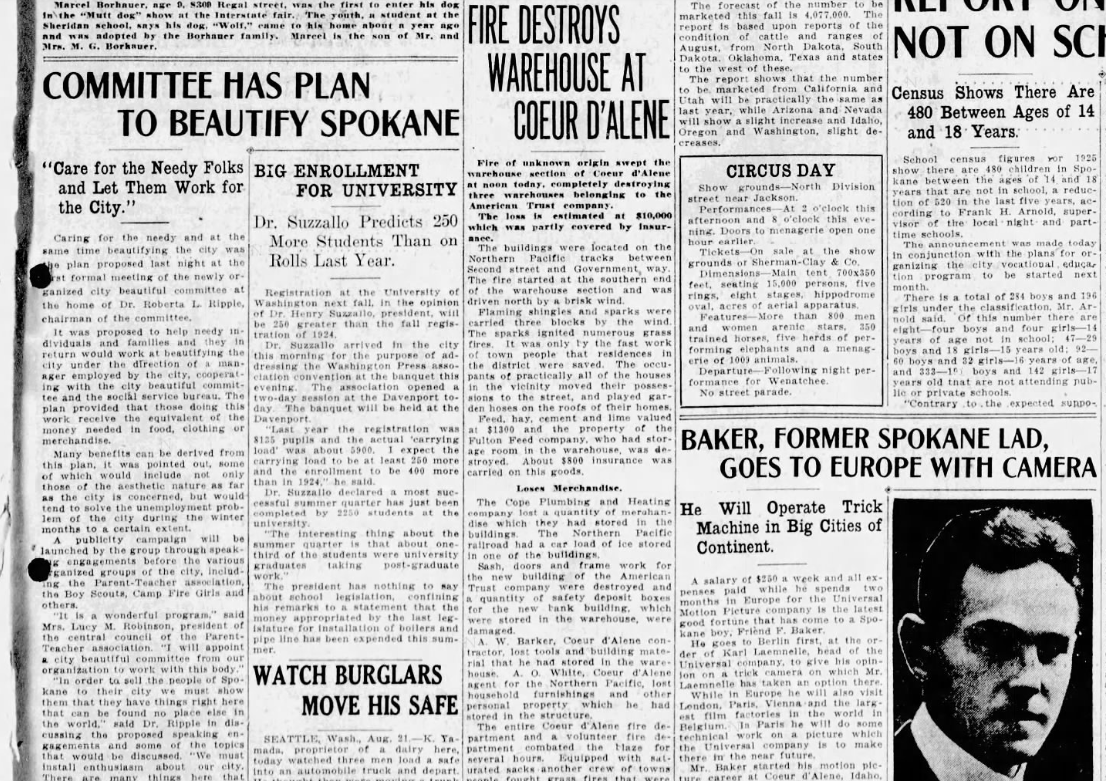
From 1925: Spokane’s new City Beautiful Committee had a plan for sprucing up the city: Hire needy individuals and families to do the work.
“Many benefits can be derived from this plan,” said the Spokane Daily Chronicle. “… Not only those of an aesthetic nature as far as the city is concerned, but would tend to solve the unemployment problem of the city during the winter months, to a certain extent.”
These needy individuals would be supervised by a manager employed by the city.