
Spokane hospice chaplain’s new book challenges comfort clichés at life’s end
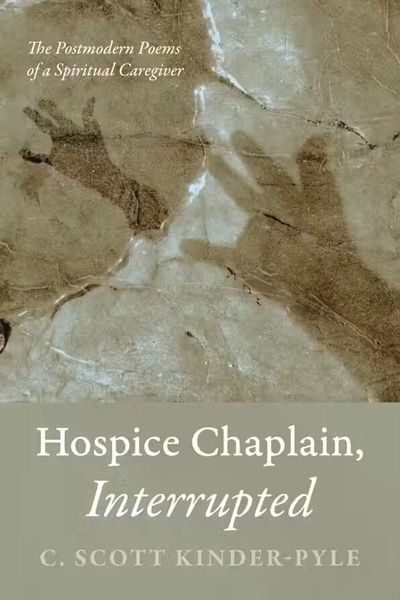
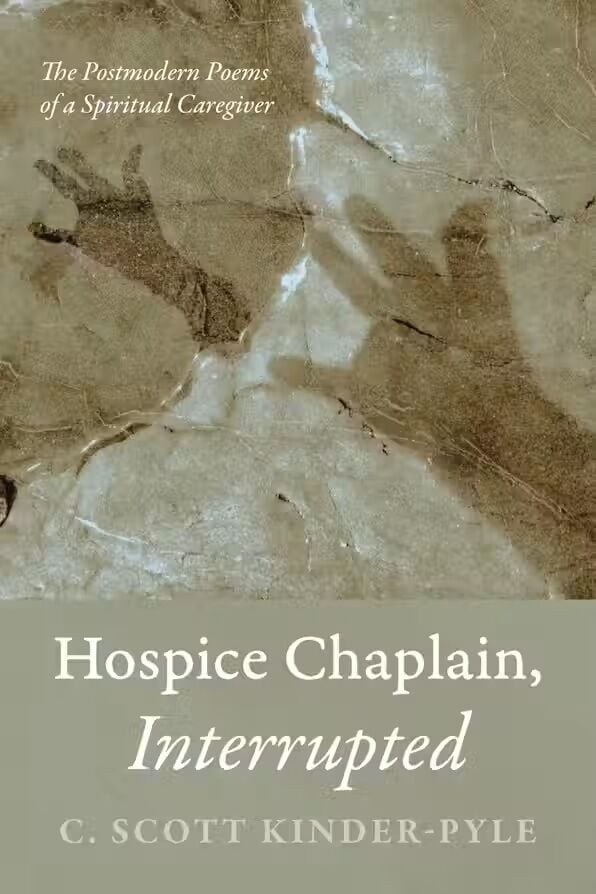
“Hospice Chaplain: Interrupted” examines how caring for the dying transforms the caregiver, exploring the profound discomfort and unexpected revelations that emerge when chaplains sit with patients at life’s end.
Written by the Rev. Scott Kinder-Pyle, a hospice chaplain and Presbyterian ordained minister in Spokane, the collection of poems following an introductory essay challenges some of the typical mechanisms pursued by those who accompany people within their final moments of life.
“The theme is interruption,” Kinder-Pyle said. “Or a fissure in one’s life narrative. When all people encounter another person, if we’re going to engage in a genuine and authentic relationship with them, we have to allow them their difference(s).”
Kinder-Pyle explained that the acceptance of an individual’s whole self – despite the differences that they may have or the way a relationship may affect one’s own life – is attained only by embracing that fissure.
“To really come face-to-face with another person is to allow your own life narrative to be interrupted,” Kinder-Pyle said. He went on to discuss what he argues as being the most profound interruption that the end of life has to offer: death.
“It is an abrupt cessation of one’s narrative,” Kinder-Pyle said.
Something that has bothered Kinder-Pyle about what he referred to as the “institutional church and organized religion” is the means by which organizations and individuals tasked with providing the pre-mortem care are going about their duty.
“A big piece of this is indicting the commodification of spirituality,” Kinder-Pyle said. “When I’m engaging with people about their beliefs as they’re terminally ill or about to grieve someone who’s terminally ill, there’s an opportunity to streamline and make light and overly sentimentalize.”
Kinder-Pyle discussed the way he feels like he and others have been encouraged to uplift and share the light-hearted side of some of the final moments in one’s life. He referred to the phrase “they’re going to a better place” characterizing the attitude expected of those holding the hands of the sick and the dying, rubbing the backs of their loved ones in the waiting rooms.
Challenging the comfort clichés of hospice work
“It’s not like I want to belittle that kind of offering of comfort, but I also want to say that there’s an opportunity to be uncertain and to express this interruption to the way we’ve organized our lives,” Kinder-Pyle said. “Certainly it’s refreshing for many people for a pastor or a chaplain or any person offering comfort to come into a situation and say ‘I don’t know, let’s wonder about that together.’ ”
Kinder-Pyle feels like hospice chaplaincy specifically has often been commodified and turned into a “bureaucratic business model.” He thinks that the themes discussed in his book will resonate with an individual who may be trapped within this system and is unsure of how they could rework what has become the expectation within in this specific line of work.
“It’s for someone who comes with their formulas or their strategies, saying ‘it’s gonna be OK,’ ” Kinder-Pyle said. “I’m not saying things aren’t going to be OK. I’m saying it’s beautiful to give people the space and time to wonder.”
Along with that wonder is the uncertainty that comes with this ultimate interruption in one’s life. A line from the opening essay in his book reads “Come hell or high water, hold space. Come dogma or desperation, hold space,” emphasizing the importance of the humanity required of the workers who sit in a moment of discomfort for what is about to occur.
Randy Bush, a former classmate of Kinder-Pyle’s at Princeton Theological Seminary and reader of his book, echoed this necessity for holding space by being present within these emotional and profound moments .
“In many cases, you offer pastoral support through a ministry of presence – of simply being there with and for the family and loved ones,” Bush said.
Bush wrote a blurb for the cover of Kinder-Pyle’s book, in which he discussed this space for genuine care that hospice chaplains have the opportunity to administer. The “ministry of presence” that he mentioned touched on themes of humanity and decommodification of the business model as a whole.
The theme of interruption in chaplaincy
“I referenced Scott’s own comments about the interruptions of chaplaincy and ministry – the breaking into a sacred space around a dying person’s bed to offer a prayer, to listen to a story, to simply be there in a time of need,” Bush said. “In ‘end of life’ settings or hospital recovery rooms, those caring interruptions can be truly life-giving.”
The caring interruption that Bush spoke on runs counter to the environment that Kinder-Pyle and other hospice chaplains have been encouraged to create for those within their final stage of life. Kinder-Pyle commented on this within his opening essay of the book.
“That essay is addressing hospice workers who are being told to be professional and characterize things on a professional basis,” Kinder-Pyle said. “I want to do that, too. But for the patient themselves, I want to have a moment of mystery, of encountering the mystery of mortality.”
Kinder-Pyle feels like his book is not only for those within similar lines of work as his own. He believes it can spark a conversation among a much vaster crowd.
“My hope is that not just care professionals, but those who receive their care will have an opportunity to use their imaginations and pay attention to what’s been happening around them,” Kinder-Pyle said.