
Spokane refugee organizations combine forces as funding, admissions numbers plummet

The Trump administration’s recent flurry of policy changes to the immigration, asylum and refugee admission processes follows an October decision that already reshaped America’s status as a safe haven for those facing persecution.
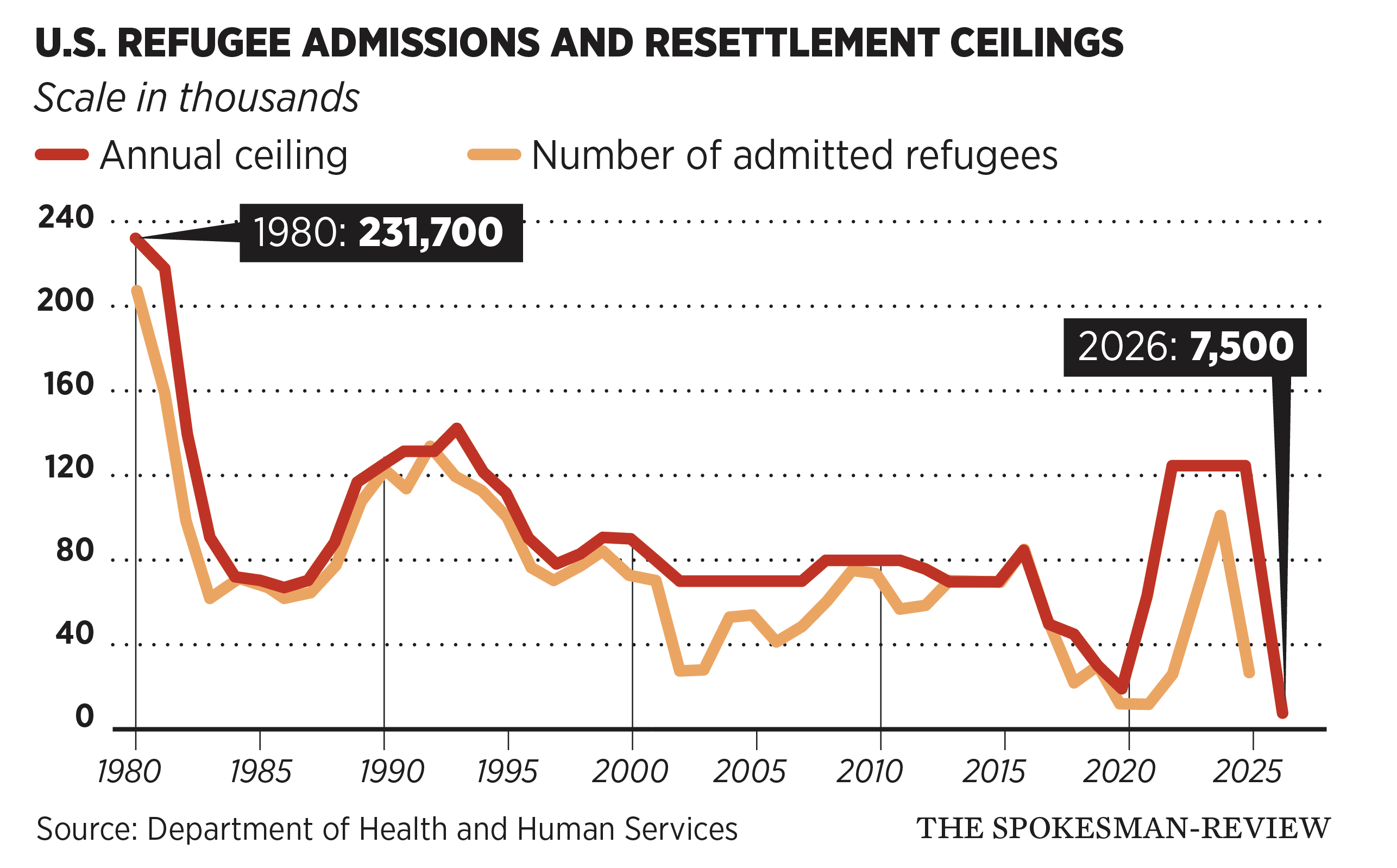
The federal cap on refugee admissions has been set at its lowest point since the program began in 1980 at 7,500. Priority will be granted to white Afrikaner South Africans, according to an Oct. 30 notice in the Federal Register.
“That is pretty alarming,” said Kathryn Garras, communications coordinator for the Eastern Washington Refugee Coalition. “Most of these spots are being reserved for a single group, and it’s basically shutting the door on people who have been waiting, including allies of U.S. missions in Iraq and Afghanistan, families fleeing the war in Ukraine, persecuted religious minorities.”
Members of the coalition, which include Thrive International and the Spokane offices of resettlement agencies the International Rescue Committee, World Relief and Refugee and Immigrant Connections Spokane, said the drastic reduction in refugee admissions could greatly affect the U.S. economy and foreign relations, while leaving “thousands of vulnerable individuals stranded.”
More than 3 million refugees have come to the United States as part of the U.S. Refugee Admissions Program since its creation in 1980 in the wake of the Vietnam War. It benefited from widespread bipartisan support then, and administrations of varying political stripes have shown support in the decades since, said Matthew Soerens, vice president of advocacy and policy for World Relief’s national office.
The president sets the ceiling for refugee admissions for each federal fiscal year, which runs from Oct. 1 to Sept. 30. The Trump administration’s cap of 7,500 is a fraction of the 125,000 cap in 2024 by the former Biden administration.
“That gives you a sense of just how unusually low 7,500 would be,” Soerens said. “That’s the most heartbreaking for us, is we have served so many refugees in Spokane and other parts of the country who still have family members stuck in refugee camps who were hoping to be reunified with loved ones.”
Mark Finney, executive director of Thrive International and former regional director of World Relief, said Spokane County typically resettles about 1% of the refugees who enter the U.S. each year. That would mean around 75 refugees until next September, a decline from the more than 1,000 resettled in Spokane last year.
“That’s really not enough to sustain even one agency,” Finney said. “I don’t know what the resettlement networks will decide to do, but I think it could mean that we would see from very few to none in Spokane. That’s sad, because we have lots and lots of families who are already here waiting for their loved ones.”
Soerens said the move, like others by the administration surrounding immigration, asylum and refugee admissions, didn’t come as a surprise. Trump was clear on his thoughts on the campaign trail, suspended the refugee program shortly after taking office and has since clawed back federal funding.
“This is somewhat just a continuation of the difficult dynamic that we’ve been navigating for a while now,” Soerens said.
The reduction will have an effect on organizations like World Relief, but Soerens said there will still be work to do to support those already in the U.S. next year despite the low ceiling.
“There are still significant needs; people do integrate really well, but it takes some time, and it’s not a short process,” Soerens said. “So there’s still people who need help learning the language and adjusting to a new culture and navigating employment and educational opportunities. We’re really committed to those things, and rely really heavily on volunteers and churches to help with those.”
The reductions could have long -lasting impacts on how other nations view the U.S. not just on humanitarian grounds, but as a military partner, Finney said. The program has long been used to advance U.S. interests, and to support the U.S. economy domestically, Garras added.
“We’ve got people who are in all sorts of sectors, bringing all sorts of skill sets,” Garras said. “People coming with backgrounds in health care, law, agriculture, so many people coming with extensive experience in the trades, which translate so well to great trades jobs over here, which we really need in the community.”
The restrictions, coupled with the Trump administration’s policies on illegal and legal immigration, could result in a nearly $900 billion blow to the U.S. economy over the next three years, including lost labor force participation, entrepreneurship and tax revenue, according to an October analysis by the National Foundation for American Policy.
Garras said now is the time for individuals to make their voices heard and advocate for refugee policies more aligned with the U.S. historic role as a safe haven. The coalition is calling for the ceiling to be lifted to at least 50,000.
“This is a really strong humanitarian program, and making such a drastic change definitely signals a different direction, I think, for our country,” Garras said.