
Michael Baumgartner visits Nigeria to highlight violence against Christians, after Trump threatens military intervention in the country
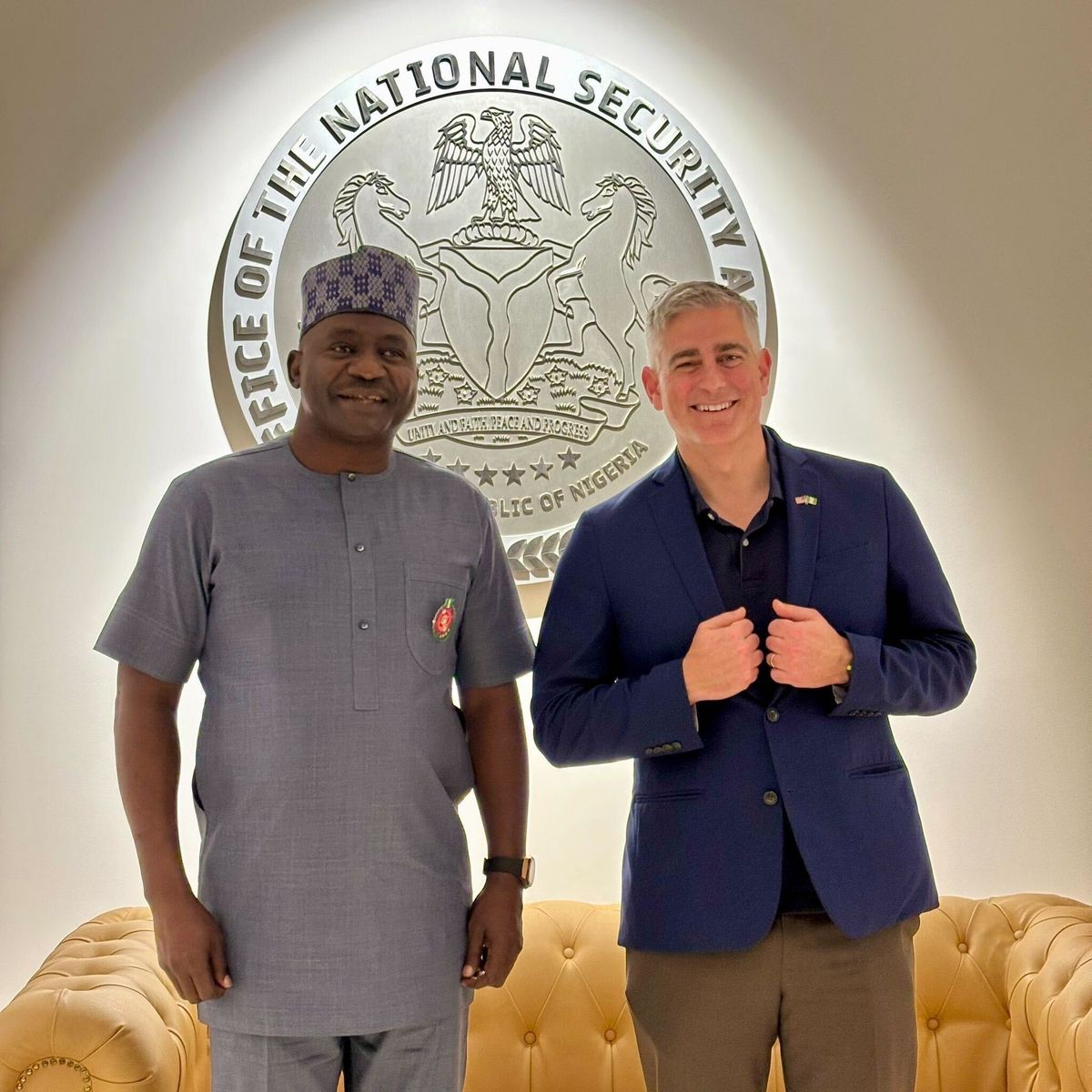
WASHINGTON – Rep. Michael Baumgartner was expected to land in Nigeria’s capital on Saturday for what he called a “Christmas week mission,” meeting with local leaders to urge the country’s government to do more to protect Christians from violence in Africa’s most populous nation.
The two-day visit follows President Donald Trump’s designation in October of Nigeria as a “country of particular concern” for threats to religious freedom. Trump threatened in a social media post that U.S. troops may go into the country “guns-a-blazing” in a “fast, vicious, and sweet” attack on Islamic terrorist groups if the Nigerian government doesn’t “MOVE FAST.” Baumgartner is part of a bipartisan delegation of House lawmakers meeting with government officials and religious leaders in the capital, Abuja.
“I hope that the trip gives the Christian community in Nigeria hope that they’re not alone,” Baumgartner said in an interview on Thursday, “and that the world is watching the actions of the Nigerian government to make sure they’re safe.”
The official census in Nigeria doesn’t measure religion, but according to the Pew Research Center, Muslims make up slightly more than half of the population of over 230 million while Christians represent a little less than half. The population is distributed across a country nearly the size of Washington, Oregon, Idaho and Montana combined, with a predominantly Christian south, a mostly Muslim north and a religiously mixed region known as the Middle Belt, with Abuja at its center.
Baumgartner cited a report from the International Society for Civil Liberties and Rule of Law, a Nigerian human rights group, that found more than 50,000 Christians and some 34,000 moderate Muslims have been killed by Islamic extremists groups in Nigeria since 2009. The congressman said about 7,000 Christians have been killed in Nigeria this year alone, while Trump has cited a smaller number – 3,100 Christians killed because of their faith in Nigeria this year, according to the Christian advocacy organization Open Doors.
That discrepancy may be partly due to the difficulty of determining and accurately tracking the cause of the mass violence that Nigerians have suffered for decades. While experts agree that violence in the country is a serious problem, the extent to which that violence is targeted based on religion is contested.
The Nigerian government doesn’t categorize the victims of violence by religion, making definitive numbers hard to come by, but other research has estimated that more Muslims than Christians have been killed in that period, because the extremist groups Boko Haram and the Islamic State’s West Africa Province have been most active in the Muslim-majority north.
Rep. Adam Smith of Bellevue, the top Democrat on the House Armed Services Committee, said in an interview Tuesday – just after he was briefed on the situation in Nigeria by Defense Department officials – that the problem isn’t as simple as the Trump administration has portrayed it.
“This is not an effort to wipe out all the Christians,” Smith said. “There is a major terrorist and criminal gang problem in Nigeria, and that entire region.”
In a post on Truth Social announcing his decision to designate Nigeria as a “country of particular concern” – something he did in his first term, before the Biden administration reversed that move – Trump declared that “Christianity is facing an existential threat in Nigeria.”
“The United States cannot stand by while such atrocities are happening in Nigeria, and numerous other Countries,” the president wrote. “We stand ready, willing, and able to save our Great Christian population around the World!”
Smith said the U.S. military has limited assets in West Africa and the Pentagon officials hadn’t expressed interest in moving assets to the region anytime soon, but he would oppose U.S. military intervention in Nigeria based on what he called a misleading “clash-of-civilizations, culture-war narrative.” Referring to the Trump administration’s annual National Security Strategy document published in November, the congressman said the president’s interest in protecting human rights seems to be limited to Christians and the white South Africans who are now virtually the only people allowed into the United States as refugees.
“I’m really worried about this,” Smith said. “When you look at the National Security Strategy, it doesn’t say anything about the threat that Vladimir Putin poses to Europe, and says a whole hell of a lot about the threat that ‘wokeness’ and immigration pose to Europe. We seem to have a much different set of values and agendas under this president than under any president that came before him.”
Baumgartner, a member of the House Foreign Affairs Committee, traveled with Smith to China in September and to several countries in the Middle East in April.
The Spokane Republican said he sees two distinct problems affecting Christians in Nigeria: Boko Haram, the Islamic State and other Islamic fundamentalist groups killing both Christians and Muslims in the north; and members of the Fulani ethnic group killing Christians in the Middle Belt region for religious reasons.
Baumgartner said the delegation planned to meet with the U.S. ambassador to Nigeria, Nigerian government officials and Christian religious leaders, and to attend a mass to commemorate a massacre of Christians. He said he wants to see Nigeria’s government provide better security for Christians and hold perpetrators accountable, but he doesn’t support sending American troops into the country.
“President Trump is using serious rhetoric and keeping options on the table so as to have as many carrots and sticks as possible,” he said. “But I would have a lot of concerns about a full-scale U.S. military intervention into Nigeria.”
Baumgartner also wants to see humanitarian support for Nigerians of all faiths who are displaced by violence. Soon after Trump took office this year, he empowered one of the world’s richest people, his then-ally Elon Musk, to dismantle the U.S. Agency for International Development, which had been the world’s biggest provider of humanitarian aid.
Baumgartner said the U.S. government should oppose threats to freedom of religion around the world, not only for Christians.
“America can’t be the world’s policeman,” he said. “But we do have a range of tools, just starting with acknowledgment and highlighting the issue, that is having some welcome impact.”
Nigerian President Bola Ahmed Tinubu responded to Trump’s threats to invade the country with a statement expressing his government’s commitment to defending religious liberty, saying the characterization of Nigeria as religiously intolerant “does not reflect our national reality, nor does it take into consideration the consistent and sincere efforts of the government to safeguard freedom of religion and beliefs for all Nigerians.”
“Religious freedom and tolerance have been a core tenet of our collective identity and shall always remain so,” Tinubu said. “Our administration is committed to working with the United States government and the international community to deepen understanding and cooperation on protection of communities of all faiths.”
Tinubu is a Muslim and his wife is a Christian pastor, an example of the religious mixing common in much of West Africa, where Christians and Muslims have lived together for hundreds of years, long before European countries colonized the region.
With Christmas approaching, Baumgartner drew on his own experience as a devout Catholic who lived in two Muslim-majority countries, Iraq and Afghanistan, when he worked for the State Department and as a U.S. government contractor.
“I’ve spent Christmas in Baghdad and Christmas in Kabul,” he said. “So I’ve seen the challenges of persecution of Christian communities, and I just really hope that our trip gives some hope to the Christians that are being persecuted there.”