
Latin American central banker starts crusade against the dollar
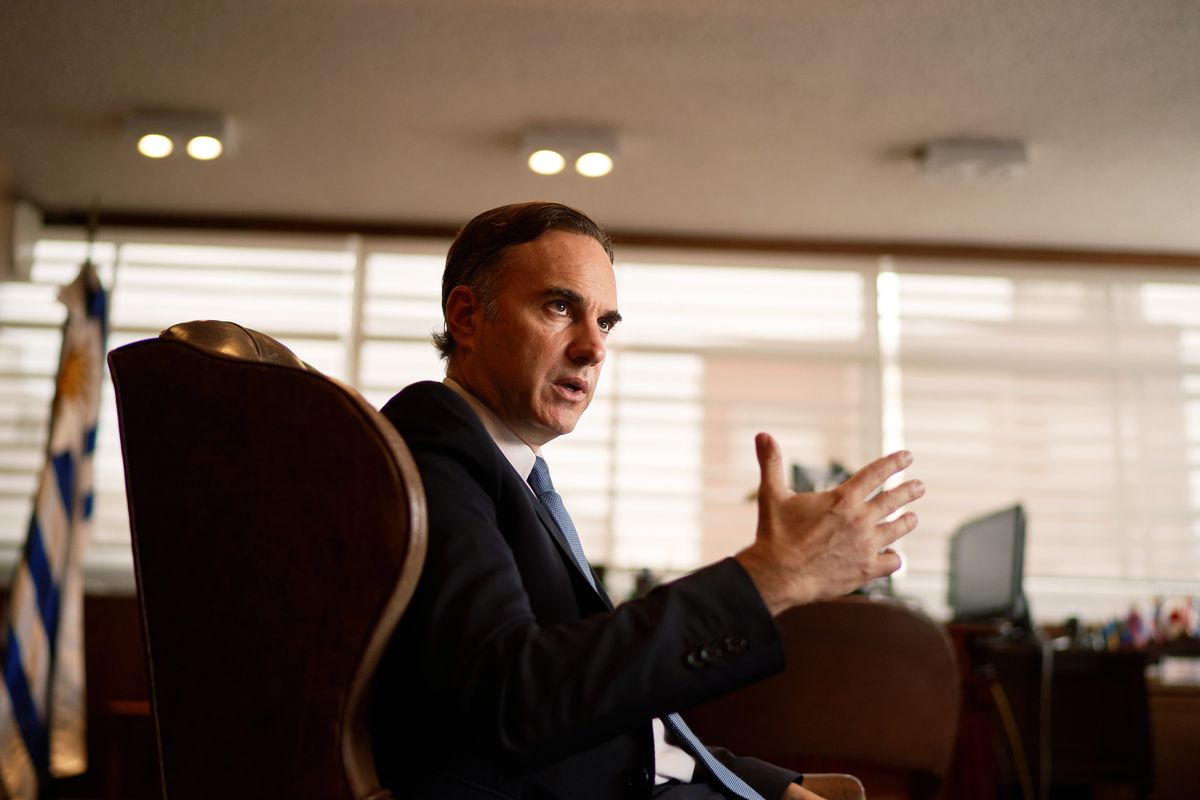
Uruguay’s central bank chief wants to convince savers in one of Latin America’s most dollarized nations that their love affair with the U.S. currency is bad for the economy and their pocketbooks.
Starting next year, Guillermo Tolosa plans to implement measures to boost the use of the Uruguayan peso as part of a strategy to develop a domestic capital market that could benefit local borrowers – from corporates and individuals to the government itself. Tolosa plans to speak with media Friday to discuss monetary policy and the central bank’s de-dollarization plans.
The first steps will include higher capital requirements on banks for some dollar loans along with eliminating reserve levels for some deposits in pesos to encourage banks to give more loans in the local currency. Other measures under consideration include requiring businesses that price goods in foreign currencies to also list prices in pesos.
It will be a long road to discourage dollar use in a country where more than two-thirds of bank deposits are held in U.S. currency. Uruguayans began adopting the greenback during periods of high inflation and currency depreciation in the second half of the 20th century. Today, ATMs offer pesos and dollars, and big-ticket purchases, such as cars and property, are priced in dollars.
President Yamandu Orsi’s de-dollarization push contrasts with that of his counterpart across the River Plate. In Argentina, President Javier Milei is pursuing labor reforms that would allow workers to be paid in either dollars or Argentine pesos. While his most radical currency proposals remain on hold, the libertarian leader has also said he could eventually eliminate the peso altogether, shut down the central bank and adopt the dollar.
Tolosa says Uruguay’s attachment to the dollar reflects an old habit formed in times of economic instability – one he believes the country has outgrown.
“Let’s give up the pacifier once and for all,” he told business leaders in September. “Your purchasing power when you invest in dollars is going to be very volatile. Investing in dollars in a context like this is a form of gambling, like a casino.”
Ditching the dollar
Uruguay’s move to reduce its reliance on the greenback, though driven largely by domestic concerns, also reflects a broader international debate about the future of the dollar. Few expect the U.S. currency to lose its dominant role in the global economy anytime soon, but rising competition from other currencies, geopolitical tensions and U.S. deficits have eroded some of its appeal.
The dollar’s share of central bank reserves slipped from about 71% at the turn of the century to almost 59% last year, according to data from the International Monetary Fund. Dollar assets in Uruguay’s reserves fell to 84% in September from 90% in March when Tolosa took office.
The central bank aims to make significant progress in developing domestic peso markets and reducing dollarization during Tolosa’s term, the monetary authority said in an emailed response to a request for comment.
Tolosa has sought to build public support for his de-dollarization campaign by arguing that Uruguayans are losing money by saving in dollars. Dollar-denominated checking accounts have lost half their purchasing power over the past two decades, he said. The scarcity of local-currency deposits also constrains credit supply, as regulations limit dollar lending to households and businesses with peso incomes.
To persuade Uruguayans to keep more of their life savings in pesos, however, policymakers will need to adopt a lower inflation target – 3% instead of the current 4.5% – and successfully defend it for years, said Aldo Lema, an economist and partner at regional consulting firm Vixion Consultores.
“Uruguay has been very slow in moving toward low and stable inflation, in contrast with Peru, which has had low and stable inflation for a long time and has de-dollarized,” Lema said.
Uruguay until recently was an outlier in Latin America with consumer price gains averaging 8.8% per year from 2001 to 2022. That situation was broadly tolerated thanks to collective bargaining agreements and business contracts structured to shield parties from price swings. High inflation did not prevent Uruguay from earning investment-grade credit ratings or attracting billions of dollars in foreign investment, including pulp mills and luxury beach properties.
Tight monetary policy is beginning to pay off, with inflation staying within the central bank’s 3%-6% tolerance range for two and a half years and hovering around the 4.5% target for six consecutive months.
Entry level housing developer Fabian Kopel thinks the construction industry would benefit from pricing in local currency, using the inflation-indexed UI unit, because about 75% of its costs are in pesos. The UI would help shield builders and buyers from inflation and currency swings that erode margins and push up home prices in dollars, he said.
The downside is consumers have little or no understanding of the UI, said Kopel, whose firm Kopel Sanchez has built about 1,600 housing units.
“The only way this will happen is if it becomes mandatory. That the entire real estate market operates in UI,” he said in an interview.