
Algae bloom prompts health advisory on north end of Hayden Lake
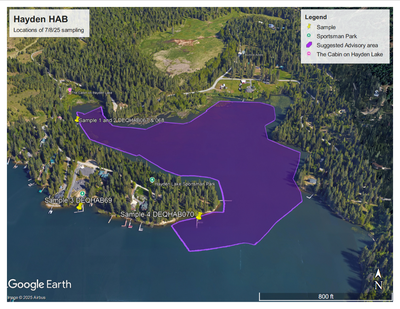
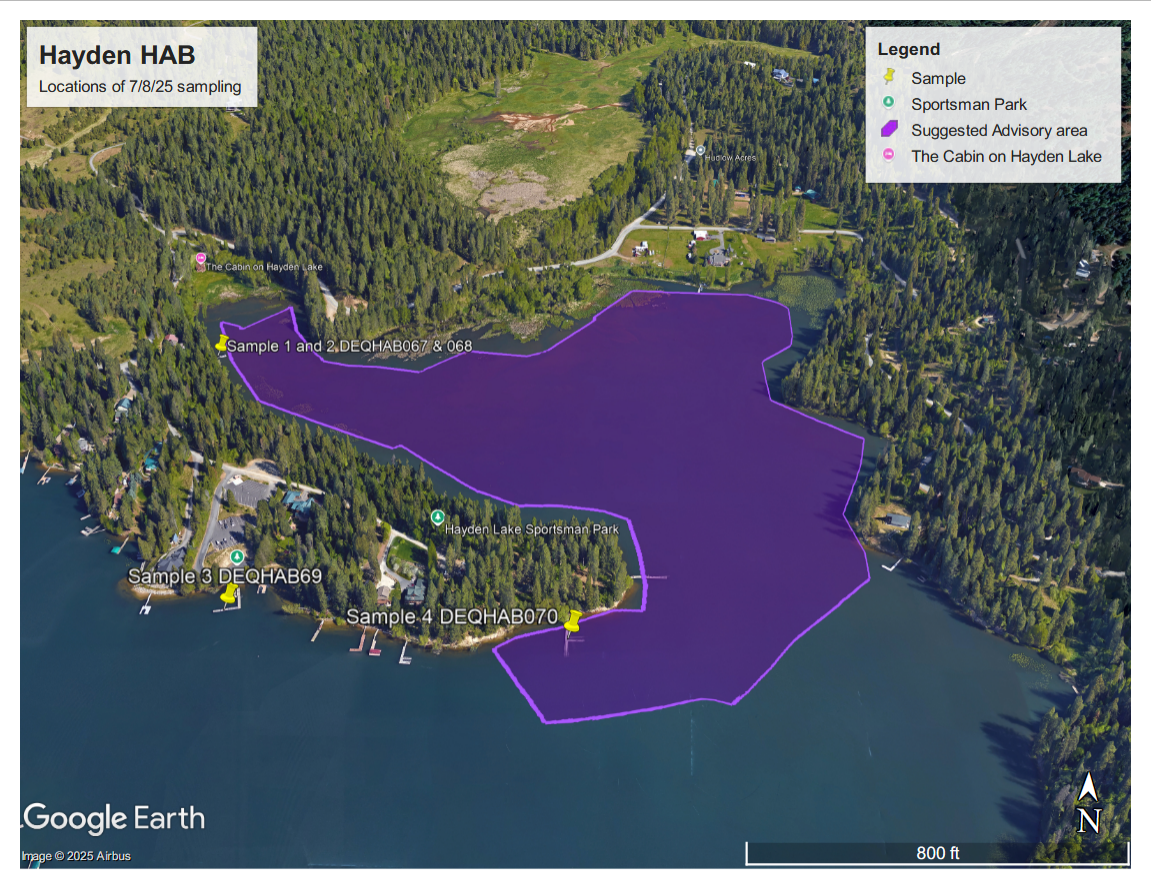
Health officials are warning those swimming, fishing and boating on the northern arm of Hayden Lake near Sportsman’s Park of an algae bloom that can cause serious sickness in people and pets.
The Idaho Department of Health and Welfare issued a public health advisory Friday morning due to cyanobacteria harmful algal bloom. This location has frequently dealt with blooms in past years, and this bloom is similar to previous ones, said Dan McCracken, regional administrator for the Department of Environmental Quality in Coeur d’Alene.
According to Bob Steen, surface water ecologist for the department and Coeur d’Alene’s surface water manager, the organisms present in the bloom are dolichospermum and microcystis. Both organisms occur naturally in water and release toxins during rapid growth.
The dry summer weather was a primary contributor to the formation of the bloom, he said.
“I think that climatic conditions like high temperatures, or lack of wind, also contribute to the development of these,” Steen said. “I don’t think it’s just nutrients.”
Blooms warrant public health advisories when the cell count of a given organism exceeds the threshold of 100,000. Initial samples show that the cell count in this bloom is more than 8 million.
Despite the particularly high cell count in this bloom, Steen said most of the lake is safe from cyanobacteria toxins.
“I do want to add that 99.9% of Hayden Lake is clear and clean. It’s safe from cyanobacteria toxins except for that marginal shoreline we put up in the north end,” Steen said.
Visitors to the popular Honeysuckle Beach area on the south end of the lake have no cause for concern from the bloom, Steen said.
A resident of Hayden Lake contacted the department Monday to report the initial bloom that has formed along the shoreline. Officials observed the bloom Tuesday. If it continues to grow, officials will map out the margins.
Health advisories are lifted once two samples collected a week apart show that the cell count has dropped below 100,000.
Officials warn visitors not to drink the lake water. Boiling or filtering will not kill cyanotoxins. Swimmers and boaters are advised to pay attention to potential blooms, and to immediately wash off with fresh water if they come in contact with water in the area.
Possible symptoms of skin exposure to harmful algal blooms include skin rashes, hives, diarrhea, vomiting, loss of breath, coughing or wheezing. If ingested, cyanobacteria can also lead to serious, sometimes deadly, nervous system problems. Anyone with symptoms should seek immediate medical attention.
Cyanotoxins can be particularly harmful and often fatal to dogs. A fish consumption advisory was also issued, meaning it is not recommended to fish near the area until the cyanotoxins are gone. DHW advises anyone fishing in the area to wear protective gloves and thoroughly wash their hands.
Those who catch fish for eating are advised to rinse fillets before cooking and to remove “skin, organs and fatty deposits” to avoid sickness.
.
Liam Bradford is a graduate of The Spokesman-Review’s Teen Journalism Institute, a paid high school summer internship program now funded by Comma. As the only paid high school newspaper internship in the nation, it is for local students between the ages of 16 and 18 who work directly with senior editors and reporters in the newsroom. All stories written by these interns can be republished by other organizations for free under a Creative Commons license. For more information, please contact our newspaper’s managing editor. Bradford can be reached at (509) 459-5497 or by email at liamb@spokesman.com.