
Hiring freeze spells end of long-term weather data collection at Priest River Experimental Forest
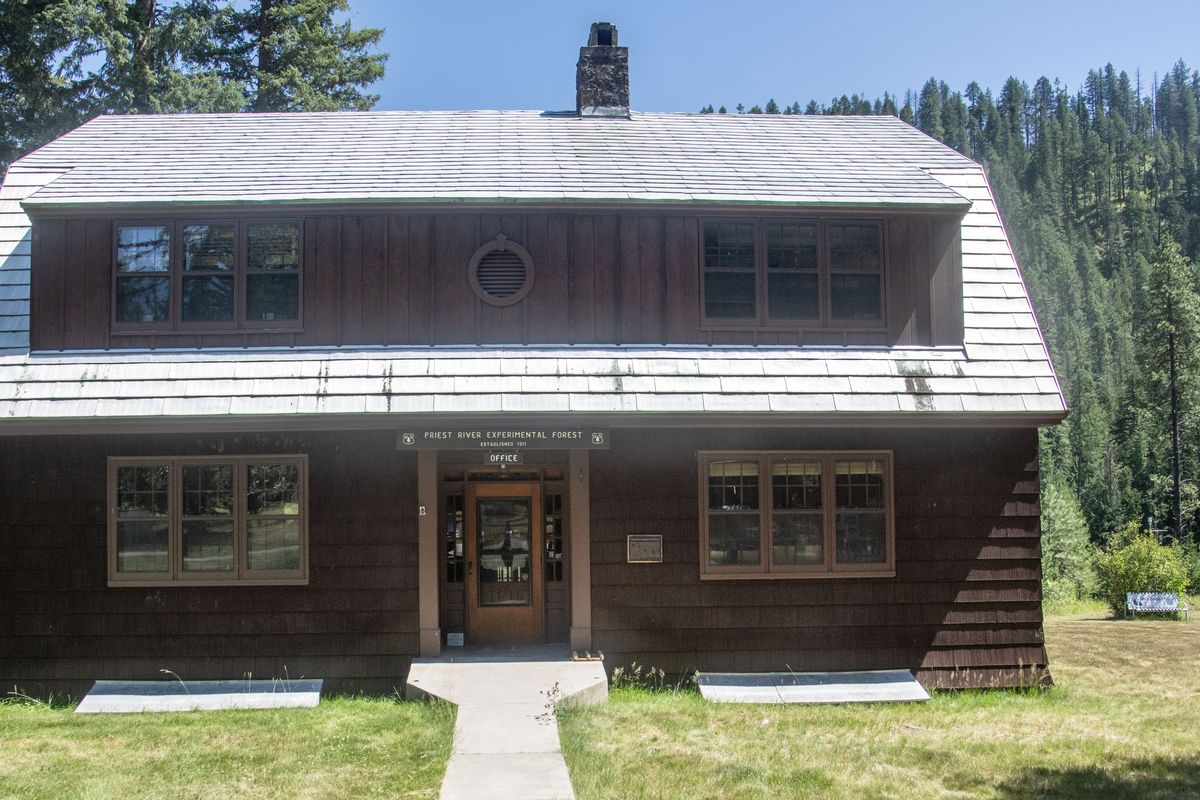
When 5 p.m. arrives at the Priest River Experimental Forest, it’s time to check the weather.
Each day, as afternoon turns into evening, the U.S. Forest Service research staffer based at the experimental forest there walks over to the weather station next to the office and looks at two thermometers – one showing the day’s maximum temperature, the other showing the minimum.
They record the readings and add them to the station’s long-term dataset, which stretches back to 1913.
Soon, though, nobody will be around to add to it.
The experimental forest’s superintendent, who lives on site and is responsible for caring for the grounds, coordinating logistics for visiting researchers and manually gathering daily weather data, is leaving the job this month.
And the U.S. Forest Service, which manages the site, can’t fill the role permanently because of the federal government’s continued hiring freeze, which has been extended to October.
The news has bled out into the Priest River area over the past few weeks, stoking fears that the experimental forest itself might be shutting down.
It won’t shut down, said Jason Reinhardt, the scientist-in-charge of the forest. Other Forest Service employees will be assigned to take care of the property and it will still be open to the public.
But there will be no full-time research staff there, forcing the discontinuation of a handful of long-term data collection efforts – such as the daily weather readings, regular streamflow monitoring and a weekly acid rain sample that’s part of the National Atmospheric Deposition Program.
“We’re stopping some data collection, but we’re not shutting the place down,” Reinhardt said.
There are some digital backups for gathering weather information, but the end of manual data collection will still leave a gap in data researchers have used to track trends going back decades. Gaps have happened in the past, prompted by other people leaving jobs at the forest, but this one comes without a definite end in sight.
Erin Plue, the Idaho state director for Trout Unlimited, said the experimental forest’s weather station provides temperature trend data that’s relatively rare in North Idaho.
“There’s nothing like it nearby,” Plue said. “It’s pretty comprehensive for a long time. There’s very little of these long-term data at lower elevations.”
The loss comes amid uncertainty about the future of the Forest Service’s research and development arm as the Trump administration looks for ways to cut spending and further shrink the federal workforce.
The Priest River Experimental Forest is one of two research forests in North Idaho. The other is Deception Creek, east of Coeur d’Alene. Both are part of the Rocky Mountain Research Station and are overseen by the Forestry Sciences Lab in Moscow, Idaho, which is where Reinhardt is based.
The Priest River forest was set aside for research in 1911. It consists of more than 6,300 acres of timber about a dozen miles north of the town of Priest River.
There are a couple of houses near the office for employees and students who conduct research there. There’s also a bunkhouse and some lodging for researchers who visit throughout the field season.
Forest Service officials chose the area for an experiment station because it contained each of the important forest types found in the West – western white pine, western larch, Douglas fir and western yellow pine.
They also thought it would be a good place to study the climatology of the region, and that there was ample room for test plots to study forest yields and growth, according to a 2004 report detailing the forest’s history.
Theresa Jain, who worked at the experimental forest for more than 30 years, said the purpose of experimental forests is to give researchers and land managers a place to try to address the pressing forestry issues of the time.
“We can study what actually occurs as a function of different management techniques,” Jain said. “It really is designed to inform forest managers.”
Individual studies have led to major advances in fire and forestry science, Jain said. Daily weather data collection helped advance those studies, and now serves as a valuable record of weather conditions.
“One of the things we have now is a history of what’s happening to the climate over the last 100 years,” she said.
The superintendent was the only full-time employee stationed at the forest. The job comes with a wide array of responsibilities. In the summer, the superintendent mows the lawn. Come winter, they plow the roads. If a tree falls in an inconvenient spot, the superintendent grabs a chainsaw and cuts it up. They also coordinate visits from other researchers and keep both short and long-term research work going.
Reinhardt, who was at the experimental forest this week, said he goes there about once a month. He has some long-term projects there, such as a silviculture project looking at western white pine. He plans to visit more now, but couldn’t say how often he would go.
He said the Idaho Panhandle National Forest has agreed to assign employees to the experimental forest to take care of maintenance on the property, which is listed on the National Register of Historic Places.
They won’t, however, have time for daily weather collection or the weekly acid rain sample, which measures the chemistry of precipitation. That sample is collected every Tuesday at 9 a.m. and immediately mailed to a lab in Wisconsin. Streamflow monitoring on nearby Benton Creek will suffer, too, as the employees assigned to work on the property will likely lack the technical know-how required.
The federal hiring freeze has been extended to at least Oct. 15, according to a memo from the Trump administration this week. It’s the second time the freeze has been extended since it was ordered in January.
Tom Weitz, who lives near Priest Lake and is a former president of the Priest Lake Museum board, said he’s happy the experimental forest won’t be shuttering entirely, and that someone will be around to maintain the property. But he said it is disappointing that some of the scientific work will end.
“You just hate to see science being put to the side,” Weitz said.