
Stage review: Theater on the Verge’s ‘Torch Song’ brings depth and laughs
When speaking about “Torch Song” before the play’s opening weekend, Theater on the Verge co-founders Troy Nickerson and Chris Jensen noted the play is groundbreaking for its handling of main character Arnold Beckoff, a gay, Jewish man who lives in New York and works as a drag performer.
Simply put, the show doesn’t punish Arnold for being gay, with actor Marianne McLaughlin noting that it also doesn’t focus on HIV/AIDS, though the show is set in the late 1970s and early 1980s New York City.
“Torch Song” was, and, in a time when drag performers are seen as threats still feels, groundbreaking for portraying Arnold as nothing more than a man with goals and desires and love to give. He happens to be a drag queen, but that’s perhaps the least interesting thing about him.
“Torch Song” is the revised, shorter version of Harvey Fierstein’s “Torch Song Trilogy,” a collection of three plays performed as three acts: “International Stud,” “Fugue in a Nursery” and “Widows and Children First!”
In the first act of the original trilogy, Arnold (Jonah Taylor) meets Ed Reiss (Steve Lloyd), a man uncomfortable with his bisexuality. This discomfort becomes a sore spot for the pair, and Ed ends up breaking up with Arnold and dating a woman named Laurel (Nicole Dietrick).
In the second act, which takes place one year after the first, Arnold meets Alan (Trey Salinas), and the two settle down and even talk about adopting a child. The pair visit Ed and Laurel, where tensions from Ed and Arnold’s past relationship arise.
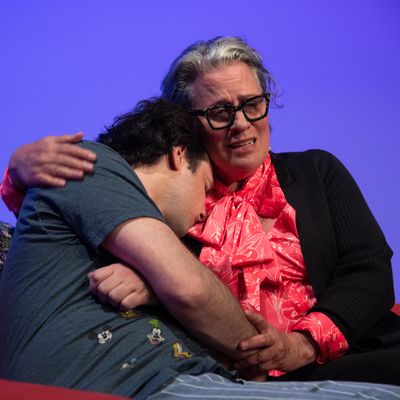
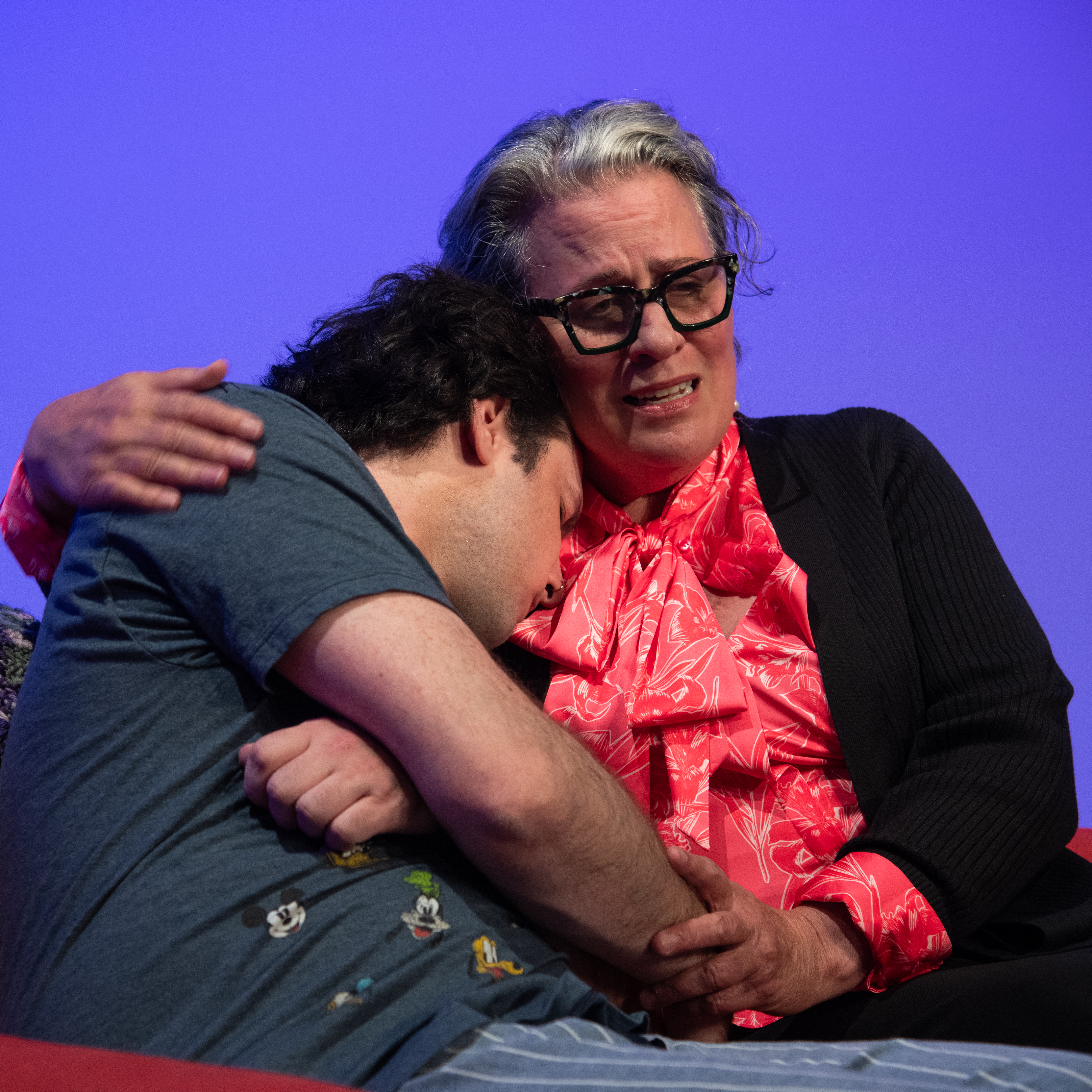
In the third, several years have passed, and Arnold is now a single father to David (Danny Post), a gay teenager. Arnold is also dealing with his disrespectful mother (McLaughlin) when she visits from Florida.
“Torch Song” is directed by Nickerson, produced by Jensen, assistant directed by Phoebe Oosterhuis and stage managed by Mary George. It features set and lighting design by Jeremy Whittington and props by Michelle Holland.
Amy Dawson is the lighting operator and Josh MacCraw and Patrick Treadway handled sound.
Having seen Taylor in at least half a dozen shows during my years writing about theater, including “Kiss Me, Kate,” “Alice By Heart” and “Spring Awakening,” I believe “Torch Song” is his best performance yet.
He handles the role of Arnold with such care and consideration. Arnold wears his heart on his sleeve and shares many of his hopes and dreams, including finding a man for “the rest of the time,” meaning the time when he isn’t performing on stage.
That longing for love is evident in Taylor’s performance. We see when Arnold’s happy and when he’s heartbroken, we see him act out of jealousy and we see him mature and stand up against his mother’s abuse. Arnold is an incredible character, and Taylor handles the emotional rollercoaster that comes with him with realism and doesn’t go over the top, even when Arnold is at a peak.
I liked watching Lloyd show how much Ed changed over just a few years. In the first act, he was grounded when Arnold worked himself into a tizzy when Ed didn’t call right away, but he eventually became someone who had to rely a bit on Arnold while trying to find his footing.
McLaughlin was infuriatingly good as Ma. So many times during the second act, I wanted to grab her shoulders and shake some sense into her, but she illustrated a type of parent figure, the type who can’t seem to understand that her son didn’t choose to be gay, that I’m sure at least a few in the audience have experienced.
She and Arnold lovingly traded barbs throughout “Widows and Children First!” but many of Ma’s lines drew audible gasps from the audience because of their bite. Watching McLaughlin and Taylor go from joking to screaming to crying to hugging and back again felt like watching a masterclass.
For all the tense moments though, “Torch Song” is such a funny show, especially thanks to smaller characters like Dietrick’s Laurel and Salinas’ Alan, who we meet in the latter half of the first act. Their interest in hearing all about Ed and Arnold’s relationship, much to the pair’s chagrin, was really fun to watch and helped illustrate how the relationship between the two men, so tense at the end of “International Stud,” had changed over time.
I won’t spoil it in case you haven’t seen “Torch Song” before, but I don’t think I’ve ever seen part of a show delivered quite like how “Fugue in a Nursery” was presented. Very creative and effective in showing how the quartet of Arnold, Alan, Ed and Laurel interacted during their weekend together.
Also bringing a ton of humor to the show was Post’s David. He was so natural with his witty lines and had great comedic timing to make those lines land as big as possible. This was my first time seeing Post on stage and I’m looking forward to seeing him again,
Theater on the Verge’s production of “Torch Song” marks the regional premiere of the play, which is both surprising and not. I’m surprised no one has wanted to produce this beautiful show before but also unsurprised given the world we live in, one that, again, sees drag performers as threats instead of people who, as Arnold tells his mother, just want love and respect.
Shows like “Torch Song,” which leave you feeling a little awestruck by the final bows, don’t come around very often, so catch it while you can. It runs through Aug. 2 at Hamilton Studio.