
‘One of those magic moments’: Death Cab for Cutie found themselves in a dairy farm, and out came Grammy-nominated ‘Plans’; now they’re onto their 11th studio album
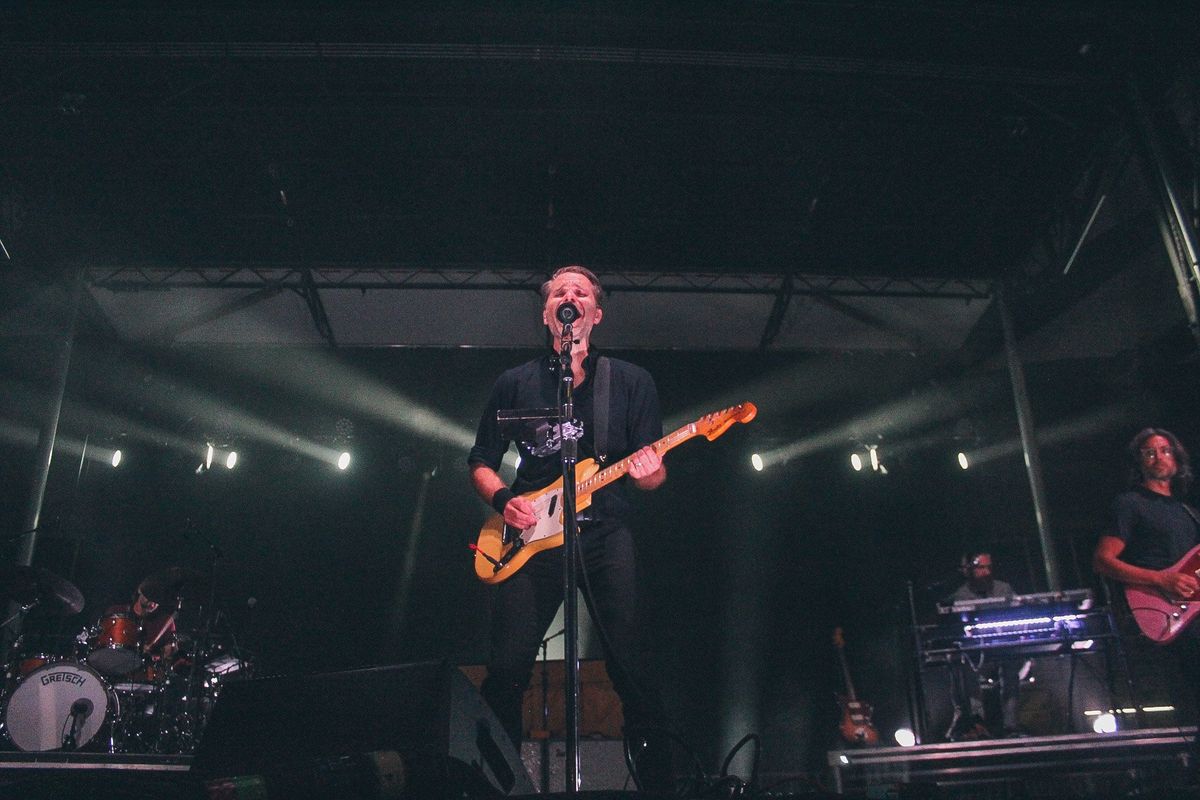
Two decades ago, a once unknown indie rock band formed at Bellingham’s Western Washington University was leaving the West Coast to hunker down in the Massachusetts countryside.
Death Cab for Cutie was coming off “Transatlantacism,” the band’s fourth album and the one that had shifted their momentum to the mainstream. The success of the record not only led to the band signing with a major label, but the first time the world outside of the Pacific Northwest was truly anticipating what they would do next.
That is, for the first time, the awaiting public had created something that could make or break any group of people vulnerable enough to share their heart and soul through the art form we call music – pressure.
“At the time we didn’t really admit it publicly as much,” bassist Nick Harmer said. “Typically, when we’re feeling any sort of pressure, even to this day, we really kind of go small, we go internal.”
Death Cab followed those instincts and fled Seattle for the frosted forests of a Massachusetts winter. Hidden among the barren trees and rolling hills, they spent a month inside a dairy farm turned class-act recording haven, Long View Farm Studios. Out there, away from the loud expectations, the band channeled what they wanted this record, and Death Cab for Cutie, to be.
“At that point, we just concentrated on making an album that felt like an extension of us and who we were as musicians,” Harmer said. “We really just wanted to make a record that we really enjoyed and that we really felt proud of and that we would stand behind. We tried to believe that if we did that, maybe the rest of it would take care of itself.”
During this time, before “Plans” would go on to be the Grammy-nominated, platinum-selling record that it is now, lead singer and lyricist Ben Gibbard continued to follow through with perhaps the primary consistency of every Death Cab album, emotional honesty. Despite the external challenges, Gibbard and the band made a conscious effort to make sure they weren’t thinking about how a song would be received by the public in order to stay authentic and keep the lyrics raw and genuine.
As an instrumentalist, Harmer tries to keep it simple and follow the emotions found within Gibbard’s often autobiographical, philosophically reflective lyricism. Sometimes this means using the bass to create a moody texture around the words, doing quite the opposite and uplifting the tempo in juxtaposition, or simply taking a step back and letting other factors do the heavy lifting.
“I wouldn’t say there’s a fixed way to do it, every album is kind of different and a lot of it just comes down to the song in front of you,” Harmer said. “I think you see that range on ‘Plans’ … we really just kind of all know when something is working and it’s appropriate or when it’s not and where to take it from there.”
This sense of connection between the band and its music led to one of Harmer’s fondest memories from the process of creating “Plans.” On the third and final attempt at recording “I Will Follow You into the Dark,” just Gibbard, his voice and an acoustic guitar created something special. Long before Harmer or his bandmates could know the impending legacy as one of Death Cab’s most recognizable songs, the sheer energy was palpable.
“It was just one of those magic moments,” Harmer said. “Watching it go down, we were like, ‘Wow, Ben just really channeled some lightning here,’ something felt electric in the room. I’ll never forget that feeling.”
Before the band gears up to record its 11th studio album this fall, Death Cab for Cutie will only be playing a select few shows this summer, including a return to Spokane on Wednesday. A few of those performances are specifically to celebrate 20 years of the record that helped define the band, and two of these special dates include Seattle’s Climate Pledge Arena.
Between the sold-out anniversary shows in his home state, constant support from fans, and the opportunity to create music with bandmates he considers family, Harmer can’t help but reflect and feel an immense sense of gratitude for everything the past two decades and this career has given him.
“I’m in a phase right now, certainly, of just gratitude,” Harmer said. “I was a teenager during the Seattle explosion in the ’90s and just so fiercely proud of all the music that was coming out of Seattle, and all my favorite bands were right here in my own backyard. And then to able to be in a band and be a part of that continuing legacy in this area is just, I don’t really have the words for it.”