
MLB Hall of Famer Ryne Sandberg, who helped put Spokane sports on the national map, dies at 65
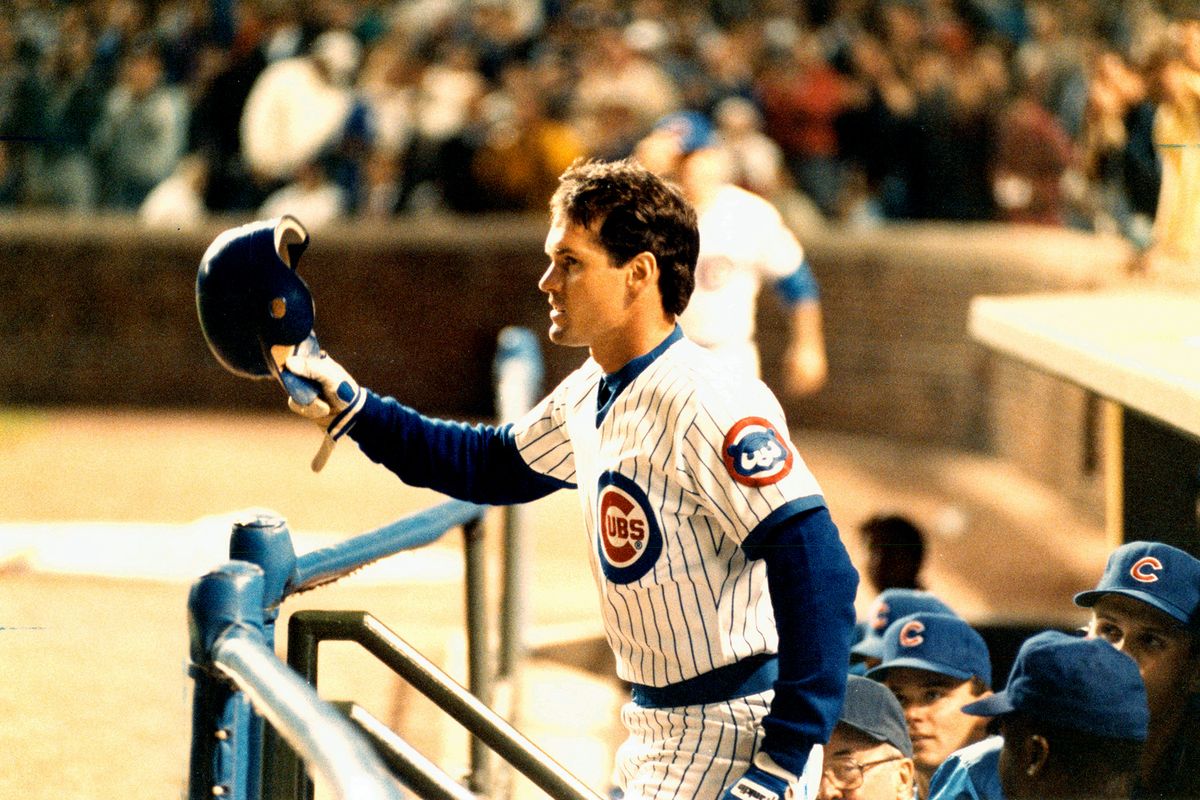
Ryne Sandberg, known nationally as an iconic second baseman for the Chicago Cubs and a distinguished member of the National Baseball Hall of Fame, died Monday at the age of 65 from metastatic prostate cancer, the team announced. Sandberg died at his home surrounded by family, the Cubs shared.
Before he was a Wrigley Field icon, Sandberg – along with eventual fellow professional athletes Mark Rypien and John Stockton – helped put Spokane sports on the map in the late 1970s.
Sandberg was a three-sport star at North Central High School and graduated in 1978. He was named to Parade Magazine’s high school all-America football team, one of eight quarterbacks. He signed a letter of intent to play football for Washington State but opted to sign with the Philadelphia Phillies after being selected in the 20th round of the 1978 MLB draft.
Choosing baseball turned out to be a Hall of Fame decision.
He rose steadily through Philadelphia’s farm system, but received little opportunity after he made his MLB debut in September 1981. Dallas Green, the ex-Phillies manager hired by Tribune Co. to run the Cubs’ front office, saw an opportunity.
Green insisted that Sandberg be included in a trade of shortstops Iván de Jesús-for-Larry Bowa in January 1982, and it changed the trajectory of a franchise that would watch Sandberg put up nearly all of his career statistics in a Cubs uniform.
“If some of those things don’t happen,” he said in The Spokesman-Review in 2005, “I don’t know if I’m in this position today. It’s not always about what you can do or think you can do, but the opportunities and help you get.”
His impressive body of work – 2,386 hits, 282 home runs, a .285 career batting average, seven seasons with at least 100 runs scored, 12 seasons with double-digit stolen bases – made Sandberg part of the Hall of Fame’s 2005 class.
“If I had ever allowed myself to think this was possible, if I had ever taken one day in pro ball for granted, I’m sure I would not be here today,” Sandberg said during his Cooperstown induction speech. “The reason I am here, they tell me, is that I played the game a certain way, that I played the game the way it was supposed to be played. I don’t know about that, but I do know this: I had too much respect for the game to play it any other way.
“I was taught you never, ever disrespect your opponent or your teammates or your organization or your manager – and never, ever your uniform. Make a great play, act like you’ve done it before. Get a big hit, look for the third-base coach and get ready to run the bases. Hit a home run, put your head down, drop the bat, run around the bases. Because the name on the front is a lot more important than the name on the back.”
With an unassuming demeanor and a consistent work ethic, Sandberg earned seven Silver Sluggers and nine Gold Gloves. His all-around skills and steady production led to 10 consecutive All-Star selections, every season between 1984 and 1993, and the National League MVP award in 1984.
Following his distinguished playing career, Sandberg went back to the Cubs’ low minors to work his way up as a manager. Sensing a big league opportunity would not come in Chicago, Sandberg made the lateral move to manage Philadelphia’s Triple-A affiliate in 2011.
He was eventually named manager in Philadelphia, but a rocky tenure with the Phillies ended when he resigned in the middle of the 2015 season with an overall 119-159 record.
Once he finally hung his spikes for good, Sandberg maintained a home on Chicago’s suburban North Shore so that he could stay close to family and be a regular presence at Wrigley Field as an ambassador for the Cubs. He disclosed publicly in January 2024 that he was diagnosed with metastatic prostate cancer.
That reveal coincided with the team’s statue plans and the 40th anniversary of “The Sandberg Game.” Those moments on national TV catapulted Sandberg, who went 5 for 6 with two late home runs off Hall of Fame closer Bruce Sutter in a wild 12-11 comeback victory over the St. Louis Cardinals.
“(That game) changed my whole career, really got me on the map,” Sandberg said last year. “And it was very much a team thing, because the rest of the season, after the All-Star break, Wrigley Field was sold out, which you didn’t see in ’82 and ’83, my first two years.”
Sandberg’s condition recently seemed to worsen. During the All-Star break in mid-July, his Instagram account shared an ominous message that thanked fans for their support.
“It’s been a challenging few months as I have been going through treatment on a regular basis,” Sandberg posted. “While I am continuing to fight, I’m looking forward to making the most of every day with my loving family and friends.
“I haven’t been to Wrigley Field as much as I hoped in the first half but I’m watching every game and am excited for the second half and to see Wrigley rocking like 1984!”
The Athletic’s Patrick Mooney contributed to this report.