
Rising prices, war rooms and layoffs: The cost of Trump’s tariffs is coming
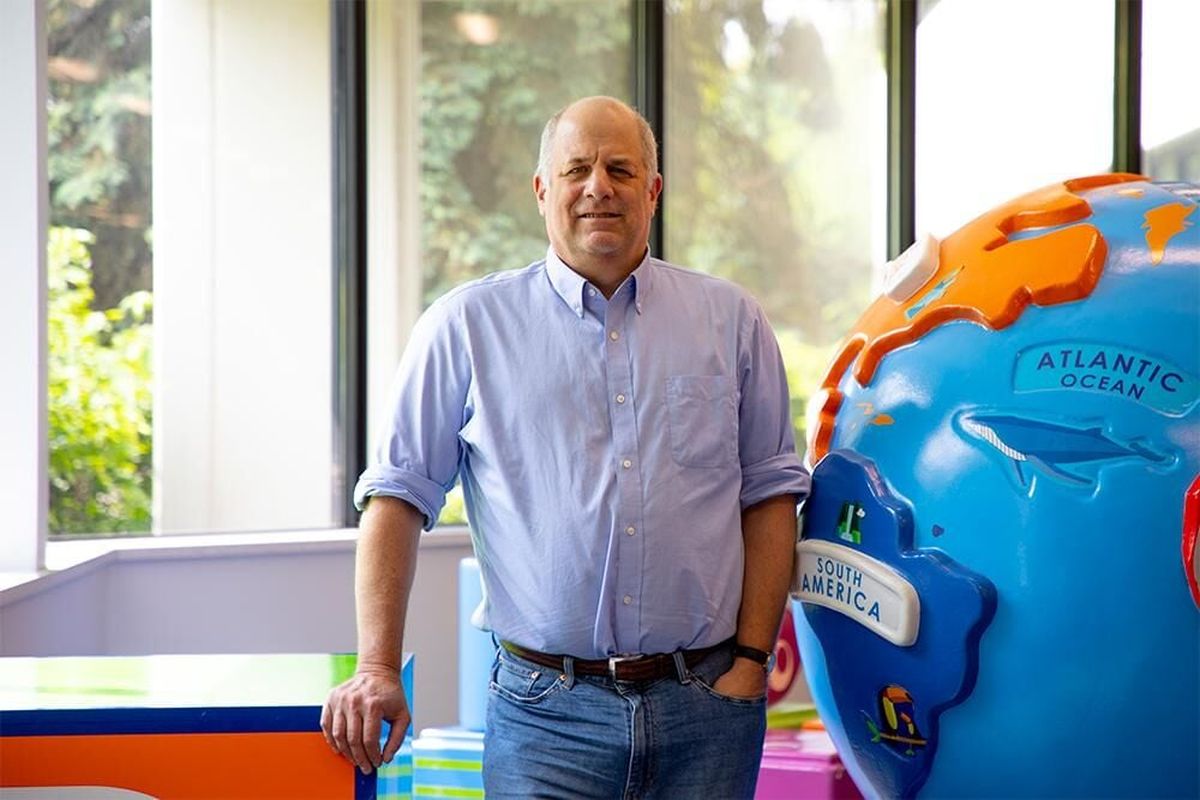
Rick Woldenberg was “gratified” last week when a federal judge ruled in his favor, backing his claims that President Donald Trump lacked the authority to impose the sweeping tariffs threatening to cost his Illinois toy companies tens of millions of dollars.
But the ruling offered him no immediate certainty, said the CEO of Learning Resources and Hand2mind, because he and other business leaders are fighting “simultaneous fires” in this era of global trade.
“From a business standpoint, our situation hasn’t changed,” Woldenberg said. “We are still in a chaotic environment where we cannot know our costs and we cannot know where to put down roots because the U.S. government has completely scrambled all the rules.”
Months of trade policy whiplash and ensuing rounds of legal challenges have created uncertainty at every stage of the supply chain, according to interviews with a half-dozen business leaders. It’s draining resources and creating logistical headaches for wholesalers, distributors and retailers during their most critical business period: June is the busiest time of year for freight, partly because companies are moving much of their inventory for back-to-school and holiday shopping.
Instead, when they’re normally focused on prepping for their most crucial business periods, import-dependent companies are slashing budgets, halting investments and looking for ways to avoid the steepest duties. Others are watching their inventories dwindle, unsure whether they’ll be able to keep shelves fully stocked. Many are cutting staff and other facets of their operations to stay afloat.
Burdened businesses
Since February, Trump has rolled out near-daily updates in tariff policy, insisting his hardball approach will compel more companies to do their manufacturing in the United States and lead to favorable trade deals.
Business owners say the constant changes have created a landscape so chaotic that it rivals the early pandemic period. Nor have the trade edicts moved the needle on domestic manufacturing.
As second-quarter earnings reports trickled in recently, big-name brands such as Best Buy, Macy’s and Costco warned that tariffs were weighing on their businesses. Even the world’s biggest retailer showed it was not immune when Walmart CEO Doug McMillon cautioned that price increases were likely “given the reality of narrow retail margins,” drawing Trump’s ire.
Trump admonished Walmart, which reported more than $640 billion in sales in 2024, posting on his social media platform, Truth Social, that it should “EAT THE TARIFFS” and “STOP trying to blame Tariffs as the reason for raising prices throughout the chain. Walmart made BILLIONS OF DOLLARS last year.”
But businesses can only absorb so much, said Jonathan Gold, vice president of supply chain and customs policy at the National Retail Federation. He said that consumers, who have been largely shielded from price increases so far, will soon see the tariffs’ effects in the form of sparser store shelves and higher prices.
“You’re seeing orders not being placed, orders being delayed or you have retailers bringing in less product,” Gold said. “These charges aren’t costs companies can absorb. They’re going to get passed on to the consumer.”
An early April analysis from Yale University found that price increases from tariffs would cost the typical U.S. household $3,800 this year.
The retail federation’s members - which include grocery chains, department stores, restaurants and clothing companies - are marshaling significant resources and staffing toward monitoring the trade war whiplash and its vast ripple effects, Gold said. Some are operating war rooms where they track policy shifts, strategize over supply chain diversions and map out pricing.
“The challenge is that companies are trying to figure out how to mitigate and diversify and shift their sourcing, and that takes time,” Gold said. “They can’t just bring everything back here for a variety of reasons.”
Woldenberg estimates that at their steepest, Trump’s tariffs would have pushed his import tax bill from roughly $2 million to $100 million a year. Even at the lower rates, he’s had to redeploy resources, and he now has nearly a third of his office staff monitoring and adapting to policy changes full time.
Trump’s first term convinced Woldenberg he needed to insulate his business from “American politicians” he said, so he spent years building his supply chain beyond China, forging connections with suppliers in Vietnam and India to keep producing toys such as the “Big Feelings Pineapple” and “Spike the Fine Motor Hedgehog.”
It was a challenging process, he said, one that forced him to break off relationships with other family-owned businesses like his, including some he’d worked with for many years. Now he’s having to do it all again.
“We know these people, we like these people, we trust these people. We’re trying not to impose pain where we can,” Woldenberg said. “But the whole supply chain just blew up.”
A White House spokesperson did not respond to a request for comment.
J.D. Ewing is president and CEO of COE Distributing, the nation’s largest office furniture wholesaler. The tariff uncertainty is painful, he said, noting that even the tariff “pause” slated to end in July is rife with unknowns.
“Any change in the posturing of what the amount of tariff is going to be from a particular country just jumbles up any and all best-laid plans,” Ewing told The Washington Post.
Ewing said that on a recent call with wholesalers from a variety of industries, it felt as though everyone was encountering the same challenges, all while facing an environment that makes planning nearly impossible.
“Uncertainty creates a need to change almost as the wind blows,” he noted, but businesses can only adjust so fast and so often.
“The supply chain is anywhere between four and eight months long, and therein lies the challenge when you have constant unknowns,” Ewing said.
Crunch time
For many companies, the tariff uncertainty is undermining preparations for back-to-school and holiday shopping. Americans spent nearly a $1 trillion on school supplies, apparel and accessories last year, according to S&P Global. The National Retail Federation reported holiday sales of $994.1 billion.
In the footwear sector, the “poster child” of highly tariffed industries even in ordinary times, according to Matt Priest, CEO of Footwear Distributors and Retailers of America, the recent trade tumult has been deeply felt. The industry paid more than $3.3 billion in duties last year, and levies on a pair of shoes can run as high as 67.5 percent, according to FDRA.
Because China is the industry’s No. 1 supplier, he said, manufacturing has been stop-start as companies decide how much product they can afford to import. Inventory is piling up at ports, and shipping container costs have more than tripled amid the backed-up demand ahead of the back-to-school shopping season.
Some FDRA members have asked their partners in China to destroy inventory, Priest said, knowing it’s not viable to ship the items thanks to tariff-related cost increases. And while some big brands can shift sourcing and divert products elsewhere, smaller and midsize firms have less flexibility, he noted.
“A lot of the damage is already done,” Priest said. “We have kids’ shoes now that have over 200 percent duty. You can’t make money on that.”
Rick Muskat, president of Deer Stags, a family-owned maker of men’s and boys’ shoes, said the “trade war threatens our ability to reach our 62nd year.” He’s had to raise boys’ shoe prices by $10 a pair, the kind of increase he knows adds up quickly for families with multiple kids and fast-growing feet. He’s loath to raise prices further but said he’s running out of options.
“We’re cutting overhead everywhere we can to try and stay afloat amid all this,” Muskat said.
Though many business owners reworked their supply chains (particularly shifting away from manufacturing in China) after Trump’s first term, Deer Stags is limited in how much it can shift. When Trump jacked up duties on China to 145 percent in April (which have since been rolled back to 30 percent), the New York-based shoemaker started taking steps to move some of its men’s shoe production to Myanmar, Muskat said. But Deer Stags hasn’t been able to find sourcing that meets its standards and price points anywhere outside of China for boys’ shoe production.
So instead of being busy gearing up for the back-to-school rush, Deer Stags is stuck. “We don’t have the goods we need to make sales,” Muskat said, and it’s anyone’s guess whether his warehouses will be full anytime soon.
On inventory scheduled to arrive this month, Deer Stags is facing additional levies in excess of $300,000, which has Muskat wondering where the money will come from, “let alone every month after that.” He’s already had to lay off a few employees.
“I’ve been talking to a lot of people in the industry, and the multibillion-dollar companies are going through similar gyrations,” Muskat said, adding that other business leaders have told him that they’re freezing spending and putting off store openings and technological upgrades to get by.
“You’ll start to see it in the stores soon,” he said. “There will be price increases in almost every product.”