
This day in history: Some Spokane repair shops were removing catalytic converters from mufflers in violation of new law aimed at cutting air pollution

From 1975: Some Spokane garages and muffler shops were illegally removing catalytic converters from 1975 model cars, said Fred Shiosaki, director of the Spokane County Air Pollution Control Authority (now known as the Spokane Regional Clean Air Agency).
Catalytic converters are pollution abatement devices and were required in the muffler systems of 1975 vehicles.
Shiosaki had fielded numerous calls about the issue, some from car owners and some from competing muffler shops accusing other businesses of removing the converters.
“One of the calls wasn’t exactly a complaint,” Shiosaki said. “A man from a local shop said he wanted to know if removing the equipment was legal, because if it was, he wanted to get in on the business.”
It was a gross misdemeanor, and the car owner ran the same risk of being charged.
An EPA official said the converters had little effect on mileage or the performance of the car, but did significantly cut carbon monoxide emissions. The federal standard for carbon monoxide pollution from a car was 30 grams of carbon monoxide per mile. The converters kept emissions to 9 to 12 grams per mile. A car without pollution control might emit as much as 100 grams a mile, he said.
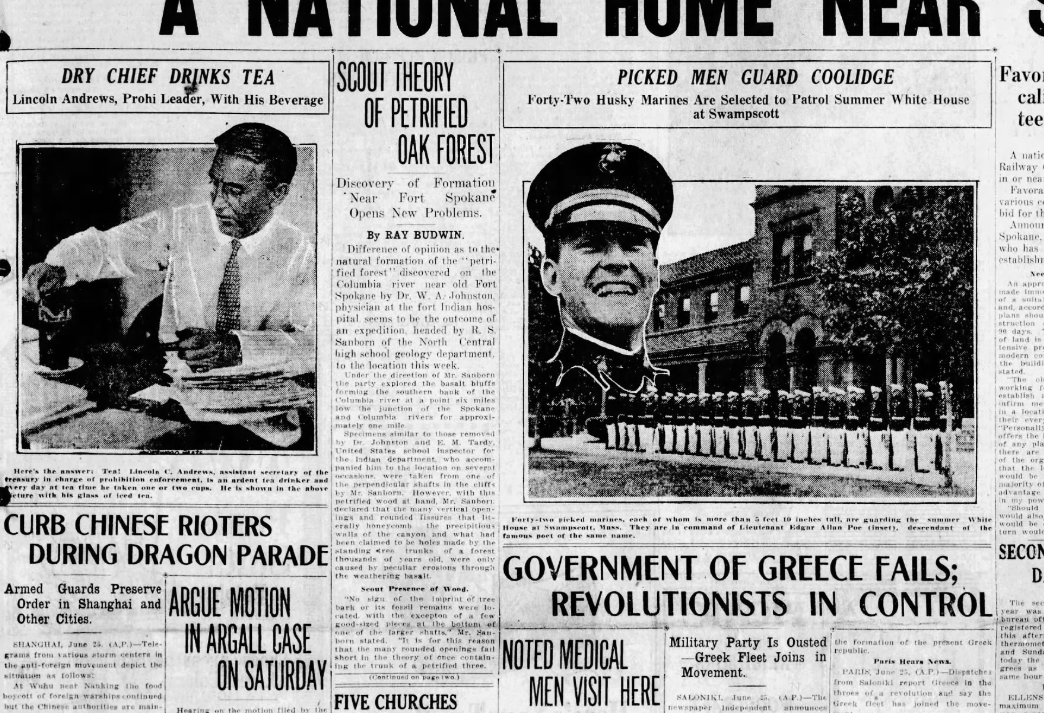
From 1925: A “petrified forest” of fossils had been found on the Columbia River near old Fort Spokane by Dr. A.W. Johnson, the physician at the nearby tribal hospital.
Or was it?
An expedition led by R.S. Sanborn of the North Central High School geology department shed doubt on the idea that the vertical holes in the basalt were made by standing tree trunks. He said there was no imprint of tree bark on the walls of the holes. He said the holes were made by the normal freezing and cracking process in the basalt.
He did find some “excellent specimens of silicon-decomposed wood,” but he said they were lodged in the rock at a later time and not part of a forest at the same spot.