
New strain of bacteria identified in bighorn sheep from Missouri Breaks where large die-off occurred
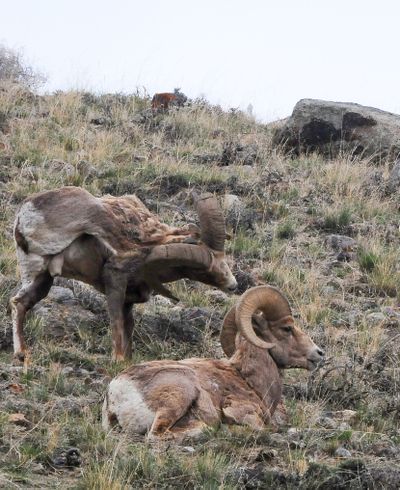
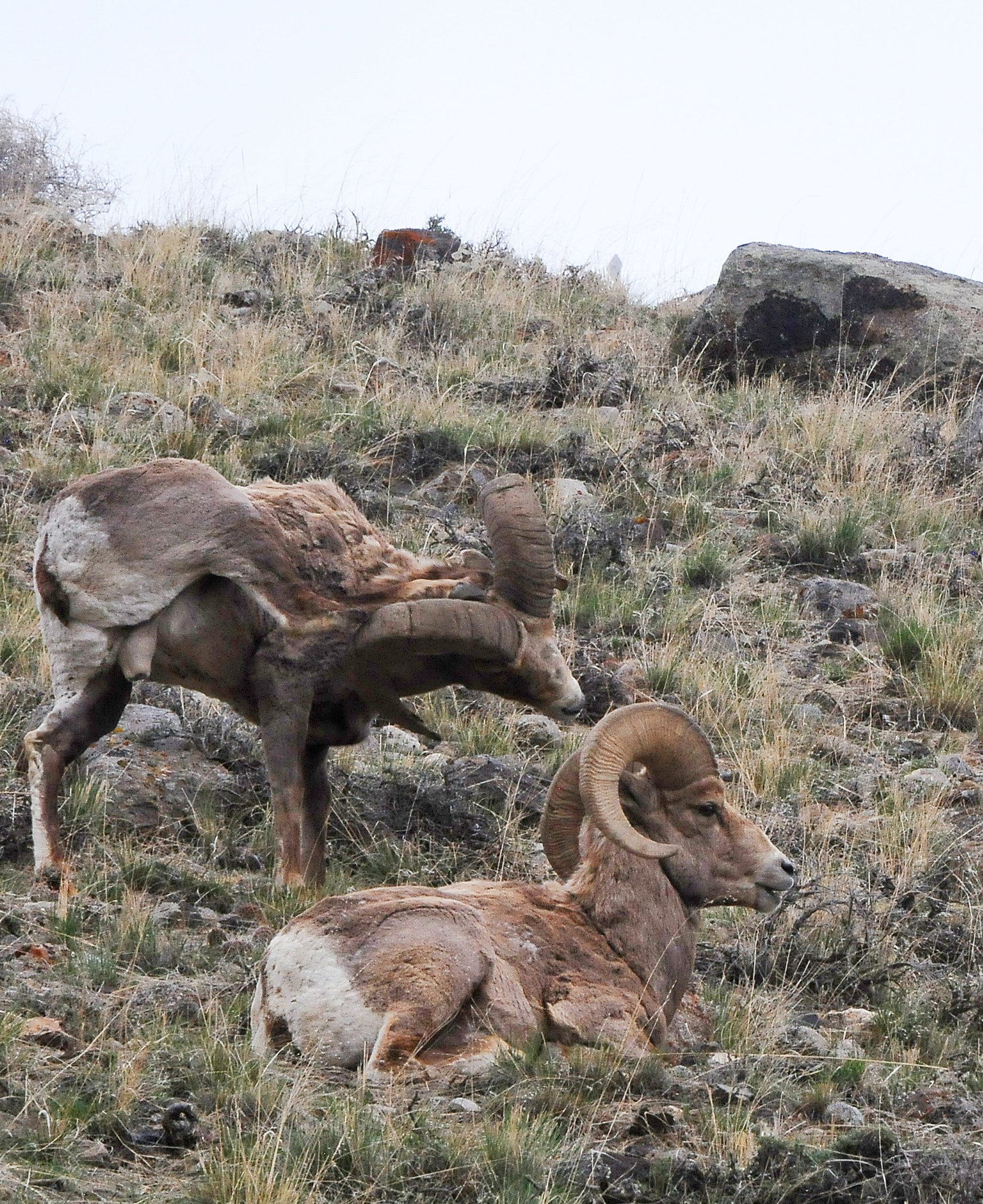
BILLINGS – Although two bighorn rams from the Middle Missouri Breaks herd tested positive for a bacteria that can lead to pneumonia, Montana Fish, Wildlife & Parks officials can’t say that’s what led to the nearly complete die-off of the once-robust herd.
One ram that was tested died during capture this spring. The other was killed by a hunter last fall. Both tested positive for Mycoplasma ovipneumonia or M. ovi, which can cause pneumonia.
“It’s hard to say what proportion of the decline we can ascribe to M. ovi,” said Emily Almberg, an FWP disease ecologist.
That’s because M. ovi can make bighorns and domestic sheep and goats susceptible to other infections.
“We have herds with M. ovi that are doing OK for a long time and we don’t know why,” she added.
But Almberg also noted the rapid die-off of a herd that was once free of the bacteria – and robust enough to allow liberal hunting and captures for transfer to other herds when the population hit 318 sheep in 2016 – is consistent with a group of animals that hadn’t previously been exposed to the bacteria.
“It was a perfect storm from an epidemiological perspective,” she said.
The bacteria in the hunter-killed bighorn was also a new strain, according to researchers at the Washington Animal Disease Diagnostic Laboratory in Pullman, Washington, who conducted the analysis.
“It’s not a perfect match with anything WADDL has sequenced before,” Almberg said.
The question then becomes, where did the bacteria come from?
In general, Almberg said the strains of M. ovi found in bighorn sheep are fairly stable. In domestic livestock though, like sheep and goats, there are more variations.
“Potentially, the strain could point to where it came from,” she said. “But strain diversity even in a flock can be high.”
Almberg also noted that bighorn rams may be moving a lot more than previously believed.
FWP biologist Nic DeCesare said two collared bighorn rams have been recorded going on long walks during the mating season. One from the Skalkaho Creek area near the Bitterroot Valley trekked 130 miles before returning home. Another, in the Sleeping Giant herd north of Helena, wandered almost 150 miles.
“The more we learn, the more questions we have,” Almberg said.
Scott Thompson, the Region 6 wildlife manager, said signs the Hunting District 622 herd in northeastern Montana may have been in trouble came during drought years when lamb survival dropped. The herd was averaging about 45 lambs per 100 ewes. In 2022 and 2023, that dropped to around 31 to 35 per 100 ewes, half of what the herd was producing between 2016-21.
In 2024, there was a rebound to 43 lambs, but then came last year’s and this winter’s die-off.
Some hunters pointed to an increase in mountain lions in the region as a possible cause.
“We have seen lions occupy more of the Breaks, including areas that overlap with this sheep herd,” Thompson said.
But to see such a significant decline leads him to believe the herd’s demise has been caused by more than lion depredation, especially in such a short period of time.
There still are a few sheep that have survived in the hunting district, at least four other rams were seen during the spring survey. Whether there are other ewes on the landscape for the rams to breed with is unknown. FWP is asking anyone who sees bighorns in the area to let them know at (406) 228-3700.
Thompson is unsure if more bighorns will be introduced to the area in the future.
“That will be a department discussion,” he said.