
Gardening: Hardy peonies add burst of color to the landscape
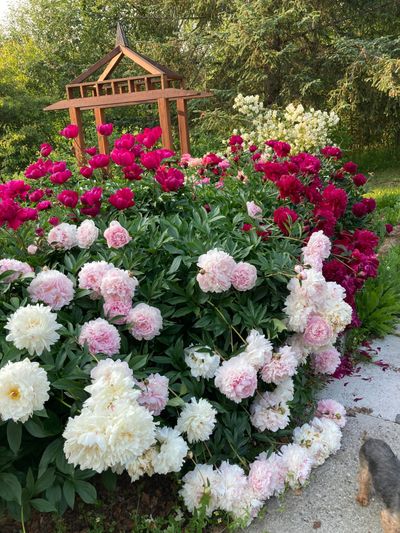

Some gardeners consider peonies to be the queens or divas of the garden. Not because they take a lot of fussing over but because they add bold and color to the late-May garden and herald the start of summer.
Growing peonies isn’t difficult. They prefer soil rich in organics and can tolerate some dryness. They can handle full sun and light partial shade, especially in the afternoon. It’s best to fertilize them in early spring before they emerge and again after they finish blooming with a 10-10-10 or a 15-15-15 fertilizer. The flowers come in shades of pink, red, yellow, white, purple and cream.
There are only two things that peonies are particular about. The first is that the top of the root ball should be within an inch of the soil surface. If it’s buried too deep, the plants won’t flower properly if at all. This means that if you are planting new nursery-grown plants, you may need to remove a little soil off the pot to find the top of the root ball.
The second thing is that established plants should only be moved in the fall after the foliage begins to yellow. Insert your shovel about a foot out from the stems and slowly work your way around the plant prying gently as you go. At this point, the root ball can be divided with each piece having a few pink buds at the top of the root ball. Replant it to the same level it was originally planted and water well. It may take two to three years to begin blooming again.
Peonies are extremely long-lived plants. I’ve heard so many stories over the years about people moving Grandma’s peonies to a new house and then another new house and then to the grandkids’ new houses. They can live to be over 100 years old.
They are also hardy, down to USDA Zone 3 or minus 30 to minus 40 degrees. This characteristic has led to the development of an unusual cut flower production area in the southern part of interior Alaska and the Kenai Peninsula. Flowers grown in this region don’t bloom until late July and early August and then supply the market in the Lower 48 states into late summer.
There are three types of peonies: herbaceous, tree and Itoh or intersectional. Herbaceous peonies are the most common and die to the ground every fall. They grow to around 3 feet tall and need to be staked to keep them erect. Tree peonies have woody stems and can grow to 6 to 7 feet tall with time and remain standing through the winter. They aren’t as hardy as other peonies and prefer more dappled sun. The last kind is the intersectional or Itoh peony, which is a cross between the tree and herbaceous peony. It has the sturdy stems of the tree peony but dies to the ground in the fall. The plant prefers full sun and gets about 3 feet tall.
Best of all, they are deer resistant.