
This day in history: Spokane residents panned plan to turn Southeast Boulevard into 4-lane arterial
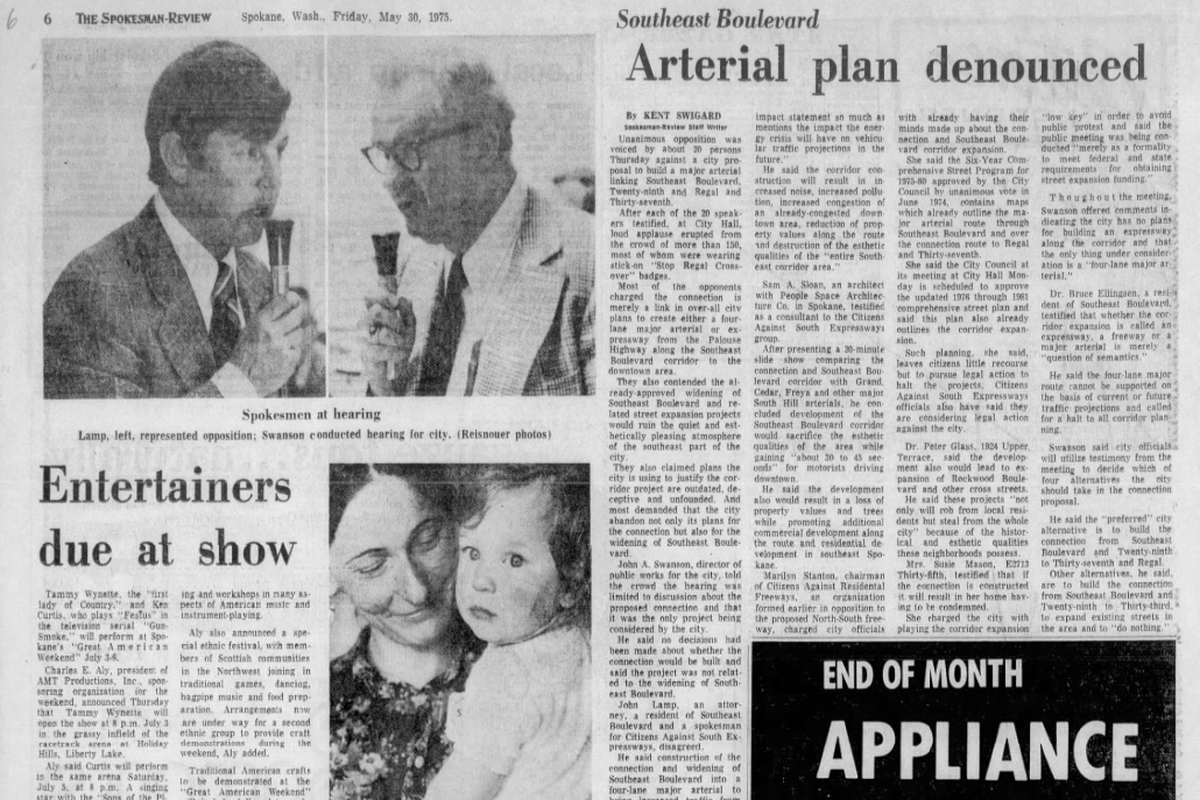
From 1975: “Unanimous opposition” was the unequivocal response to a city proposal to “build a major arterial” linking Southeast Boulevard, 29th Avenue, Regal Street and 37th Avenue.
About 20 speakers condemned the idea at a City Hall hearing, prompting loud applause from audience members wearing “Stop Regal Crossover” badges. Many were members of “Citizens Against South Expressways.”
They said it would “ruin the quiet and aesthetically pleasing atmosphere of the southeast part of the city.”
“They demanded that the city abandon not only its plans for the connection, but also for the widening of Southeast Boulevard,” The Spokesman-Review said.
City officials replied that the city had no plans for building an “expressway,” just a four-lane major arterial. They said no decision had been made about the future of the project.
Today, Southeast Boulevard remains mostly a two-lane road. One alternative proposal, however, did mostly come to fruition. The city built a “crossover” in 1999 to link Southeast Boulevard to Regal Street through a curved roadway that runs from 31st Street to Regal at 34th Street.
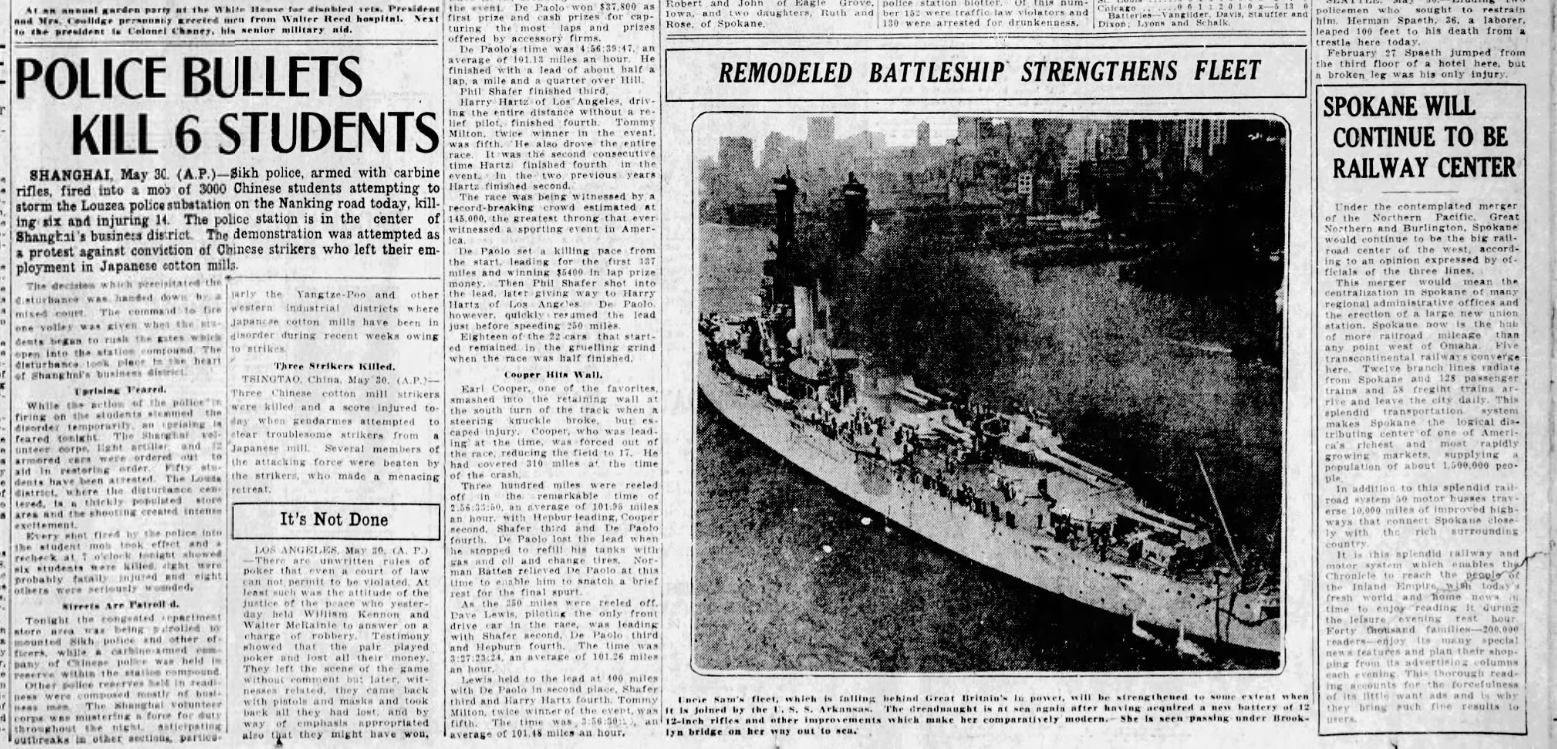
From 1925: Spokane would continue to be “the big railroad center of the West” even following the proposed merger of the Northern Pacific, Great Northern and Burlington lines, the Spokane Daily Chronicle said.
“The merger would mean the centralization in Spokane of many regional administrative offices and the erection of a large new union station,” the Chronicle predicted. “Spokane now is the hub of more railroad mileage than any point west of Omaha. Five transcontinental railways converge here. Twelve branch lines radiate from Spokane and 123 passenger trains and 58 freight trains arrive and leave the city daily.”