
‘Thanksgiving Play’ gives voice to Native communities in roundabout way
For how far women have come over the course of history, fighting to be included, to have their voices be heard, there are still barriers being broken.
In 2023, Larissa FastHorse became the first female Native American playwright to have a play produced on Broadway.
The first. In 2023.
FastHorse’s play, “The Thanksgiving Play,” presents an interesting scenario in which four white-passing men and women are tasked with creating a play about the first Thanksgiving that is politically correct and sensitive to Native history as part of Native A merican Heritage Month celebrations in a school. One of the biggest hangups is that there are no Native voices guiding the quartet.
The director of the play, Logan (Katie Preston), thinks she has that part covered when she hires an actress who she believes is Native, Alicia (Elena Joyner), to bring cultural authenticity to the production. When Alicia arrives at the school, however, Logan learns she is not Native; she just portrays Native characters when asked.
Logan, her partner Jaxton (Jackson McMurray), an actor, Caden (Erik Contzius), a clueless history teacher, and Alicia struggle to follow school district rules while bringing historical accuracy to their play, all while addressing privilege and misrepresentation of Native history and culture.
Jeremy Whittington, former artistic director of Stage Left Theater, approached director Misty Shipman, an enrolled member of the Shoalwater Bay Tribe of Indians, about leading a production of “The Thanksgiving Play” about three years ago.
Shipman wasn’t familiar with the play at the time, but she read the script and found FastHorse to be a “brilliant, witty, cunning, biting satirist.”
“The Thanksgiving Play” was one of assistant director Jaz Vega’s, a Native Hawaiian and Mexican-American, favorites from the 2023 theater season. The show, they said, has a bite to it that they hadn’t seen before, not only in on- and off-Broadway works, but also in Spokane.
“It doesn’t feature Native voices, but in its own really special way, uplifts them through the silence,” Vega said. “We really integrated it into the show, and it’s really beautiful.”
“The Thanksgiving Play” opens Thursday at Stage Left Theater and runs through Nov. 30.
As director, Shipman made a concerted effort to bring Native voices to the theater. In “The Thanksgiving Play,” the odd-numbered scenes can be performed however the director would like. Some directors, Shipman said, will make those scenes a puppet show or animate them, while others will use the main four actors in those scenes as well.
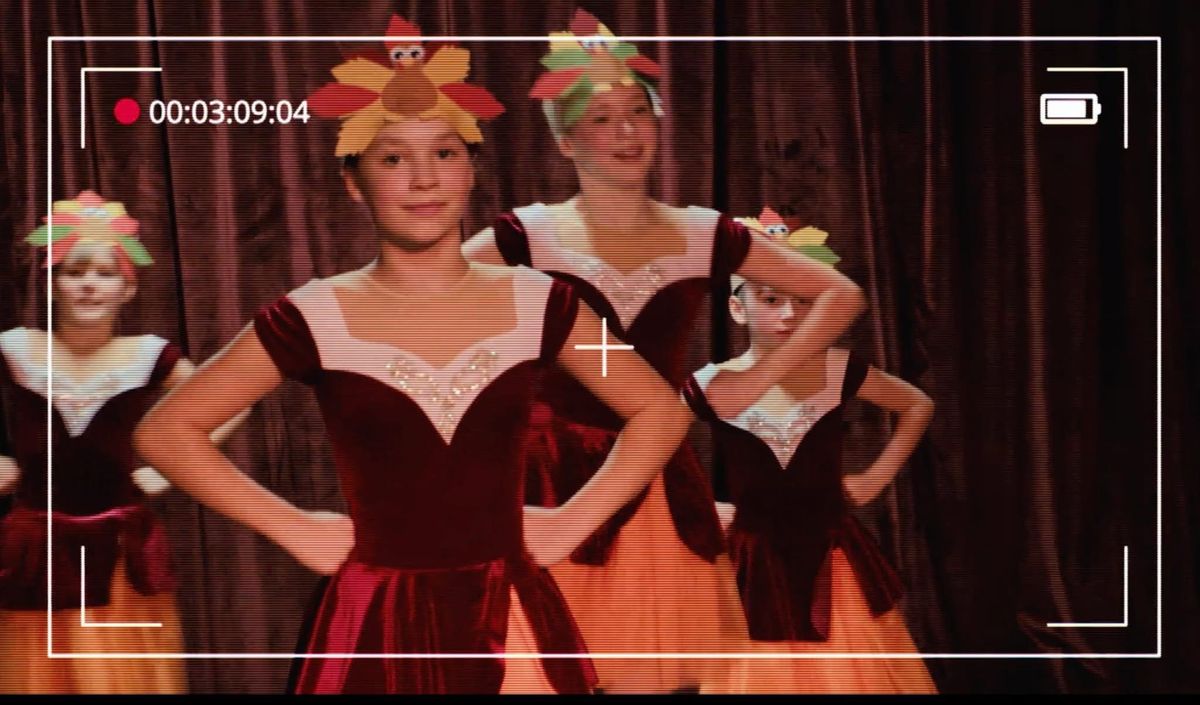
Shipman, a filmmaker, chose to film the odd-numbered scenes with BIPOC actors. Cinematographer Evan Olson helped Shipman film those scenes, which feature actors Iaitia Farrell, Ron Ford, Mary Ormsby, McMurray, Vega and students from Company Ballet School.
“The heart and soul of the show comes through in those odd-numbered scenes, and that’s where we get the representation that I was really hopeful for,” Shipman said.
There will also be art in the lobby created by Native artists, and scene transitions will be accompanied by music from the Halluci Nation, a First Nations electronic duo.
“The Thanksgiving Play” features a cast of characters who mean well but haven’t quite nailed the execution. Good intentions and acting in good faith can take you far, Shipman said, but what people like the characters in “The Thanksgiving Play” really need is more information and knowledge.
“As most satires go, especially when you’re talking about, I believe the way that they refer to the group of people is the ‘terminally woke,’ there’s an opportunity to get the mirror shined at yourself a little bit,” Stage Left Artistic Director Dahveed Bullis said about the play.
Shipman and Vega are aware that non-Native audience members might see reflections of themselves or people they know in the characters in “The Thanksgiving Play,” but they don’t want audiences walking away hating these characters and the traits they share.
The intention is not to make anybody feel like the bad guy, Vega said, but rather to spark a conversation that might lead someone to realize a certain thought process or the words they use might not be appropriate.
Shipman said the actors themselves wanted to be appropriate and respectful in their handling of FastHorse’s story and the experiences of Native individuals. To help, Shipman invited language keepers, water protectors and storytellers from the Spokane Tribe of Indians to speak to the cast and crew during rehearsal.
For two hours, the tribal members shared stories in Salish then translated them into English, talked about poetry and salmon, and shared origin stories that “reflected the culture and values of the Spokane nation as well as their heart for the future.”
“That really grounded our cast,” Shipman said. “We know a lot of Indigenous people will come and see our show, and we want to be honoring and respectful of that experience. I know the cast really cares about that.”
The Native community has been especially supportive of “The Thanksgiving Play.” Along with the tribal members who shared Native culture and stories with the cast, the Native actors involved in the prerecorded scenes and the Native artists displaying work in Stage Left’s lobby during the show’s run, the Kalispel Tribe of Indians stepped in to sponsor the show.
Bullis recognizes that Stage Left is a group of storytellers on land that was never ceded by the original storytellers of the land, so he’s made it part of the theater’s mission to find opportunities for the original storytellers to have their stories told.
He’s excited for “The Thanksgiving Play” but is even more so excited for a story written by an Indigenous person from the Inland Northwest that is directed by an Indigenous person from the Inland Northwest.
“As I’m looking at what this does, really, for the Stage Left community, it speaks again to ‘Hey, get used to this, because we’re going to keep pushing representation,’ ” he said. “If the broader culture, the world as it is, is trying to put a damper there on that, then it’s even more so the artist’s job to make sure that representation is happening, because if we don’t exist to push against fascism, then what are we here for?”
And, as Shipman puts it, if space is made for Native artists and audiences, they will fill that space.
“If you ask Native people into your theater spaces, we will come,” she said. “I would like every theater in this city to always have a show by a Native American playwright every single season, without fail. And it is not too much to ask.”