
Pilgrims stream to Spain, seeking the Holy Grail in Valencia
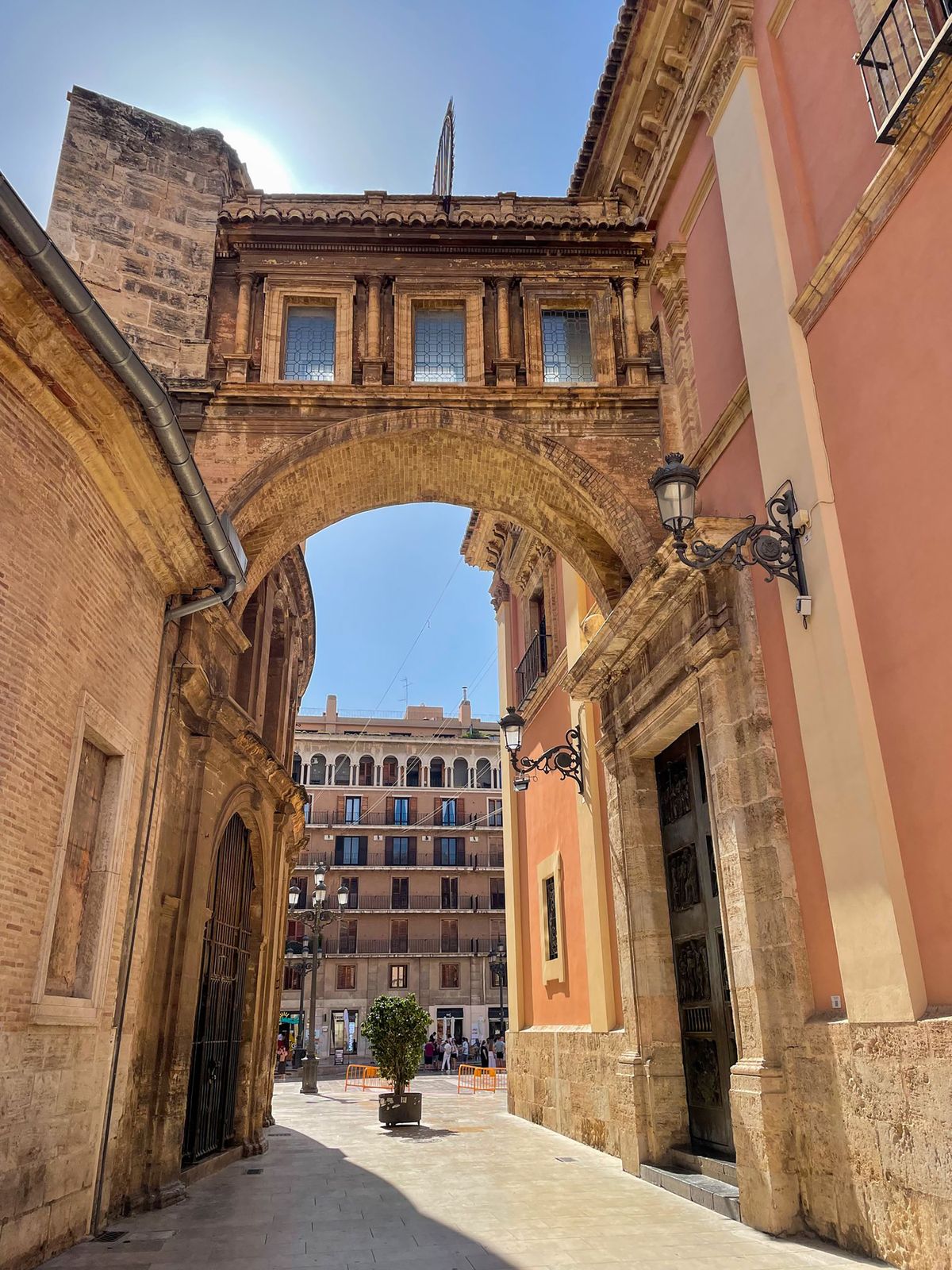
VALENCIA, Spain — Mysterious signposts illuminate stone walls and archways, guiding a rider through twisting medieval alleys to the Cathedral of Valencia, where he found the Holy Chalice, he says.
The rider, clad in a brown jacket, leather hat and whip, recalls Indiana Jones, a feeling underscored by epic adventure film music playing in the background.
This may resemble a Hollywood trailer but is not the handiwork of a major California studio but Valencia’s tourist office.
The Vatican appears to suggest the Grail’s presence in Valencia as former Pope Francis granted the cathedral the rare privilege of celebrating a “Holy Year” every five years due to the Grail’s story, in 2015.
As of October 30, that time comes round again.
Most people associate the Spanish city with wide sandy beaches, modern architecture and paella rather than one of Christianity’s most legendary treasures.
“Yet it has been in our cathedral since 1437,” says Vicente Pons, head of the cathedral archive, as he opens a register book from that time, bound in goatskin.
The Latin script confirms King Alfonso V handed several relics to the cathedral, including the Holy Chalice. “It was a pledge for the money he borrowed from the church for his wars in Naples and never reclaimed,” says Pons.
According to legend, Saint Peter brought the chalice of the Last Supper from Jerusalem to Rome. In the 3rd century, Pope Sixtus II tasked his deacon Lorenzo with securing the Grail from Emperor Valerian. Lorenzo hid it in the northern Spanish Pyrenees in Aragon.
From the 11th century, it was verifiably located in the rock monastery of San Juan de la Peña until the monks handed it over to Aragon’s King Martin in 1399, whose successor Alfonso V transferred it to his court in Valencia in 1424.
But is it the real Grail? There were also Grail legends in England, France and other countries. “But all were excluded as the chalice of the Last Supper due to their age, origin or nature – except ours in Valencia,” says Grail researcher Ana Mafé.
Renowned archaeologist Antonio Beltrán first discovered in 1983 that it was indeed a Jewish ritual vessel from Palestine from the time of Jesus.
Whether it is the chalice of the Last Supper remains a matter of faith, says Beltrán.
Art historian Ana Mafé does not doubt it. “I was able to trace the chalice of Valencia iconographically back to the 4th century in Roman catacombs,” she says.
Either way, the chalice has been venerated in Valencia for centuries.
In the Museo de Bellas Artes, there are depictions of the Grail by Joan Ribalta and Juan de Juanes from the 16th century.
Next to the museum are the ruins of the former royal palace, where the Grail lay in the treasury for years.
Following the Grail’s trail, visitors delve deep into medieval Valencia, when the city was one of the most important trading metropolises in the Mediterranean.
They discover San Juan del Hospital, Valencia’s oldest church, founded by Crusaders in 1238. The Iglesia de San Nicolás, known as Valencia’s Sistine Chapel due to its magnificent ceiling paintings, also plays a special role for the Santo Cáliz, as the chalice is called in Spanish. At the end of the 15th century, two priests of this parish church promoted the Grail cult. They were Alfonso and Rodrigo de Borja, who later became popes.
“The chalice was made popular mainly by Archbishop Juan de Ribera, who placed it at the center of the Eucharistic cult in the 16th century,” says Miguel Navarro, director of the seminary El Patriarca, founded by Ribera.
For the refectory, the dining hall, Ribera commissioned the Renaissance master Juan de Juanes with the imposing painting “The Last Supper,” which shows Jesus surrounded by his disciples. Before them on the table is the chalice from Valencia’s cathedral.
The chalice was originally a simple bowl made of agate stone. Goldsmith Antonio Piró shows how he makes detailed copies of the chalice for churches in his workshop.
“The gold setting adorned with white pearls and red gemstones was only added in the Middle Ages,” says Álvaro de Almenar, canon of the cathedral and official Keeper of the Holy Chalice.
Due to fear of looting, the Grail was rarely shown to the public until the early 20th century.
The Nazis also searched for the chalice, a theme picked up by the Hollywood film “Indiana Jones and the Last Crusade” in 1989. Driven by SS leader Heinrich Himmler, they suspected it in the wrong place, further north in the monastery of Montserrat near Barcelona.
“Shortly before, the chalice was almost destroyed in the Spanish Civil War in 1936 when Republican troops set fire to the cathedral,” says Alicia Palazón from the Foundation of the Holy Chalice.
On the way to the new Grail pilgrimage center Almudín, housed in a gigantic medieval grain store in the old town, she stops in front of an inconspicuous house on Avellanas Street. “A few hours before the Republicans destroyed the cathedral, the canon hid the chalice here with a churchgoer he knew.”
After the Civil War, the Santo Cáliz was initially kept in the architecturally unique Silk Exchange from the 15th century in 1939.
And where does the search for the Holy Chalice end today? In the small side chapel of the Catedral de Santa María de Valencia. Since the cathedral’s reconstruction, it has shone there in its brownish colors behind thick bulletproof glass.
“At the thought of holding the same chalice that Christ handed to his disciples at the Last Supper, I become deeply reverent,” says Grail Keeper Almenar.
Many of the pilgrims streaming to the city for Holy Year are likely to feel the same way.
_____