WCAC move didn’t make big headlines, but became big deal for Gonzaga, basketball program
When Gonzaga received an invitation to join the West Coast Athletic Conference (WCAC) in Sept. 1978, it received a nine-paragraph, no-byline article at the bottom of The Spokesman-Review’s sports page.
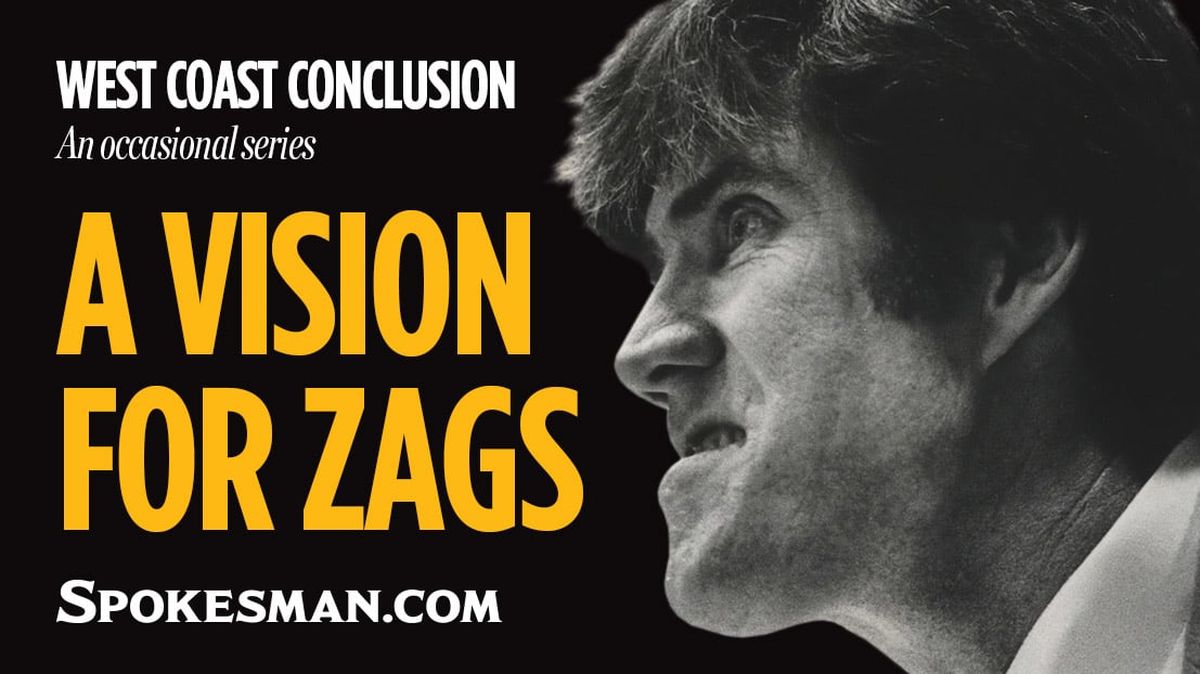
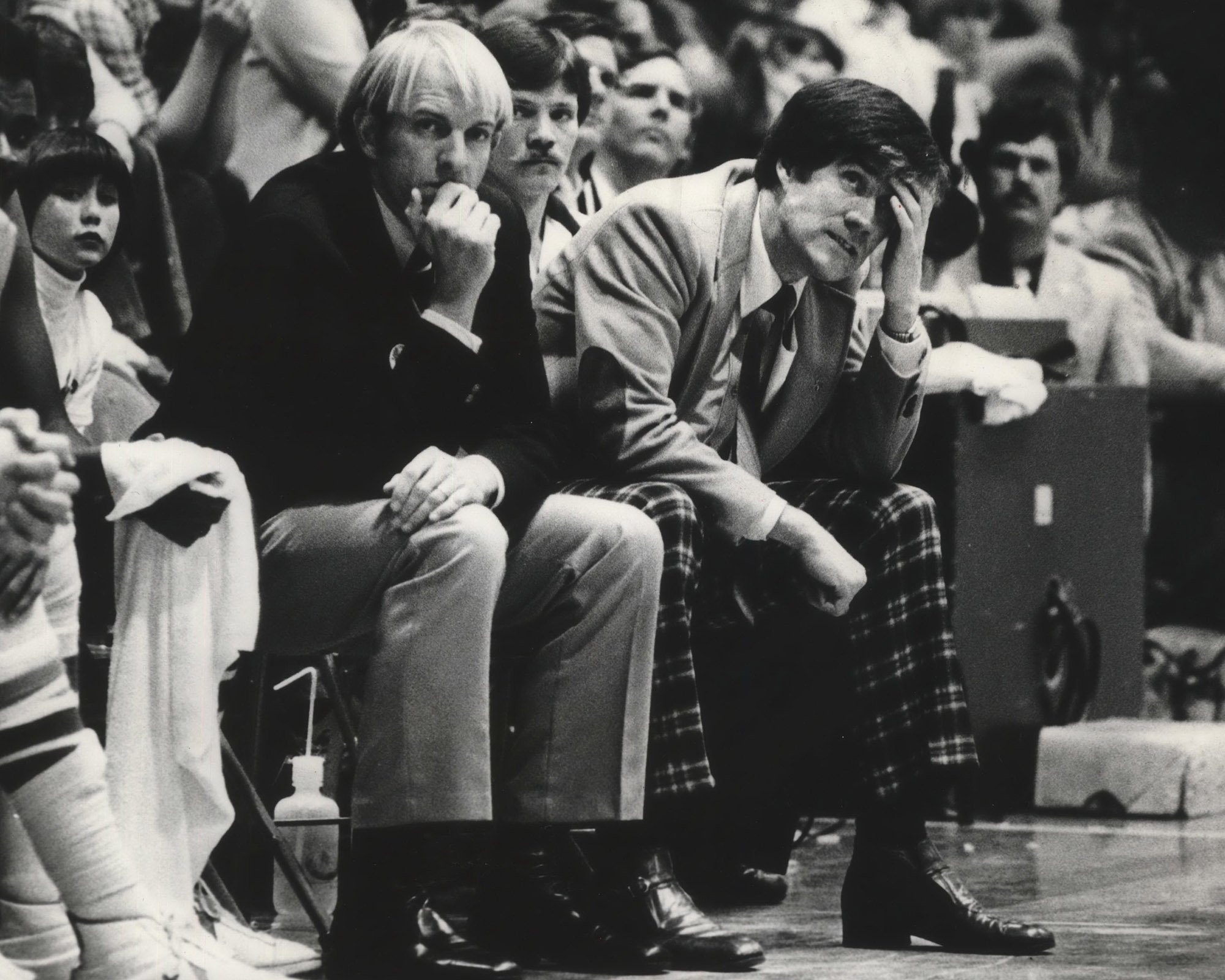
Gonzaga did not need much time before deciding to take the off ramp from the Big Sky Conference. Less than three weeks later, an S-R headline read: “It’s official: Zags go WCAC”, next to a picture of Gonzaga basketball coach Dan Fitzgerald, the driving force behind the move, and WCAC commissioner Jerry Wyness.
The Zags had moved up, literally and figuratively, including the placement of the article in the center of the sports page. It was the top local story but still beneath Associated Press articles on the NL and AL baseball playoffs while a preview of Idaho football’s upcoming game at Nevada-Las Vegas anchored the bottom of the page.
In newsprint and on campus, it reflected the tenor of times. Long before Gonzaga became an NCAA Tournament mainstay over the last quarter century, the Zags often could be found in the middle of the Big Sky standings.
“Obviously athletics didn’t have the sort of visibility that it does now,” said Chuck Murphy, who played tennis at GU, graduated in 1973 and was the school’s controller in 1978. “I don’t recall it (joining the WCAC) being that much of a topic of conversation around campus. Again, the athletic programs were not that much of a thing back then.”
Murphy recalled an example.
“I can remember in those times you could just show up to the game and walk in and sit anywhere you wanted in old Kennedy Pavilion,” said Murphy, now Gonzaga’s chief strategy officer. “I had a van and I’d bring my kids and neighborhood kids, maybe a dozen, show my ID and we were all in.”
Conference hopscotch is fashionable these days, but that under-the-radar move roughly 4½ decades ago played an important role in Gonzaga’s improbable transition into a college basketball powerhouse.
It required two schools, Gonzaga and Nevada, to come to the realization that they were in the wrong conferences.
Gonzaga was a Big Sky outlier as a Jesuit institution with basketball at the forefront of its athletic programs. Meanwhile, Nevada was in the basketball-centric WCAC alongside mostly faith-based universities, longing to elevate its football profile after years as an independent.
Hmm, what if …
“As I see it, the most logical move for the Big Sky would be to trade Gonzaga for Nevada-Reno, a member of the basketball-only WCAC,” the Spokane Daily Chronicle’s Charlie Van Sickel wrote in a May 1978, column.
Several paragraphs later, Van Sickel cautioned: “The biggest drawback from the standpoint of consummating a Gonzaga-for-Reno trade is its pure simplicity and logic. When you’re dealing with intercollegiate athletics, those two factors often are overlooked or disregarded.”
Not this time. Common sense won out. It was not portrayed in newspaper reports as a swap when it ultimately happened, but the result was essentially the same: Nevada bolted for the Big Sky and Gonzaga replaced the Wolf Pack in the WCAC.
The move also required Fitzgerald’s vision, no doubt influenced by several years spent in the WCAC as a Santa Clara assistant coach before taking the Zags’ job prior to the 1978-79 season, and Gonzaga President Rev. Bernard Coughlin’s efforts to make it a reality.

“The way I understood it from Fitz, Father Coughlin was pretty open to it right away and the big thing was selling it to (Gonzaga’s) board of trustees,” said Bud Nameck, hired as Gonzaga’s sports information director and radio voice for basketball in 1980-81, Fitzgerald’s third season as head coach and GU’s second year in the WCAC.
“The thing that’s crazy and I’ve talked about this when Fitz was inducted into Hall of Fames, if Gonzaga had stayed in the Big Sky no way any of this would have been possible.”
Fitzgerald, who passed away in 2010, was heavily involved in the WCAC discussions as GU’s acting athletic director. He replaced Larry Koentopp, who was hired as general manager for the Spokane Indians baseball team.
“From a historical standpoint, it was a brilliant move,” said Mike Roth, who joined Gonzaga’s basketball staff in 1982 as a grad assistant under coach Jay Hillock and later served as longtime athletic director. “Dan and Father Coughlin deserve the credit. We were the odd duck in the Big Sky and it just made all the sense in the world to join a Catholic basketball league instead of a state school football league.
“It made a lot of sense, not only at the time but over time.”
It did not revolve around the millions of dollars that accompany conference moves these days, but there were some conditions attached to Gonzaga joining the WCAC.
GU, which navigated serious financial issues earlier in the 1970s with the help of trustee Harry Magnuson, contributed $20,000 to the WCAC’s endowment portfolio and was required to guarantee $2,000 per game for incoming conference opponents in its initial season in 1979-80, according to a Spokesman-Review article.
The Zags also had to play home conference games at the old Spokane Coliseum instead of cozy Kennedy Pavilion.
Gonzaga’s record in the WCAC (renamed WCC prior to the 1989-90 season) was similar to most of its time in the Big Sky before posting a 20-win season in 1992. That was GU’s first 20-win campaign since going 21-6 in 1967 when it earned a second consecutive co-Big Sky championship.
Murphy said Gonzaga’s expenses in the WCAC likely increased with additional flights to face conference foes compared to bus trips primarily in the Big Sky. The trade-off proved to be more than worth it on and off the court.
“It put us in a league with our peer Jesuit West Coast institutions,” Murphy said. “All of those institutions have great academic profiles so it raised our academics by being in that group and allowed us to have more visibility in those key West Coast markets (Los Angeles, the Bay Area, Portland and Seattle) where we have a lot of alums and where we recruit students.”
Some WCAC schools were not entirely thrilled with Gonzaga in the conference, at least for the first handful of seasons.
“I’ve heard stories,” Roth said. “Even after we joined the WCAC there was still grumblings about, ‘Why do we have Gonzaga in this league, they’re hurting us’ anytime GU wasn’t in the room.”
“I understand there was still some sentiment that Spokane wasn’t easy to get to compared to LA or Portland, the Bay or Seattle, and that GU didn’t really do much for the league,” Nameck said. “I think there’s always grumbling that way, but the fact that Fitz had been around the league and had been recruiting with all the other coaches kind of solved that a little bit.
“I can remember guys (on opposing teams) would come into the old Kennel and right before their shootaround, Fitz would open the doors so it would be freezing in there.”
The Zags figure to receive a much warmer reception when they exit the WCC for the Pac-12 after this season as the revamped conference’s flagship basketball program.