This day in history: Near Hanford, the latest radioactive threat was unusually darling
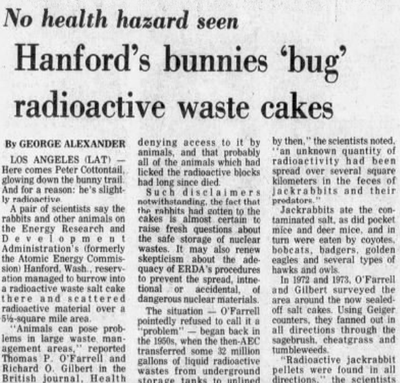
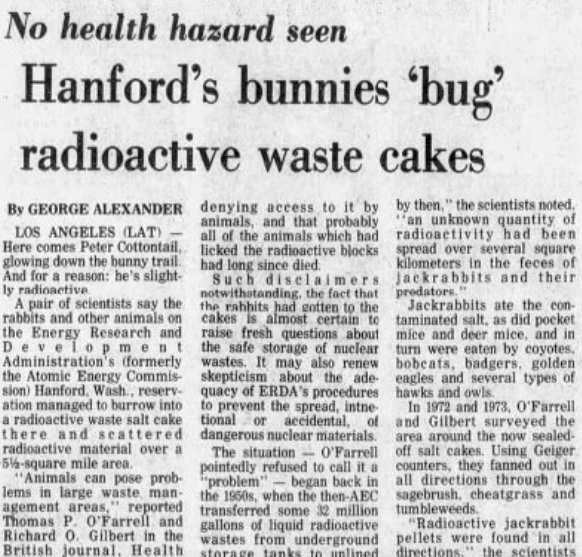
From 1975: Pieces of “radioactive waste salt cakes” were being spread over 5 square miles at the Hanford nuclear reservation. Researchers identified the culprits: bunny rabbits.
To be specific, jackrabbits, as well as pocket mice and deer mice.
These animals had burrowed into the buried radioactive salt cakes and then spread them around through fecal droppings and bones. Radioactive jackrabbit droppings “were found in all directions.”
“Animals can pose problems in waste management areas by acting as an efficient biological transport mechanism for radionuclides which are thought to be safely buried,” a researcher said.
Steps were taken to “cover with asphalt the two salt cakes involved.” Authorities noted that animals were naturally attracted to salt licks.
From 1925: The Spokane Daily Chronicle declared that Spokane was “well-equipped” to accommodate a growing fad: golf.
“… Three 18-hole golf courses are now enjoyed by Spokane golf enthusiasts,” the paper said.
“These links are all wholly different in contour and each, with its natural landscaping, presents charms all its own.”
The three courses were the Spokane Country Club, the Manito Country Club and the Downriver Golf Course. More were on the way over the next decade.
Also on this day
(From onthisday.com)
1695: English pirate Henry Every and his crew capture the Grand Mughal ship Ganj-i-Sawai in the Arabian Sea, looting all gold and silver estimated to be worth up to 600,000 pounds (hundreds of millions in today’s currency). This would become the biggest pirate raid in history.