
Trump announces National Guard will be deployed in Memphis to fight crime
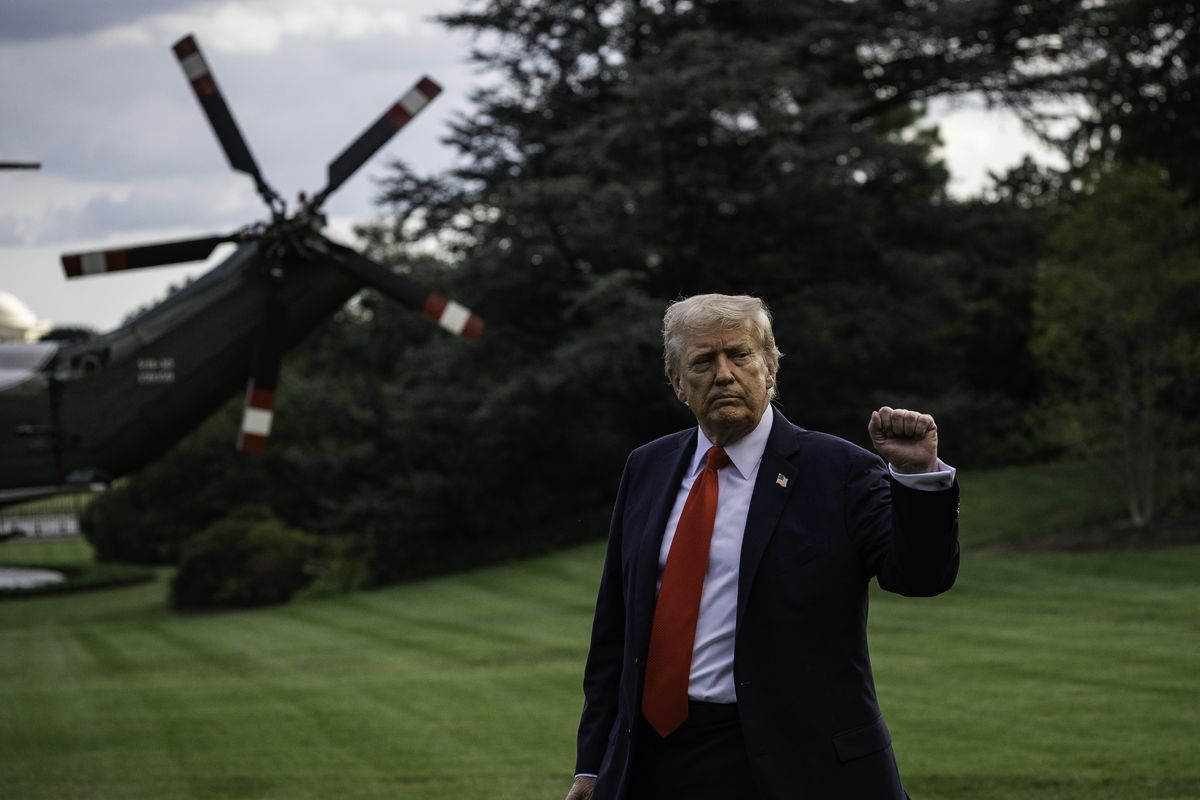
President Donald Trump announced Friday that Memphis will be the next target of a National Guard deployment, as his administration expands its use of the military to fight crime to its third Democratic-run city in recent months.
“We’re going to Memphis,” Trump said during a Fox News interview, calling it a “deeply troubled” city. “National Guard and anybody else we need. And by the way, we’ll bring in the military too, if we need it.”
The move follows similar National Guard deployments to Los Angeles and Washington, D.C., part of what Trump has said is a necessary federal intervention in those cities to crack down on violent crime and ramp up deportations of undocumented immigration. The deployment to Memphis will be the first time Trump has mobilized the National Guard to a state he won in November.
Trump asserted Friday that Memphis Mayor Paul Young, a Democrat, and Tennessee Gov. Bill Lee, a Republican, supported his move. His claim could not immediately be verified.
Trump spent recent weeks considering where to deploy the National Guard next after sending troops to Washington, D.C., last month. He most commonly floated Chicago, making an inflammatory social media post last weekend suggesting his administration was soon going to “war” with the city.
However, state and local Democratic officials there voiced strong opposition to the proposal. Illinois Gov. JB Pritzker, a Democrat, accused Trump of having a “nefarious plan” to normalize the militarization of cities to his benefit. Both Pritzker and Chicago City Council members said they would have welcomed support from federal agencies to track down drug traffickers and violent criminals – but not in the shape of a National Guard deployment.
Trump said Friday he “would have preferred going to Chicago” next, but suggested he was put off by such a “hostile” setting.
Memphis is the second-most populous city in Tennessee, behind Nashville. Memphis has historically experienced a high crime rate, though like other major cities, it has seen a drop in crime in recent years.
“Overall crime is at a 25-year low, with robbery, burglary, and larceny also reaching 25-year lows,” the Memphis Police Department said in a news release Tuesday.
Young, the Memphis mayor, acknowledged in a statement to local media Thursday that Trump and Lee were “considering” deploying the National Guard to Memphis.
“I am committed to working to ensure any efforts strengthen our community and build on our progress,” Young said.
Young’s office did not immediately respond to a request for comment on Trump’s announcement Friday, including his claim that Young is “happy” with the federal incursion. But Lee Harris – the Democratic mayor of Shelby County, which includes Memphis – said Trump’s announcement is “disappointing, anti-democratic, and violates American norms and possibly U.S. laws.”
“We will do everything in our power to prevent this incursion into Tennessee and to protect the rights, safety, and dignity of every resident in our communities,” Harris said in a statement.
The office of the governor did not respond to a request for comment, but other Tennessee Republicans responded positively to Trump’s announcement. Sen. Marsha Blackburn applauded the president for helping “Make Memphis Safe Again,” noting in a statement that she voiced support last month for putting troops in Memphis.
Trump promised the National Guard would “straighten out” Memphis like in Washington, which he hailed as a “crime-free” city now. He made false and exaggerated claims about the recent reduction of crime in the city, including that it had been years since D.C. went a week without a reported homicide.
During his interview on “Fox & Friends,” Trump continued to toy with the idea of bringing the National Guard to other cities, including other Democratic-led cities in red states. He reiterated his interest in New Orleans, saying it is “in really bad shape” and that the Republican governor of Louisiana, Jeff Landry, “wants us to go in.” Landry said earlier this month that the state would welcome federal law enforcement help “from New Orleans to Shreveport!”
New Orleans has seen a drop in crime of almost every type over the past three years, according to data from the New Orleans Police Department, and murders in the city in 2025 are on track to drop to a near-50-year low. While New Orleans Mayor LaToya Cantrell (D) and the New Orleans police signaled a willingness to cooperate with federal partners last week, most of the city’s other Democratic leaders oppose the plan.
Trump has hinted that the federal takeover of policing in D.C. could serve as a test case for other cities across the country. However, Washington is unique in that it has no governor and the president has direct control over troops there.
In California and Illinois, Democratic leaders have challenged Trump’s authority to use their troops to enforce civilian laws.
A federal judge ruled Sept. 2 that Trump’s deployment of the National Guard to Los Angeles violated a law that prohibits the military from carrying out domestic law enforcement. It was a narrow opinion that did not apply to other states. The case is now on appeal before the 9th U.S. Circuit Court of Appeals.