
How Lutnick is using government power to pessure private companies
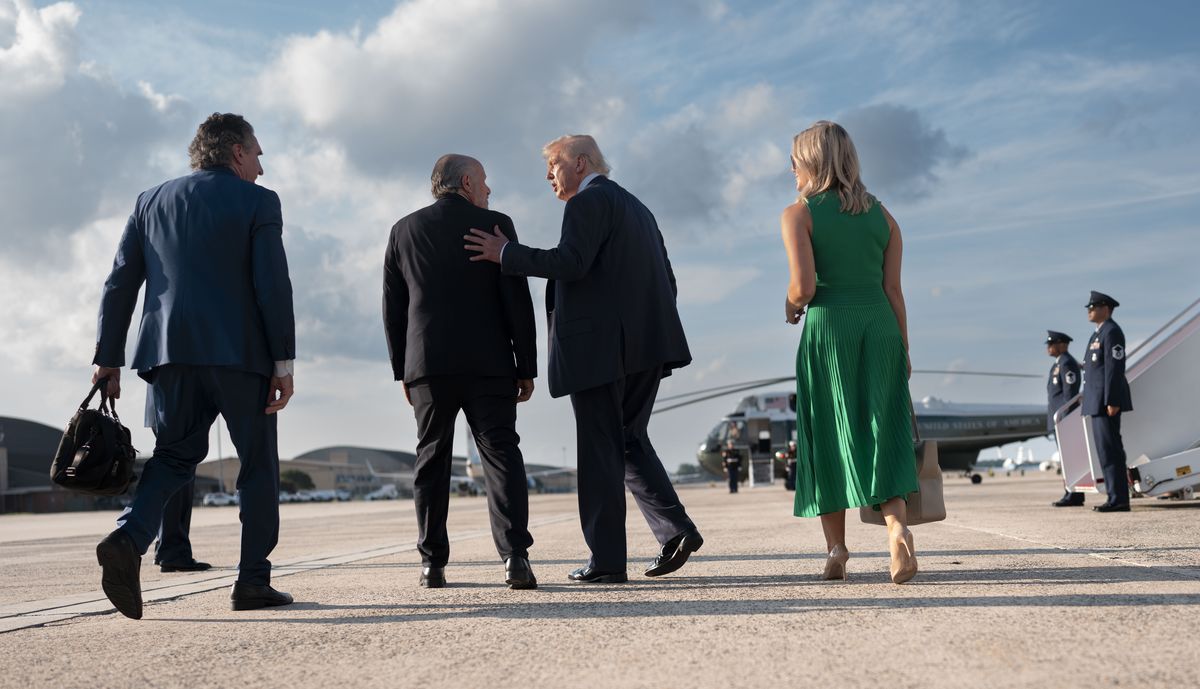
WASHINGTON – In late August, Howard Lutnick, President Donald Trump’s commerce secretary, flashed his trademark grin as he sat alongside Lip-Bu Tan, the CEO of Intel, in Lutnick’s office. They were preparing to sign an unusual agreement that would extend Trump’s influence over corporate America in a way not seen in generations.
Over the previous week, Lutnick had hammered out a deal with Tan and other Intel executives to make the government the largest shareholder of the U.S. tech giant. The agreement came together after Trump said Tan should resign because of his ties to Chinese companies, a comment that sent the company scrambling.
“America should have shares,” Lutnick told Tan, according to a video posted on social media. “Because it’s just fair. And we agreed together, and then you went to your board of directors, and they agreed.
“This is exactly what Donald Trump is all about,” Lutnick added.
In recent months, Trump has announced a series of moves that have expanded the economic reach of the government into corporate America, setting companies on edge. In addition to Intel, the administration has moved to take a stake in U.S. Steel and in a rare earths producer, MP Materials. Officials have suggested that the United States could take shares in other industries.
Trump has also talked about taking a cut of chip sales to China and has used the threat of tariffs to strong-arm Japan and South Korea into agreeing to put hundreds of billions of dollars into a fund that will be controlled by the United States. The agreement allows Trump to invest the money largely at his discretion during his presidency.
Lutnick has publicly praised Trump for these moves, applauding his dealmaking and leadership. But Lutnick – a former Wall Street bond broker – has played an important role in facilitating and, in some instances, thinking up these plans.
As commerce secretary and a top official in charge of Trump’s trade negotiations, Lutnick has an array of powerful economic levers to deploy. They include threatening to impose tariffs on goods like cars, chips and steel; halting manufacturing grants; and withholding licenses to export.
He has used those abilities freely and enthusiastically to try to squeeze more investment and other concessions out of companies and foreign governments, according to interviews with more than a dozen current and former officials and industry executives. Many of them spoke on the condition of anonymity because they either were not authorized to speak publicly or did not want to become targets of the White House.
Lutnick’s efforts revolve around a newly created initiative inside the Commerce Department called the Investment Accelerator. While little is known about the initiative – including to some in the department – Lutnick appears to be turning it into a fund that can collect foreign capital and negotiate equity stakes in companies. The investment vehicle can then direct those resources toward accomplishing Trump’s goals, like building out America’s industrial capacity or potentially generating funding to pay down the national debt.
But Lutnick’s moves are raising a variety of concerns among companies, government officials and others, including whether the Commerce Department has the authority to invest in private-sector firms and whether this will end up creating economic distortions as the United States picks winners and losers. They have also trampled traditional conservative ideas about keeping the government out of the private market.
While some department employees, including some appointed by Lutnick, are concerned about the measures, they are afraid to push back for fear of getting fired, current and former officials said.
Some corporate executives are now afraid to lobby the administration directly out of fear they will be pressured for something in return. Some have privately likened the treatment to tactics used by the Mafia.
Lutnick declined through a spokesperson to be interviewed for this article. The Commerce Department and Intel did not provide comment.
Lutnick, a New York billionaire who ran the brokerage firm Cantor Fitzgerald before joining the administration, had no prior government experience. He won a position at the helm of the nearly 50,000-person Commerce Department this year because of his hefty fundraising for and devotion to Trump, as well as his long investment career and nontraditional ideas for transforming government.
In recent months, Lutnick has focused his efforts toward setting up what he describes as a “national and economic security fund” within his department, financed by the hundreds of billions of dollars that Japan and South Korea pledged to invest as part of their trade deals.
Lutnick had more than a dozen conversations with the Japanese. In July, Lutnick and other officials pitched the idea for the fund to the president in the Oval Office.
The president agreed, and shortly afterward announced that he had struck “the largest trade deal in history” with Japan. It would include a $550 billion investment, and 90% of the profits from the investments would go to the United States, he claimed. Critics have questioned whether those hefty sums will ultimately materialize.
At the crux of the investments Lutnick is negotiating is the Investment Accelerator. It was set up in March through an executive order as a concierge service for companies making high-dollar investments in the United States.
The accelerator has assumed control of tens of billions of dollars from the 2022 CHIPS Act, a bipartisan bill aimed at building up U.S. semiconductor manufacturing. Companies signed contracts with the Biden administration to receive those grants, but Lutnick has paused many of the payments as he pushes firms to invest more in the United States.
It was that push that resulted in the government taking a stake in Intel. Other chip companies that were slated to receive large government grants, like Taiwan Semiconductor Manufacturing Corp. and Micron, have announced new investments in the United States in recent months. But Intel has struggled to carry through on its previously announced projects.
The government’s new relationship with Intel is causing concern among some companies, which worry they may be forced to do business with the chip giant on unprofitable terms. Whereas the Biden-era program was originally devised to dole out grants to Intel over a number of years as it hit milestones for producing more semiconductors in the United States, the Trump administration has given Intel the rest of its grant money upfront in exchange for the equity stake.
Some progressives, including Sen. Bernie Sanders, I-Vt., have praised the move. But many Republicans and Democrats have criticized it as government interference in the private sector. Sen. Rand Paul, R-Ky., has called the government’s stake in Intel a “step toward socialism.”
It is not clear how many companies the U.S. government could seek to take equity in. Lutnick has said the administration may take stakes in defense firms, while Scott Bessent, the Treasury secretary, has mentioned shipbuilding as a potential target.
But the idea that has provoked the most criticism appears to be that of taking a cut of artificial-intelligence chip sales to China. The move would put the government in the position of benefiting financially from the sale of a product the Commerce Department is also charged with regulating for national security reasons.
Department lawyers have been studying the idea, but many officials and outside lawyers say it is not legally permitted.
An administration official told The New York Times this month that the government’s topmost priority was national security and that it would not compromise on those concerns.
This article originally appeared in The New York Times.