
West Side comic Bo Johnson brings tour of laughs to Post Falls
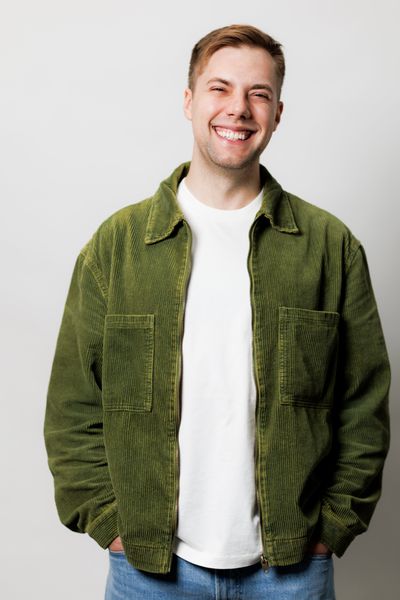
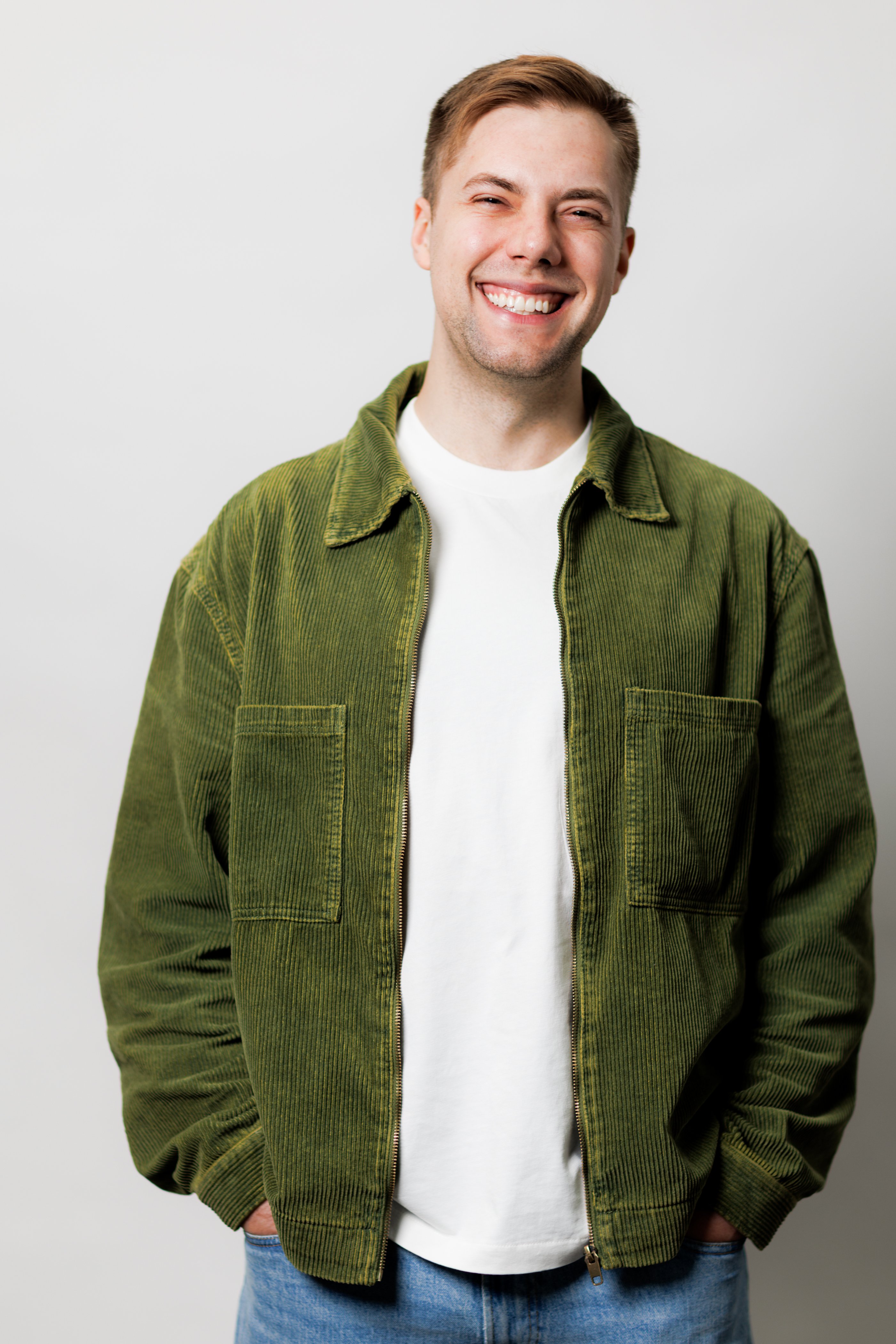
If Bo Johnson had stuck with his childhood ambitions, he would be touring the country as a professional jazz clarinetist, not as a comedian.
But after learning that the market wasn’t great for jazz clarinetists, he switched to the “still very hard but more modern dream” of performing standup comedy. Johnson had wanted to perform comedy since middle school, watching specials from comedians like Mitch Hedberg and Demetri Martin.
Johnson wrote jokes growing up, but it wasn’t until near the end of his time at the University of Washington that he and two friends began sharing them with others via pamphlets they produced featuring Seattle-centered “Onion”-esque articles.
Johnson heard from a few people that they liked what the trio was doing, but he never saw an instant reaction to a joke. Standup, he realized, was where that instant result came from.
After graduating from the University of Washington, the Seattle native attended a few open mics around town, but only as a member of the audience. A few months later, Johnson performed at his first open mic at a since-closed Thai restaurant as a New Year’s resolution.
“I’ve loved comedy and standup for so long, but I think the more attached you are to a dream, the harder it is almost to try and to start, because then you can find out ‘Oh, I’m actually awful at this,’ ” he said. “If you never try, there’s a freedom from failure versus trying. You are giving yourself permission to fail.”
Whether in the audience or onstage, Johnson eventually noticed something that was comforting, but also had the potential to be a problem the longer he did standup: No one really cared about the comedians on stage.
If he had a great set, or if he bombed, it didn’t matter too much at the end of the day, because the audience would move on.
“Once I started doing it more and more and more and getting to the place where it was getting closer to being a job, I was like ‘Well, now I would like some people to care,’ ” he said with a laugh.
Johnson started making rounds around indie venues and comedy clubs, and people started to care. By 2019, Johnson wasn’t paying all his bills with comedy, but he was making enough to pay his rent, he said.
He made it to the finals of the Seattle International Comedy Competition and was getting more opportunities to headline around the region.
Johnson used all his vacation time from his day job at a food bank to go on the road but had to make a decision when offered a month of roadwork. The money wasn’t really there to justify quitting his job, but Johnson wondered what he could accomplish if he focused solely on stand up.
Johnson quit his job in March 2020. Three weeks later, with the pandemic shutting down the performing arts world, the food bank hired him back.
As things started to reopen, Johnson posted standup clips to his social media. He started building a fanbase and, once he was able to go back on the road, found that “some people were coming out to see (him) on purpose for the first time.”
Though, yes, Johnson does still hear from audience members that they thought they were going to see Bo Burnham.
Three years ago, he quit his day job for a second time to pursue standup and has been touring ever since. He released a set through Don’t Tell Comedy in 2023, has appeared at the Just For Laughs festival in Montreal and was recently a headliner at the Bend Comedy Festival. Johnson headlines the Draft Zone in Post Falls on Saturday.
Before he quit his day job, Johnson performed throughout the Northwest. The region isn’t representative of the entire country, of course, but performing in cities like Seattle, Portland, Walla Walla and Pullman gave him a feel for what crowds in similarly sized cities might be like across the country and what material might work best there.
As he’s become more established over the years, he now builds his sets based on how likely those in the audience are to have seen his previous work. If he’s performing in a city for the first time, he tends to do more older, established material. If he’s performing where the audience has likely seen a lot of his older material, he includes newer jokes.
“They’re more open-minded to seeing stuff that’s in development and also would almost rather see the jokes that are invisible online, even if they’re not as fully finished,” he said.
For those who haven’t seen Johnson’s work, he recommends they watch his Don’t Tell Comedy set. It’s easy to know if you’ll have fun at a concert, he said, because you know the genre of the artist performing. It’s not so easy with comedians.
“When you go to a music show, you know if you’re going to be a country band or a rock band or EDM music,” he said. “With comedy, sometimes people come and they’re like ‘Well, I like heavy metal, and this is pop.’ “
While he’ll write topical jokes with short shelf lives, Johnson focuses on evergreen jokes that are more personal. He likes that those jokes will still make sense years down the road.
He also enjoys writing jokes about the city in which he’s performing to start the show.
“If I can think of something that connects the audience in the room to what’s happening in that place, that gets me a little bit more present,” he said.
Johnson has recently recorded another 10-minute set for Don’t Tell Comedy. He also recorded and self-produced an hourlong special earlier this year in Portland. Both specials will likely be out by early next year.
He also has a full touring schedule through the end of the year that will take him to Texas, Florida, Canada and Oregon as well as Gig Harbor and Seattle.
“What I’m excited about is hopefully getting newer jokes to be stronger, and I am excited to ultimately release that big, longer term, hourlong project,” he said. “Hopefully it doesn’t disappear into the oblivion of the internet fully.”